
Congress Considers New Support Initiatives for Cyber Command Amid Suicide Concerns
Congress is intensifying efforts to support U.S. Cyber Command amid rising mental health concerns and recent suicide incidents among personnel. The emphasis is on enhancing mental health resources and legislative action.
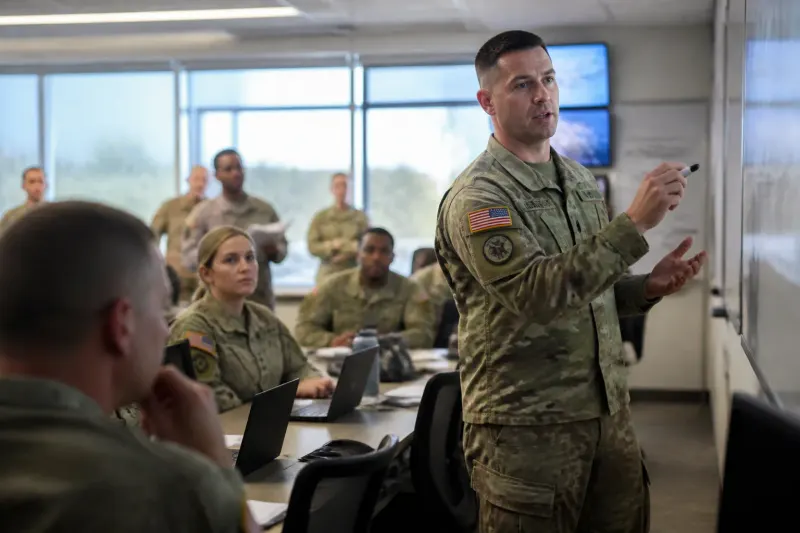
The distressing trend of suicide deaths among personnel at U.S. Cyber Command has prompted congressional leaders to seek solutions aimed at enhancing mental health support for its members. This effort comes at a critical time when the operational tempo and demands placed upon Cyber Command are higher than ever, especially in light of recent military engagements.
Rising Concerns Over Mental Health
With a series of tragic events sending shockwaves through the military community, lawmakers see this as a vital moment to act on mental health support. According to congressional sources, the Pentagon’s evolving appetite for enhanced cyber capabilities has intensified pressure on Cyber Command personnel. The clustering of suicide incidents, first reported by Bloomberg, has raised alarms about the stress levels within the organization.
Legislative Actions Under Review
The National Defense Authorization Act (NDAA), which outlines spending and policy for the Pentagon, is viewed as a key vehicle for implementing new measures of support. The House has already passed its version of the NDAA, but the Senate has yet to vote on its draft. Negotiations are expected to take place during the upcoming congressional break, aiming for a finalized version by Thanksgiving, with a vote anticipated in December.
Critical Suicide Clusters Among Personnel
The recent spate of suicides has drawn parallels to previous emergencies experienced during the Global War on Terrorism, notably the reported suicides among drone pilots. Members of Cyber Command discussed the potential connection between job demands and these tragic outcomes, noting that current cyber operations range from ongoing conflicts with adversaries like Iran and Russia to domestic missions involving Southern border control.
Assessing the Impact on Cyber Command Personnel
Representative Sarah Elfreth (D-MD), whose district borders Cyber Command, commented on the unique stresses faced by personnel at its Fort Meade headquarters, home to the National Security Agency (NSA). She pointed out that every mission performed by Cyber Command is inherently complex, and these recent incidents underscore a potential crisis in mental health resources.
Seeking Expanded Mental Health Resources
Elfreth intends to advocate for expanded access to mental health providers for Cyber Command personnel. The current situation is exacerbated by the need for mental health professionals to hold security clearances, limiting the pool of available support. The fiscal 2024 NDAA previously required the Department of Defense to assess the "occupational resiliency" of Cyber Command's Cyber Mission Force and report on the adequacy of current support systems.
Inadequate Support Systems Identified
A report obtained by Recorded Future News found that existing resources for personnel were insufficient and posed risks to mission effectiveness. Although military leaders have initiated steps, such as tapping senior officials for strategic oversight on mental health matters, an actionable implementation plan has yet to be presented to Congress.
Future Funding and Support Initiatives
As Congress approaches its next cycle of funding negotiations, another potential pathway for enhancing Cyber Command's support systems is through the upcoming government funding bill. A recent House Appropriations Committee proposal includes $11 million earmarked for “High Performance Team Training” as part of the fiscal 2027 defense spending bill. This funding is seen as crucial to fostering cognitive and emotional resilience among Cyber Command personnel engaged in high-pressure operations.

Leadership Accountability
Previous personnel, including Andrew Schoka, a former Army officer with experience at Cyber Command, emphasized that leadership accountability is a fundamental issue that must be addressed. Burnout is recognized not only as a consequence of excessive workload without breaks, but also due to inadequate planning and support from those in command. Ensuring that leaders are equipped with the necessary technical expertise to manage their teams properly is critical to mitigating these issues.
Broader Impacts on the Intelligence Community
The issue of mental health and suicide prevention extends beyond Cyber Command to include the NSA, where there have also been recent reports of suicide deaths. Conversations surrounding these incidents have occurred at various levels of government, emphasizing the urgency of taking steps to address personnel welfare within the intelligence community.
Government Response and Continued Focus
There has been notable attention from government officials regarding this troubling trend. Senator Mark Warner of Virginia and Representative Jim Himes of Connecticut have raised inquiries about the support mechanisms available to personnel at NSA, reflecting a broader concern for the welfare of those who serve in cybersecurity and related roles.
Conclusion
As Congress takes steps to address the mental health crisis within Cyber Command, it faces challenges that intersect both legislative action and practical implementation. The pending legislation, particularly in the NDAA and upcoming funding measure, may shape the deeply needed improvements in mental health support for military cyber operators. Ensuring mental resilience amidst heightened operational demands will not only serve the personnel but also bolster the mission effectiveness of Cyber Command in an increasingly complex digital battleground.
Key Takeaways
- Congress is addressing a rise in suicides among Cyber Command personnel, focusing on mental health support.
- The National Defense Authorization Act (NDAA) aims to provide additional resources for Cyber Command.
- Pressure from high-tempo operations has spotlighted the need for more mental health professionals with security clearances.
- A proposed $11 million funding for High Performance Team Training aims to enhance personnel resilience.
- Leadership accountability is crucial to manage burnout and mental health challenges within Cyber Command and the NSA.
Frequently Asked Questions