
Measles Resurgence Reveals U.S. Public Health Vulnerabilities
The resurgence of measles in the U.S. has reached over 4,400 cases in 2026, posing significant challenges for public health as vaccination rates decline.
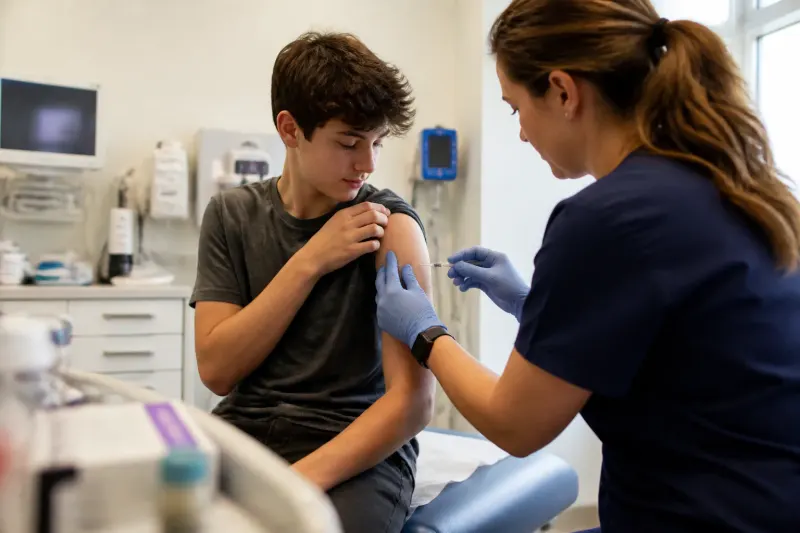
Measles Outbreak Overview
The United States is facing a serious public health crisis as more than 4,400 measles cases have been reported this year, marking it as the worst outbreak in over three decades. This alarming resurgence has also resulted in at least three deaths. The situation highlights significant vulnerabilities within the U.S. public health system, particularly regarding declining vaccination rates and eroding public trust in health institutions.
For nearly two years, measles — a highly contagious disease once eliminated in the U.S. — has returned with a vengeance. Experts warn that the current outbreak not only reflects a resurgence of measles itself but also serves as a warning signal about the nation's ability to combat future infectious diseases, both vaccine-preventable and emerging pathogens.
Public Health Experts Weigh In
Several public health experts expressed deep concerns over the implications of the measles resurgence. Jennifer Nuzzo, an epidemiology professor at Brown University School of Public Health, described measles as a "canary in the coal mine". This metaphor reflects its role in indicating broader systemic weaknesses in public health defenses.
Nuzzo stated, "It’s the canary in the coal mine for other vaccine-preventable illnesses, where we could see a return of things that used to harm kids, but also for very acute, no-notice dangerous infectious disease emergencies." She emphasized that the U.S. is on the verge of losing its official measles elimination status during an upcoming review by the Pan American Health Organization in mid-November.
Pockets of Low Vaccination Coverage
Data reveals significant issues related to vaccine coverage in the U.S. According to the Centers for Disease Control and Prevention (CDC), vaccination coverage for the measles, mumps, and rubella (MMR) vaccine among kindergarteners dropped to 92.4% in the 2025-2026 school year, which is below the recommended threshold of 95% necessary to prevent sustained transmission. This translates to around 280,000 kindergarteners who have not completed the MMR vaccination series.
Moreover, exemption rates have surged, reaching a record high of 4.2% for incoming kindergartners in the same school year, compared to 3.6% the previous year. These statistics underline a serious challenge: while a majority of parents still vaccinate their children, there are enough pockets of low coverage to create a dangerous environment.
The Role of Public Sentiment Towards Vaccines
Most Americans generally support childhood vaccinations. Although a July 2025 KFF survey indicates a level of uncertainty among the public regarding vaccines, it does not suggest a broad anti-vaccine sentiment. Instead, many parents find themselves susceptible to misinformation which complicates vaccine uptake.
Dr. William Moss, an epidemiology professor, noted that recent outbreaks are often concentrated in “closely knit communities” where low vaccination rates correlate with increased virus transmission. While this might seem to only threaten limited areas, it puts vulnerable populations, such as infants too young to be vaccinated and medically compromised individuals, at significant risk.
Government Policies Impacting Vaccination Confidence
The political climate surrounding vaccine policy is also experiencing upheaval. Recently, President Donald Trump signed an executive order advocating for splitting the MMR vaccine into separate shots. This action, coupled with continued misinformation about vaccine safety, has raised concerns that the government may unintentionally diminish public trust in vaccines.
Experts have warned that these political maneuvers risk further eroding confidence in vaccination programs, as seen by Scott Weaver, a virologist from the Galveston National Laboratory, who noted that the public health infrastructure has weakened considerably since the COVID-19 pandemic. As a result, the CDC has seen a considerable exodus of experienced staff who specialized in vaccine-preventable disease monitoring.

Measles and Future Outbreak Projections
Failure to improve vaccination rates today could lead to bleak scenarios in the near future. A model published in JAMA in April 2025 projects that measles could become endemic in the U.S. if current vaccination rates remain unchanged. This could result in an estimated 851,300 cases over the next 25 years, leading to approximately 170,200 hospitalizations and 2,550 deaths.
These findings underscore the serious consequences that declining vaccination coverage could have, as noted by Michael Osterholm, an epidemiologist from the University of Minnesota, who pointed to Canada’s recent loss of measles elimination status after a multi-province outbreak as a warning indicator for the U.S.
Consequences Extending Beyond Measles
The implications of low vaccination rates are not confined to measles alone. Reports indicate that other vaccine-preventable diseases are also on the rise. In the 2025-2026 school year, vaccination rates for polio dropped to 92.4%, while coverage for DTaP (diphtheria, tetanus, and pertussis) fell to 92%. Pertussis cases alone have seen a significant resurgence, with roughly 43,300 reported cases in 2024 and nearly 28,000 cases in 2025, a stark rise from pandemic-era figures.
Experts speculate that declining vaccination rates coupled with waning immunity over time significantly contribute to this upward trend in disease spread. Under a hypothetical scenario of a 50% decline in childhood vaccination rates, the JAMA model posits projections of 9.9 million rubella cases, 4.3 million polio cases, and 197 diphtheria cases over 25 years. This highlights not only the potential for increased outbreaks but also the severe health risks associated with vaccine-preventable diseases.
Preparing for Future Public Health Threats
The measles outbreak raises critical questions about the national readiness to detect and respond to emerging public health threats. Dr. Manisha Juthani, president of the Association of State and Territorial Health Officials, emphasized that public health's primary goal is prevention, suggesting that the U.S. must invest in enhanced surveillance and communication strategies to combat infectious diseases effectively.
Public health vulnerabilities could also affect the country's defenses against potential biological attacks, as argued by Steph Batalis, a research fellow at Georgetown University. She asserts that the ongoing struggles to control known infectious diseases like measles indicate larger systemic issues that could be exploited by individuals seeking to undermine public health efforts.
Despite these challenges, Osterholm noted that low MMR immunization rates do not necessarily indicate that Americans would resist vaccination during a biological emergency. He suggests the nature of threats could inspire urgent action among the public to seek necessary vaccinations and treatments.
Key Takeaways
- Over 4,400 measles cases and three deaths have been reported in 2026, marking the worst outbreak in over three decades.
- Vaccination coverage among kindergarteners dropped to 92.4%, below the 95% threshold needed for herd immunity.
- Political moves affecting vaccinations, such as a proposal to split the MMR shot, risk eroding public trust.
- Future scenarios predict over 851,300 measles cases if vaccination trends do not improve, resulting in significant hospitalizations and deaths.
- Other vaccine-preventable diseases are rising, with polio and pertussis rates also showing concerning declines in vaccination.
Addressing these vulnerabilities extends beyond measles itself and poses a significant challenge for public health as the nation prepares to face both current and future health crises.
Frequently Asked Questions