
Trump Renames AI to 'Super Intelligence' Amid Industry Changes
President Trump has rebranded 'Artificial Intelligence' as 'Super Intelligence', leading to industry responses and widespread reactions about self-regulation.
A Bold Rebranding in Technology
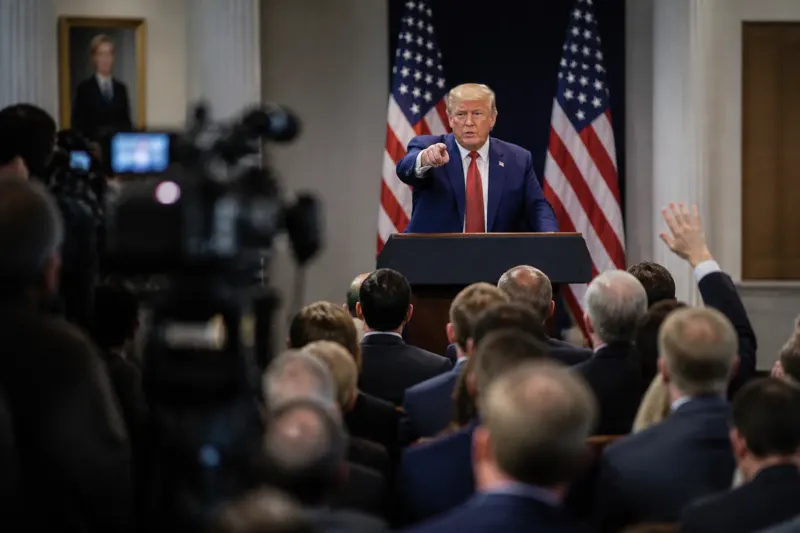
In a surprising move, President Donald Trump has officially declared the renaming of "Artificial Intelligence" (AI) to "Super Intelligence" (SI). Announced through an executive order, this is being touted as a necessary term change to better represent the evolving capabilities of the technology. According to Trump, "the term 'Super Intelligence' more appropriately captures the promise, potential, and rapidly advancing capabilities of these technologies."
The directive mandates that the executive branch shall use the new terminology in all relevant contexts and cease acknowledging the term "Artificial Intelligence." This unexpected decision has stirred reactions across the tech industry and beyond, with many finding it amusing yet concerning.
Industry Leaders Respond
The renaming of AI was swiftly endorsed by several influential figures in the technology sector. A notable event that followed was the signing of the White House Accord on Super Intelligence, which included prominent names such as:
- Sundar Pichai from Google
- Dario Amodei from Anthropic
- Mark Zuckerberg from Meta
- Greg Brockman from OpenAI
- Elon Musk from XAI
- Jensen Huang from Nvidia
Many leaders expressed a strong commitment to advancing the new terminology. For instance, Musk emphasized this on his X platform, albeit returning to the term AI shortly after, indicating a mix of support and confusion surrounding the branding.
Contrasts with Past Naming Attempts
Some have highlighted the resemblance of "Super Intelligence" to previous made-up terms, such as Trump’s attempts to rebrand geographical locations like the Gulf of Mexico. Critics point out the absurdity of this move, describing it as a part of Trump's larger strategy that sometimes feels disconnected from reality.
The Accords’ Implications
The White House Accord on Super Intelligence aims to shift the responsibility for ensuring the safety and ethical development of AI to the industry itself. The accord states that companies developing these technologies are expected to prioritize safety and public trust. Notably absent from the agreement is any mention of regulatory oversight or government involvement.
This self-regulatory approach has raised eyebrows, with concerns that without external checks, the potential for misuse or unforeseen consequences of AI technologies may rise.
Criticism from Industry Veterans
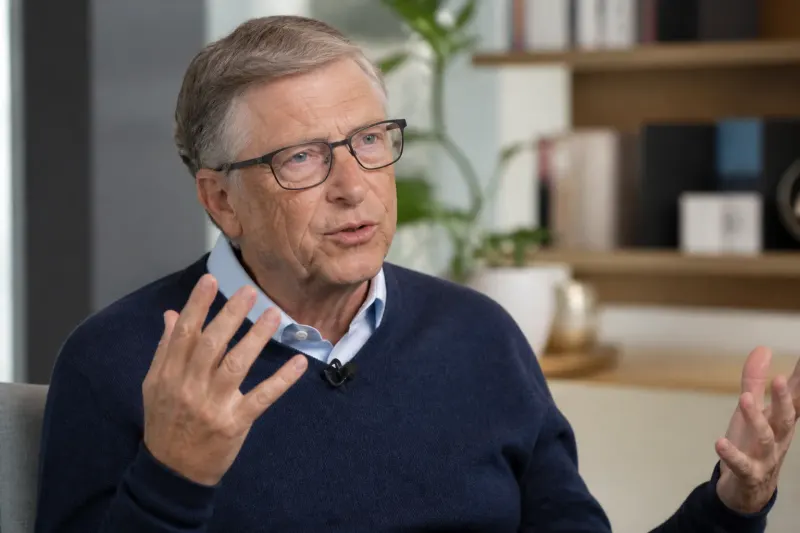
Critics of the White House Accord include tech veterans like Bill Gates, who openly expressed skepticism about the efficacy of self-regulation. He commented, "It’s fair to say that outside of the industry, the awareness of the dangers of AI is extremely low." Gates emphasized that reliance on industry self-regulation is not feasible given the inherent risks associated with these technologies.
His remarks underline the importance of not only innovating in tech but also ensuring that those innovations are accompanied by robust safety measures.
Broader Reactions
The executive order and subsequent regulations have left many in the tech industry scratching their heads. While some are willing to embrace the term change as a marketing strategy, the operational implications seem minimal. Industry insiders observe that the general public and tech community have not widely adopted the term Super Intelligence. Instead, the name change itself may become a footnote in the discourse around AI advancement.
Reactions on social media were equally mixed, with many users mocking the absurdity of the renaming, while others expressed genuine concern about the impact on public perception of AI technologies.
Future of Super Intelligence and Industry Safety
With the accord in place, participants are expected to meet regularly to discuss standards and best practices for the responsible development of Super Intelligence. However, skepticism remains prevalent regarding the industry's commitment to actual safety over profit motives.
As the definition of AI evolves, the implications of this rebranding are still far from clear. The lack of government oversight raises alarm bells for those advocating for responsible AI usage. If the current trajectory holds, companies may prioritize profits over ethical considerations, further complicating the already delicate relationship between technology and regulation.
Key Takeaways
- President Trump's amendment of AI to "Super Intelligence" aims to reflect advancements in technology.
- Industry leaders, including tech giants, have signed the White House Accord on Super Intelligence.
- Critics argue that self-regulation could lead to significant risks without appropriate oversight.
- Bill Gates has publicly warned against relying on the industry to self-regulate.
- The term "Super Intelligence" has not gained traction outside of the political sphere and tech circles.
Conclusion
In light of these developments, the renaming from AI to Super Intelligence is emblematic not only of ongoing technological evolution but also reflects a growing tension between innovation and regulation. As industry leaders navigate this new landscape, the focus will need to shift toward ensuring that ethical considerations are not left behind in the pursuit of profit and growth.
Frequently Asked Questions