
VisionQuest Review: Complex Finale for MCU's Odd Trilogy
VisionQuest brings a unique conclusion to the MCU's trilogy. It explores heavy existential themes while showcasing character depth and impressive production quality.
VisionQuest, the latest entry in the Marvel Cinematic Universe, brings an unusual but compelling conclusion to a trilogy that started with the groundbreaking WandaVision and continued with Agatha All Along. The series centers on Vision, portrayed by Paul Bettany, as he embarks on a complex quest involving themes of existence, identity, and legacy within the ever-expanding Marvel narrative.
The Concept and Storyline
Set several years after the events of WandaVision, VisionQuest explores the life of White Vision, who has adjusted to a new existence, working at a Scottish pub while nurturing a virtual utopia at home. This quirky setting features orphaned Stark AIs including J.A.R.V.I.S., F.R.I.D.A.Y., and even the infamous Ultron, voiced by James Spader. The show dives deep into Vision's relationship with these characters, expanding on the idea of artificial intelligence and its connection to humanity.
The plot thickens when bounty hunter Paladin, played by Todd Stashwick, disrupts Vision's newfound tranquility, revealing the existence of his son, Tommy Shepherd (Ruaridh Mollica). The series follows Vision's journey to rescue his son from the clutches of a mysterious Client while contending with an avian serial killer known as Butcherbird, creating a narrative rich with action and emotional stakes.
Overall Themes and Tonality
VisionQuest is praised for its exploration of heavy existential themes, mirroring the philosophical questions presented in WandaVision. The series tackles the essence of what it means to be alive and self-aware—a fitting narrative arc for Vision, as he grapples with his identity as an AI created not just by Tony Stark and Bruce Banner, but influenced by a multitude of characters. This exploration is accentuated through Vision's interactions with Ultron and other AIs, who represent different facets of his existence.
While the show maintains a lighthearted tone, incorporating humor and whimsical elements, it can occasionally feel dense and overwhelming. The intertwining realities of the virtual world and tangible life lead to moments of confusion, making it more challenging to follow compared to its predecessors. This complexity, however, enriches its narrative, inviting viewers to theorize and engage deeply with the unfolding story.
Character Development
Bettany’s portrayal of Vision is multifaceted, displaying a range of emotions and vulnerabilities previously unexplored in the MCU. The series also highlights the character of Ultron, transforming him into a humorous and somewhat endearing figure. While maintaining his malevolence, Ultron's character dynamics allow for comedic moments alongside darker themes of AI genocide, adding depth to the relationship between him and Vision.
Another standout character is Jocasta, played by T'Nia Miller, who emerges as a crucial player in the story, adding layers to the narrative as she becomes entangled in the unfolding mysteries. The series does well to balance character development with revealing secrets, ensuring viewers are kept intrigued throughout its eight episodes.
Production Quality
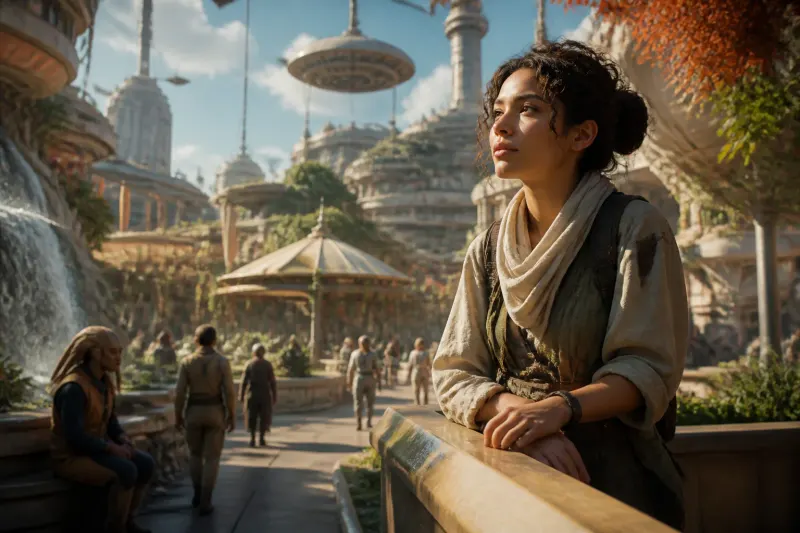
With each episode exceeding one hour, VisionQuest is a visually stunning series that utilizes cutting-edge CGI, especially in depicting Vision's virtual world. The artistic design reflects a novel blend of architectural marvels and animated characters who serve as both companions and amplifiers of Vision’s emotional journey. Although some visual elements may get lost in the execution due to the ambitious scope, the overall aesthetic remains a notable strength of the production.

Critical Reception and Future of the MCU
The critics' reviews of VisionQuest show a mixed response. Many viewers enjoy the intricacies of the plot and the depth of character development, noting it as a worthy addition to the MCU. However, some have criticized its pacing and the apparent disconnection from the larger Marvel narrative, particularly as audiences look forward to the upcoming Avengers: Doomsday. Despite its flaws, it serves as a suitably reflective end to a unique chapter in Marvel television.
Marvel's strategy to release episodes in batches garnered some debate, as it hampers the natural build-up of suspense. Comparing to the episodic releases of WandaVision, the momentum and intrigue might have benefited from a single episode format month by month rather than the two-episode drop. Nonetheless, the series manages to provide satisfactory answers and engaging twists at a steady pace, capturing the audience's attention.
Key Takeaways
- VisionQuest explores deep existential themes and the concept of AI identity.
- The character development of Vision and Ultron provides a mix of humor and darkness.
- The visually stunning production boasts impressive CGI and set designs.
- The series maintains a complex story structure, keeping viewers guessing and speculating.
- Although connected to the MCU, it feels somewhat standalone leading into the next phase.
Conclusion
In summary, VisionQuest effectively concludes its trilogy while tackling compelling themes within the Marvel Cinematic Universe. Its production quality, character depth, and philosophical query make it a remarkable series, albeit one not without its shortcomings. As Marvel steers towards the next mega-event with Avengers: Doomsday, VisionQuest stands as a testament to the unique narrative possibilities within this beloved universe, encapsulating the ongoing journey of its characters even in the face of impending changes.
Frequently Asked Questions