
Wall Street Creates $61 Billion Market for AI-Powered Bonds
Wall Street is developing an innovative bond market worth $61 billion. By structuring AI-driven energy needs into financial products, investors can navigate this lucrative investment landscape.
Introduction to AI and Electricity Costs
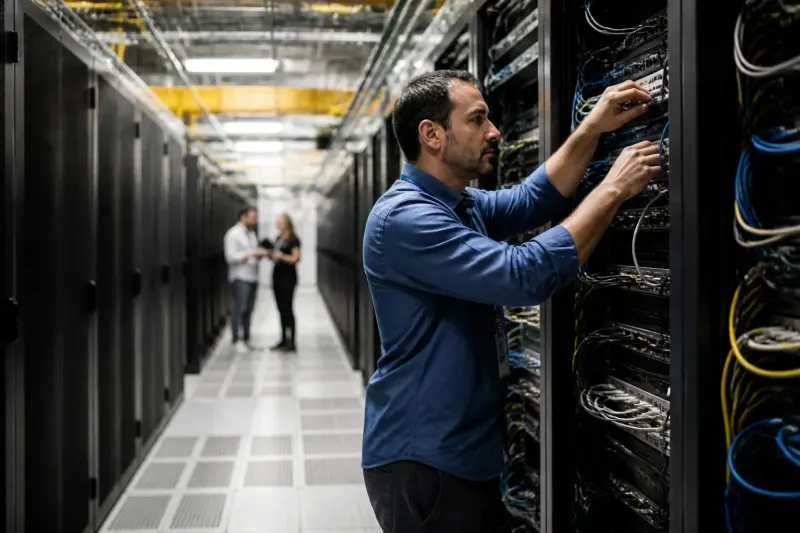
The rise of artificial intelligence (AI) has led to soaring electricity demands, placing significant financial pressure on data centers. Each interaction with AI consumes energy, driven by extensive server operations, cooling requirements, and network connectivity. The exponential growth of AI has turbocharged the costs associated with electricity in these facilities, prompting Wall Street to take a closer look at how they can leverage this increased energy consumption into debt financing.
Emergence of AI-Backed Bonds
Wall Street is now packaging operational data from data centers, tenant contracts, and power infrastructure into bonds, repaid by customer revenues generated from these high-demand facilities. Once a data center is operational with paying customers, its owner can transfer ownership of the facility and its contracts to a separate legal entity that issues bonds. Investors are then repaid from the rents and service fees that data center customers pay after operational costs, including electricity, maintenance, taxes, and insurance, are deducted.
Structure of the Bonds
The bonds mean that electricity becomes a crucial component in determining the financial stability of these investments. Within the cash flow structure, electricity expenditure influences how revenues are calculated. For instance, S&P recently assigned an A(sf) rating to Sabey Data Center Issuer's $475 million notes, backed by real estate and tenant lease payments. This move exemplifies the growing trust and interest in bonds backed by data centers.
Growth of Data-Center Bonds
The data-center securitization market has seen phenomenal growth over recent years. Outstanding securitizations expanded from roughly $4 billion in 2020 to an astounding $61 billion as of July 2026, according to research from the Structured Finance Association based on data provided by Barclays. As AI continues to demand more resources, the potential for further growth in this market seems inevitable.
| Year | Outstanding Data-Center Securitization Value |
|---|---|
| 2020 | $4 billion |
| 2026 | $61 billion |
The Energy Appetite of AI
The energy consumption of U.S. data centers is set to drastically increase, with estimates suggesting they could consume between 521 to 843 terawatt-hours (TWh) by 2030. This projection equals approximately 9.5% to 15.3% of total U.S. electricity use, as reported by the Lawrence Berkeley National Laboratory's 2025 update. The growth outlook for this sector underscores the direct correlation between AI development and energy consumption.
Implications for Investors
For bond investors, these shifting power requirements capture the inherent risk associated with financing long-term securities. While increased demand for AI chips can elevate revenue, it can also necessitate additional investment in power infrastructure and cooling solutions to maintain operational efficiency. This cycle complicates the investment landscape, as ongoing costs can undermine profitability.
Refinancing and Risk Considerations
The transaction structure behind these bonds introduces more complexity. The SEC's detailed handling of tenant revenue after deducting costs means investors need to evaluate two interconnected underwriting tasks: first, the creditworthiness of tenants and, second, the physical capacity and design of the data center itself. If a tenant's operational needs outgrow its physical space, it could jeopardize investor returns.

Market Outlook and Securitization Types
Data centers undergo various financial stages throughout their lifespan, often beginning with construction loans or project finance before transitioning into corporate bonds or private credit. Once operational and generating revenue, owners can refinance through data-center securitizations or commercial mortgage-backed securities. This flexibility allows operators to continually access funding as their facilities mature.
Classification of AI-Backed Bonds
A critical shift occurred on July 29, when the SEC's Office of Structured Finance ruled that certain data-center securitizations did not fall under the Exchange Act definition of asset-backed securities. This interpretation potentially allows issuers to bypass certain obligations tied to traditional asset-backed securities, which may lead to streamlined operations and reduced costs for bond issuers.
Consequences of SEC's Classification
This new legal standing implies that data-center structures could function similarly to real estate financing, allowing investors to maintain their stake even after bond repayments. The classification shift has started to change the purpose and perception of data center bonds in the financial landscape, paving the way for increased adoption and potential for growth in both operational and financing sectors.
Key Takeaways
- Wall Street has built a $61 billion market for bonds backed by AI-demanding data centers.
- U.S. data centers may consume up to 843 terawatt-hours of electricity by 2030.
- Securitizations have grown sharply from $4 billion in 2020 to $61 billion in 2026.
- The SEC's recent ruling allows some data-center bonds to bypass traditional asset-backed security obligations.
- Investors need to balance tenant creditworthiness with ongoing power needs for investment stability.
Conclusion: A Dynamic Investment Landscape
The evolution of AI technology continues to reshape the financial landscape for data centers, turning electricity consumption into a compelling investment narrative. The innovative structuring of bonds not only illustrates Wall Street’s adaptability in servicing evolving sectors but also highlights the growing importance of energy management in maintaining sustainable growth. As AI's influence expands, investors have much to consider regarding making data-center bonds a cornerstone of their portfolios.
Frequently Asked Questions