

Top Cast

Trailer
Synopsis
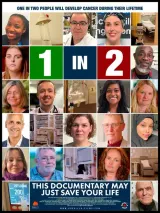
Filmmaker David Wilkinson, diagnosed with cancer for the second time, turns his camera on his own treatment journey. What begins as a personal document expands into an investigation of rising bowel cancer rates among adults under 50 — patients too young for routine screening and, as the film argues, too often dismissed by a medical system calibrated for older demographics.
Through Wilkinson's lens, we meet a cohort of young patients navigating delayed diagnoses, aggressive treatments, and a healthcare infrastructure slow to adapt. Their stories interlock with expert commentary to frame a quiet crisis hiding in plain sight.
1 in 2 Review: A Personal Journey Through a Public Health Crisis
David Wilkinson's 1 in 2 arrives with a sobering statistic baked into its title: nearly half of us will face a cancer diagnosis. The documentary doubles as Wilkinson's second personal confrontation with the disease, lending the film an immediacy that pure reportage often lacks. At 142 minutes, it's a substantial commitment — one that demands patience as it toggles between intimate video diaries and broader investigative threads.
Direction and Structure
Wilkinson wears triple hats as director, writer, and on-screen protagonist, a choice that yields both authenticity and occasional self-indulgence. The film's strongest passages occur when Wilkinson steps back from his own narrative to amplify younger patients — Laura Lee, Amaryllis Roberts, Millie Tanner — whose bowel cancer diagnoses arrived decades before standard screening guidelines would catch them. Their testimonies, delivered with quiet fury, expose a medical blind spot more damning than any statistic. Less effective are the extended sequences of Wilkinson's treatment logistics; while honest, they occasionally blur the line between necessary witnessing and filmmaker's therapy.
Performances and Voices
The cast of "Self" portrayals is uneven by design — these aren't actors but patients, clinicians, and advocates. Dale Vimalachandran and Edwina Forkin bring clinical clarity without jargon, while Slaine Kelly and Iain Macleod humanize the systemic failures. David Burke's segments, though brief, add a necessary historical perspective on screening policy. The film's emotional center remains Wilkinson himself, whose vulnerability is palpable but whose narration sometimes over-explains what the visuals already convey.
Who Should Watch
Viewers seeking a tight, data-driven exposé may find 1 in 2 meandering. Its power lies in accumulation: the steady drumbeat of stories that collectively indict a screening framework built for an earlier demographic reality. Patients, caregivers, and healthcare professionals will find the most value; general audiences should prepare for a film that prioritizes testimony over polish.
Pros
- Unflinching personal access that grounds abstract statistics in lived experience
- Amplifies underrepresented voices: young bowel cancer patients failed by current screening guidelines
- Balances emotional testimony with clinical expertise without sensationalism
- Timely subject matter addressing a documented epidemiological shift
- Wilkinson's dual role as patient and filmmaker creates rare narrative intimacy
Cons
- Runtime feels overextended; tighter editing would sharpen the investigative thread
- Director's narration occasionally over-explains visual evidence already on screen
- Treatment sequences become repetitive, diluting the film's policy-focused second half
- Limited exploration of potential environmental or dietary drivers behind the trend
- Pacing favors accumulation over momentum, risking viewer fatigue
Verdict
1 in 2 is an uneven but vital documentary that transforms personal crisis into public advocacy. Its raw authenticity outweighs its structural flaws, making it essential viewing for anyone touched by early-onset cancer — and a wake-up call for those who aren't.
Reader Rating
Be the first to rate this movie
Write a Review
Sign in to share what you thought — star ratings above need no account.
Frequently Asked
Is 1 in 2 worth watching?
Yes, particularly if you're interested in healthcare policy, patient advocacy, or early-onset cancer trends. The film's personal approach makes complex systemic issues accessible, though its length and pacing may challenge viewers seeking a concise exposé.
What is 1 in 2 about?
The documentary follows filmmaker David Wilkinson through his second cancer diagnosis while investigating a sharp rise in bowel cancer among adults under 50 — patients too young for standard screening and often dismissed by doctors.
Is 1 in 2 suitable for kids?
Not recommended for children. The film contains frank discussions of cancer treatment, mortality, and medical trauma that may be distressing for younger viewers. Parental discretion strongly advised for teens.
Who directed 1 in 2?
David Wilkinson directed, wrote, and stars in the documentary as himself, chronicling his own treatment alongside other patients' stories.
How long is 1 in 2?
The film runs 142 minutes (2 hours 22 minutes).
If you liked this, watch
Movie data provided by TMDB. This product uses the TMDB API but is not endorsed or certified by TMDB.