

Top Cast
Trailer
Synopsis
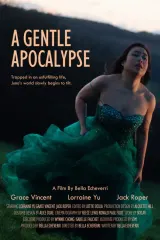
Juno (Lorraine Yu) drifts through a repetitive London existence: a soulless office job, a situationship with Noah (Jack Roper) that refuses to define itself, and a growing sense that adulthood has arrived without the promised instruction manual. When a chance meeting with the free-spirited Sage (Grace Vincent) coincides with a bizarre, inexplicable event in the city, Juno’s perception of her stagnant reality begins to fracture. The film follows her over a compressed timeframe as the boundary between the mundane and the magical blurs, forcing her to confront whether she is the protagonist of her life or merely a background character.
Bella Echeverri’s script leans into magical realism not as spectacle but as externalized metaphor, using a single surreal occurrence to refract Juno’s internal crisis. The narrative avoids exposition, trusting visual storytelling and Yu’s expressive performance to convey the weight of small disappointments. While the premise hints at a transformative journey, the short runtime means the film functions more as a tonal poem than a conventional plot-driven story.
A Gentle Apocalypse: Big Ideas in a Tiny Package
At just nine minutes, A Gentle Apocalypse attempts to condense a quarter-life crisis into a magical realist snapshot. Writer-director Bella Echeverri throws Juno (Lorraine Yu) into a spiral of dead-end work, romantic ambiguity, and creeping isolation, then pivots on a surreal encounter that reframes her reality. The ambition is clear, but the runtime forces compromises that leave both the fantasy and the emotional stakes feeling undercooked.
Direction and Visual Language
Echeverri’s direction shows a keen eye for composition, especially in the mundane office and flat sequences that ground Juno’s dissatisfaction. The shift into fantasy is signaled through subtle color grading and practical effects rather than CGI, a wise choice for a micro-budget production. However, the brevity means the “strange encounter” promised in the synopsis arrives abruptly, with little visual or narrative preparation. The magical realist twist — presumably the film’s hook — feels more like a punctuation mark than a transformation, leaving the audience to infer a thematic resonance that the script hasn’t fully earned.
Performances: Yu Carries the Weight
Lorraine Yu delivers a watchable, internalized performance as Juno, conveying exhaustion and quiet yearning with minimal dialogue. Grace Vincent as Sage and Jack Roper as Noah provide functional support, but their characters exist primarily as reflections of Juno’s internal state rather than fully realized people. Joanna Ackroyd’s Businesswoman is a caricature by design, yet the satire lacks bite because the film never establishes the corporate world sharply enough. The cast does what they can with thin material, but the script doesn’t give them room to breathe.
Story and Pacing: A Sketch, Not a Story
The central flaw is structural: nine minutes is simply insufficient for a coming-of-age arc, a magical realist intervention, and a meaningful resolution. The official overview promises a world that crumbles and a changed perspective, but on screen the crumbling happens off-screen or in montage, and the perspective shift is told rather than shown. The comedy elements are mild, mostly situational, and the fantasy element — while intriguing — serves more as a metaphor than a narrative engine. As a calling card for Echeverri’s voice, it works; as a standalone short, it feels like a proof of concept for a feature that doesn’t yet exist.
Who Will Enjoy This?
Viewers who appreciate experimental short-form storytelling and magical realism on a shoestring may find charm in its ambition. Festival programmers looking for fresh UK voices should take note. General audiences expecting a complete narrative, however, will likely feel the film ends just as it begins to get interesting. The current audience score is unknown, but early festival response suggests curiosity more than enthusiasm.
Pros
- Lorraine Yu's nuanced lead performance
- Inventive low-budget magical realism visuals
- Bella Echeverri's confident tonal control
- Effective use of color grading to signal reality shifts
- Relatable quarter-life crisis core
Cons
- Runtime too short for narrative ambitions
- Supporting characters underdeveloped
- Magical realist twist arrives unearned
- Satirical elements lack sharpness
- Ending feels abrupt rather than resonant
Verdict
A Gentle Apocalypse showcases a distinct directorial voice and a compelling lead performance, but its nine-minute runtime suffocates the very coming-of-age arc and magical realist twist it attempts to deliver. It feels like a promising pilot for a series or feature that hasn't been made yet. Worth a watch for short-film aficionados, but casual viewers may find it slight.
Reader Rating
Be the first to rate this movie
Write a Review
Sign in to share what you thought — star ratings above need no account.
Frequently Asked
Is A Gentle Apocalypse worth watching?
If you enjoy experimental short films and magical realism, yes. As a complete narrative, it may feel incomplete.
What is A Gentle Apocalypse about?
A young woman navigating work, love, and loneliness experiences a surreal event that shifts her perspective, told through magical realism in nine minutes.
Is A Gentle Apocalypse suitable for kids?
Not specifically for children; themes of adult dissatisfaction and surreal imagery may confuse younger viewers. No official certification listed.
Who directed A Gentle Apocalypse?
Bella Echeverri, who also wrote the screenplay.
Where can I watch A Gentle Apocalypse?
As a 2026 UK short film, it may appear on festival circuits or streaming platforms later; check official channels for release info.
Movie data provided by TMDB. This product uses the TMDB API but is not endorsed or certified by TMDB.