
Top Cast
Synopsis
Filmmaker Dicky Bahto constructs a personal and collective portrait of the Assyrian community, weaving together family history, ancient artifacts, and the work of contemporary diaspora artists. Triggered by the destruction of Assyrian antiquities in the Mosul Museum, the film traces a line from the Seyfo genocide to the present, exploring how cultural memory survives — and is rebuilt — through material fragments and living practice.
Blurring the boundaries between documentary, essay film, and collaborative art, A note on the ruins for visitors assembles its story through shards rather than narrative, inviting viewers into an intimate, sometimes opaque act of remembrance and resistance.
A note on the ruins for visitors Review: Fragments of Memory, Weight of History
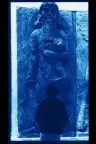
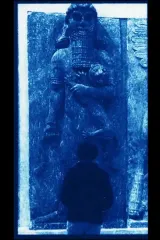
A note on the ruins for visitors arrives as a 69-minute meditation on Assyrian identity, stitched from family archives, ancient artifacts, and diaspora collaborations. Director Dicky Bahto, also on screen, constructs a film that feels less like a documentary and more like a ritual — part elegy, part act of reconstruction. The prompt is visceral: Daesh's destruction of the Mosul Museum artifacts forced a confrontation with the fact that the Seyfo genocide, in Bahto's words, "hadn't ended." That realization powers every frame.
Direction and Form
Bahto rejects linear narrative. The film moves through fragments — shards of pottery, whispered stories, contemporary artists at work — mimicking the very fragmentation of cultural memory it examines. This approach honors the subject but demands patience. At times, the collage feels deliberate and resonant; at others, it drifts into opacity, leaving viewers without enough anchor points. The runtime is brief, yet the density makes it feel longer. Bahto's choice to include himself among the cast blurs author and subject, a bold move that sometimes illuminates, sometimes self-indulgently obscures.
Performances and Presence
The ensemble — largely non-professional, drawn from community and family — brings an unforced authenticity. Esther Elia and Maryam Yousif carry quiet gravity; their moments of direct address feel like testimony rather than performance. Katoosh and the Kingsley family members contribute a lived-in warmth that grounds the more abstract passages. But the film's refusal to identify speakers or contextualize relationships can frustrate. You sense the intimacy, but you're often left outside it.
Who Will Connect
This is not a film for casual viewing. It speaks most directly to diaspora audiences, scholars of cultural memory, and viewers drawn to experimental nonfiction. Its insistence on an "open future" amid ruin is politically and emotionally potent. General audiences may find the lack of conventional structure alienating. The film asks you to assemble meaning from fragments — a request that mirrors its subject, but one not every viewer will accept.
Pros
- Ambitious, personal engagement with Assyrian history and diaspora identity
- Authentic, lived-in presence from non-professional community cast
- Formally daring — structure mirrors the fragmentation of cultural memory
- Politically resonant insistence on continuity amid erasure
Cons
- Opaque structure alienates viewers without prior context
- Minimal identification of speakers or relationships creates distance
- Self-inclusion of director occasionally feels self-indulgent
- Demands high viewer effort for relatively short runtime
Verdict
A note on the ruins for visitors is a courageous, fragmented act of cultural reconstruction that rewards patience but resists accessibility. Essential for viewers invested in diaspora memory and experimental form; challenging for those seeking conventional documentary clarity.
Reader Rating
Be the first to rate this movie
Write a Review
Sign in to share what you thought — star ratings above need no account.
Frequently Asked
Is A note on the ruins for visitors worth watching?
If you're drawn to experimental nonfiction, diaspora studies, or films about cultural memory, yes. It's a challenging but thoughtful work. General audiences may find its fragmentary approach difficult.
What is A note on the ruins for visitors about?
The film explores Assyrian identity and cultural survival through family archives, ancient artifacts, and contemporary diaspora artists, prompted by the destruction of Mosul Museum antiquities and the ongoing legacy of the Seyfo genocide.
Is A note on the ruins for visitors suitable for kids?
No. The film deals with genocide, cultural destruction, and complex historical trauma in an experimental format unsuitable for children.
How long is A note on the ruins for visitors?
The film runs 69 minutes.
Who directed A note on the ruins for visitors?
Dicky Bahto directed and appears in the film.
If you liked this, watch
Movie data provided by TMDB. This product uses the TMDB API but is not endorsed or certified by TMDB.