

Top Cast

Trailer
Synopsis
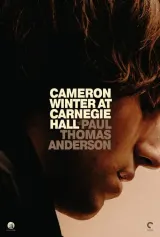
Paul Thomas Anderson directs this concert documentary capturing Cameron Winter — frontman of the Brooklyn rock band Geese — in a sold-out solo performance at New York's historic Carnegie Hall. The film presents the full set list in sequence, blending Geese favorites with newer solo material arranged for an expanded ensemble including strings and brass.
Without interviews, backstage footage, or explanatory narration, the documentary relies entirely on the performance itself: Winter's intense stage presence, the band's intricate interplay, and the venue's ornate architecture. Anderson's signature visual style — long takes, precise framing, a focus on physical process — transforms the concert into a self-contained cinematic experience that runs a concise 75 minutes.
Cameron Winter at Carnegie Hall Review: PTA Turns a Concert Into Cinema
When Cameron Winter at Carnegie Hall was announced, the pairing felt inevitable: Paul Thomas Anderson, a filmmaker obsessed with performance and American eccentricity, training his lens on a frontman whose songs already play like short stories. The result is a 75-minute concert documentary that refuses to settle for mere documentation. Anderson doesn't just record the show; he directs it, shaping a set list into a narrative arc with the same meticulous control he brings to Phantom Thread or The Master.
A Visual Language for Live Music
Anderson and cinematographer Michael Bauman (a frequent collaborator) eschew the standard multi-cam broadcast grammar. Instead, they favor long, unbroken takes that drift between Winter's face, his hands on the guitar, and the ornate architecture of Carnegie Hall itself. The hall becomes a character — its gilt edges and velvet seats reflecting the music's tension between grandeur and intimacy. One sequence, a single take through "Nation" that moves from extreme close-up to wide balcony shot without a cut, demonstrates how Anderson translates musical dynamics into visual ones. It's the kind of formal confidence that separates a concert film from a filmed concert.
Winter at the Center
Cameron Winter proves a compelling subject. His stage presence is restless, intellectual, slightly alien — he sings with his eyes closed, body coiled, as if each song is an exorcism. The set draws heavily from Geese's catalog ("Low Era," "Disco," "3D") alongside newer solo material, arranged for an expanded ensemble that includes strings and brass. The arrangements breathe new life into familiar songs; "First World Curse" swells into something orchestral and mournful, while "Cowboy Nudes" gains a jagged, almost free-jazz edge. Winter's between-song banter is minimal, cryptic, occasionally funny — he treats the audience like collaborators in a private joke.
The Limits of the Form
For all its craft, Cameron Winter at Carnegie Hall cannot fully escape the constraints of its genre. The runtime is brisk — perhaps too brisk — leaving little room for context about Winter's trajectory from Brooklyn DIY venues to this stage. We glimpse the band's chemistry in rehearsal snippets during the credits, but the film offers no interviews, no backstage access, no narrative scaffolding beyond the performance itself. That purity is admirable, but it also means the film lives or dies by the music. Viewers unfamiliar with Winter's work may find the experience hermetic, impressive but impenetrable. The sound mix, while pristine, occasionally buries lyrics under the venue's natural reverb, a choice that favors atmosphere over intelligibility.
Who Should Watch
Fans of Anderson's recent work (Licorice Pizza, the HAIM videos) will recognize his fingerprints: the tracking shots, the obsession with process, the way he frames artists as both masters and servants of their craft. Geese devotees get a definitive live document. For the curious newcomer, it's a litmus test — if the opening minutes of "Blender" don't hook you, nothing else will. This isn't a gateway drug; it's a victory lap captured by a filmmaker who understands that the best concert films don't just show you what happened. They make you feel like you were the only one in the room.
Pros
- Anderson's distinctive visual language transforms a concert into cinema
- Winter's magnetic, idiosyncratic performance holds the frame
- Inventive arrangements breathe new life into familiar songs
- Concise 75-minute runtime respects the viewer's time
- Carnegie Hall's architecture used as expressive visual element
Cons
- No context, interviews, or narrative scaffolding for newcomers
- Lyrics occasionally buried in the venue's natural reverb
- Brevity leaves Winter's artistic trajectory unexplored
- Hermetic approach risks feeling impenetrable to non-fans
- Credits-only rehearsal glimpses feel like a missed opportunity
Verdict
A formally assured concert film that elevates its source material through pure directorial craft, though its hermetic approach may alienate viewers unfamiliar with Winter's music. Essential for fans; a striking but opaque curiosity for everyone else.
Reader Rating
Be the first to rate this movie
Write a Review
Sign in to share what you thought — star ratings above need no account.
Frequently Asked
Is Cameron Winter at Carnegie Hall worth watching?
Yes if you're a fan of Paul Thomas Anderson's recent work or Cameron Winter/Geese. The filmmaking is exceptional, but the film assumes familiarity with the music and offers no entry point for newcomers.
What is Cameron Winter at Carnegie Hall about?
It's a concert documentary capturing Cameron Winter's sold-out solo performance at Carnegie Hall, directed by Paul Thomas Anderson. The film presents the full show without interviews or backstory — just the music, the performance, and the venue.
Is Cameron Winter at Carnegie Hall suitable for kids?
The film has no official rating but contains no explicit content beyond occasional mild language in lyrics. It's likely fine for teens, though younger kids may find the abstract, music-only format unengaging.
How long is Cameron Winter at Carnegie Hall?
The runtime is 75 minutes — notably concise for a concert film, presenting the full set without filler.
Do I need to know Geese to enjoy this film?
It helps significantly. The film provides no context about Winter's background or the songs' meanings. Viewers unfamiliar with the material may admire the craft but feel locked out of the emotional core.
If you liked this, watch
Movie data provided by TMDB. This product uses the TMDB API but is not endorsed or certified by TMDB.