

Top Cast

Trailer
Synopsis
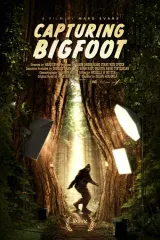
In 1967, Roger Patterson and Bob Gimlin filmed a minute of shaky 16mm footage in Northern California’s Bluff Creek—an image of a towering, hairy biped that became the cornerstone of Bigfoot lore. Nearly six decades later, a previously unknown reel surfaces from a family safe, allegedly shot the same day. Director Marq Evans tracks down the surviving witnesses, including Patterson’s son Clint, Gimlin himself, and the man who claimed to wear the suit, Bob Heironimus, to hear their conflicting accounts of what really happened in those woods.
Interwoven with commentary from costume specialists, anthropologists, and longtime researchers, the film uses the “new” footage as a narrative spine to revisit the most analyzed cryptozoological evidence in history. The documentary does not claim to solve the mystery; instead, it layers testimony upon testimony, letting the viewer weigh the credibility of each voice against the grainy frames that started it all.
Capturing Bigfoot: A New Lens on an Old Legend
Capturing Bigfoot arrives with a tantalizing hook: a supposedly lost reel of 16mm film, locked away for decades, that promises to rewrite the history of the most famous cryptid footage ever shot. Director Marq Evans assembles the living principals of the 1967 Patterson-Gimlin encounter—including Roger Patterson’s son Clint, the other witness Bob Gimlin, and the man who long claimed to be the creature in the suit, Bob Heironimus—alongside analysts like costume expert Bill Munns and anthropologist Jeffrey Meldrum. The result is a documentary that feels less like an investigation and more like a family reunion where everyone has a different version of the same story.
Direction: Between Reverence and Rigor
Evans, who co-wrote with Tamir Ardon and Michelle M. Witten, clearly has unprecedented access. The film’s strength lies in its willingness to put conflicting accounts side by side without heavy-handed narration. Yet the direction occasionally slips into hagiography, treating the Patterson legacy with a tenderness that blunts critical scrutiny. The “discovered reel” framing device is effective as a narrative engine, but the film never fully interrogates the chain of custody or the motivations of those who held it. For a mystery built on visual evidence, the documentary is strangely reluctant to subject the new footage to the same frame-by-frame forensic gaze applied to the original. The cinematography of the modern interviews is clean but unremarkable; the reenactments of 1967 Bluff Creek are serviceable but lack the gritty texture of the Patterson film itself.
The Witnesses: Compelling, Contradictory, Human
The cast of real-life characters is the film’s undeniable asset. Bob Gimlin, now in his 90s, remains steadfast and sympathetic; Clint Patterson carries his father’s torch with quiet conviction; Bob Heironimus, the self-confessed hoaxer, is given ample screen time to reiterate his claim, though his credibility wavers under cross-examination. Experts like Munns and Meldrum provide technical ballast, but the film leans heavily on their reputations rather than new analysis. Teresa Brooks and Sandy Collier add local color, while Larry Lund represents the longtime researcher perspective. The ensemble feels authentic, but the documentary rarely pushes past their rehearsed talking points. A tighter edit might have forced more direct confrontation between the opposing narratives.
Story and Pacing: A Mystery That Resists Resolution
At 103 minutes, Capturing Bigfoot moves briskly, toggling between 1967 reenactments, archival interviews, and present-day sit-downs. The mystery structure works—each revelation about the safe, the film’s provenance, the conflicting testimonies—pulls the viewer forward. Yet the third act settles for ambiguity rather than synthesis. The film poses the central question (hoax or history?) but declines to weigh the evidence decisively, leaving the audience to do the work. That may be honest to the subject, but it can feel like a missed opportunity for a documentary positioned as a “game-changer.” The score is functional, never intrusive, but also never memorable.
Who will enjoy it? Believers will find validation; skeptics will find familiar gaps. Casual viewers intrigued by the Patterson-Gimlin film’s cultural footprint will appreciate the access. Those hoping for a definitive scientific verdict should look elsewhere. Capturing Bigfoot is a worthwhile time capsule for cryptozoology enthusiasts, but it stops short of the rigorous re-examination its marketing suggests.
Pros
- Unprecedented gathering of primary witnesses (Gimlin, Heironimus, Patterson’s son) on camera
- The “lost reel” hook provides a compelling narrative structure
- Expert commentary from Munns and Meldrum adds technical credibility
- Efficient 103-minute runtime avoids bloat
- Balanced presentation of hoax vs. genuine encounter arguments
Cons
- Reluctant to apply rigorous forensic analysis to the newly revealed footage
- Direction occasionally drifts into hagiography of the Patterson legacy
- Third act settles for ambiguity rather than evidence-based conclusion
- Reenactments lack the visceral quality of the original 1967 film
- Fails to press witnesses on inconsistencies in their decades-later recollections
Verdict
Capturing Bigfoot offers unprecedented access to the key figures behind the Patterson-Gimlin film, but its reverence for the subject undermines the critical distance needed for a definitive assessment. Worth watching for the voices alone, less so for answers.
Reader Rating
Be the first to rate this movie
Write a Review
Sign in to share what you thought — star ratings above need no account.
Frequently Asked
Is Capturing Bigfoot worth watching?
If you’re fascinated by the Patterson-Gimlin film and want to hear the surviving principals tell their stories in their own words, yes. If you expect a scientific breakthrough or definitive proof, you’ll likely be disappointed.
What is Capturing Bigfoot about?
The documentary centers on a recently discovered reel of 16mm film from the same 1967 Bluff Creek expedition that produced the famous Patterson-Gimlin Bigfoot footage. It assembles the key witnesses and experts to re-examine the event through this new material.
Is Capturing Bigfoot suitable for kids?
The film contains no graphic violence, profanity, or sexual content. Its talk-heavy, investigative tone may bore younger viewers, but it’s generally family-friendly for ages 10+ with an interest in mysteries or nature.
Does Capturing Bigfoot prove Bigfoot exists?
No. The documentary presents conflicting testimonies and the new footage without reaching a conclusion. It frames the mystery rather than resolving it.
Who directed Capturing Bigfoot?
Marq Evans directed and co-wrote the film alongside Tamir Ardon and Michelle M. Witten.
If you liked this, watch
Movie data provided by TMDB. This product uses the TMDB API but is not endorsed or certified by TMDB.