

Top Cast
Synopsis
Filmmaker Marinthia Gutiérrez Velazco traces her astrocartography line of Venus and Midheaven through Los Angeles, mapping a birth-chart coordinate tied to creativity and harmony. Across the city's geography, multiple versions of herself emerge — each inhabiting a different relationship to cinema, place, and identity — while a shared fate looms: the impending death of her grandmother.
Blending self-portrait, essay film, and esoteric inquiry, the 16-minute work moves associatively between performers embodying the filmmaker's fractured selves, using the city's light, architecture, and domestic spaces as both map and territory for an intimate reckoning with lineage and loss.
Cartografía Review: An Ambitious Astrocartographic Self-Portrait in 16 Minutes
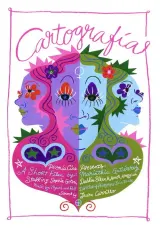
Cartografía arrives as a 16-minute experimental short from writer-director Marinthia Gutiérrez Velazco, blending autobiographical inquiry with esoteric geography. The premise is arresting: the filmmaker maps her astrocartography line of Venus and Midheaven across Los Angeles, using the city as a canvas for multiple versions of herself — each with a distinct relationship to cinema and place — all converging on the inevitable loss of her grandmother. On paper, it's a rich conceptual framework. In practice, the film's success hinges entirely on whether its brief runtime can sustain such metaphysical weight without collapsing into opacity.
Direction and Visual Language
Gutiérrez Velazco wears her influences on her sleeve — there are echoes of Maya Deren's psychic choreography and Agnès Varda's essayistic warmth — but her voice feels distinctly her own. The cinematography treats Los Angeles not as backdrop but as collaborator: light fracturing through palm fronds, freeway overpasses as celestial meridians, domestic interiors charged with planetary significance. At its best, the film achieves a hypnotic, almost ritualistic rhythm. At its worst, the symbolism threatens to suffocate the emotional core. The director's choice to fragment her own presence across multiple performers (Sophie Gorai, Amor Amezcua, Dahlia Elkan, and others) is conceptually sound but occasionally disorienting in a work this short; we barely settle into one incarnation before shifting to the next.
Performances and Emotional Anchor
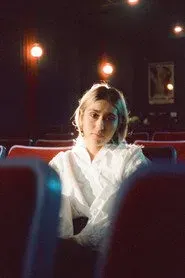
The ensemble carries an impossible task: embodying facets of a single consciousness while maintaining individuality. Gorai and Amezcua stand out, grounding their segments in a tactile grief that the more abstract passages lack. Lidia Beltran and Angélica Garcia bring a quiet gravitas to the grandmother's presence — felt more in absence than appearance. The film's emotional truth lives in these performers' faces, not in its astrological schematics. When the conceptual apparatus recedes, Cartografía breathes.
Who Will Connect With This Work
Viewers drawn to experimental autobiography — think The Beaches of Agnès compressed into a dream logic — will find much to unpack. Those expecting narrative coherence or conventional character arcs should look elsewhere. The film demands a specific mode of attention: associative, patient, willing to sit with ambiguity. Its 16-minute length is both a constraint and a mercy; a feature version might have exhausted its central conceit.
Pros
- Striking visual language that transforms Los Angeles into a psychic landscape
- Strong ensemble performances anchoring abstract concepts in lived grief
- Ambitious fusion of astrology, autobiography, and experimental form
- Hypnotic rhythm at its best passages — genuinely transportive
- Clear authorial voice from a promising new filmmaker
Cons
- Runtime too brief to fully develop its multiplicity of selves
- Astrological framework occasionally overwhelms emotional accessibility
- Fragmented structure can feel disorienting rather than revelatory
- Some symbolic gestures read as self-indulgent rather than earned
- Limited rewatch value for audiences outside experimental cinema circles
Verdict
Cartografía is a bold, conceptually dense experiment that rewards patience but struggles to fully integrate its astrological framework with its emotional core in just 16 minutes. Worth seeking out for fans of avant-garde autobiography, less so for viewers wanting narrative clarity.
Reader Rating
Be the first to rate this movie
Write a Review
Sign in to share what you thought — star ratings above need no account.
Frequently Asked
Is Cartografía worth watching?
If you enjoy experimental shorts that blend autobiography with metaphysical inquiry, yes. If you prefer conventional storytelling or clear narrative arcs, likely not.
What is Cartografía about?
A filmmaker maps her astrocartography line of Venus and Midheaven across Los Angeles, exploring multiple versions of herself while confronting her grandmother's impending death.
Is Cartografía suitable for kids?
No. The film's abstract structure, mature themes of grief, and experimental form make it inappropriate for children.
How long is Cartografía?
16 minutes.
Who directed Cartografía?
Marinthia Gutiérrez Velazco, who also wrote the film.
If you liked this, watch
Movie data provided by TMDB. This product uses the TMDB API but is not endorsed or certified by TMDB.