

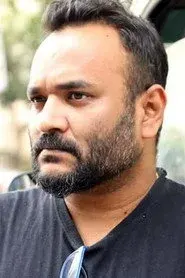
Top Cast


Synopsis
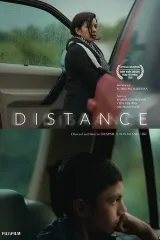
Ambika (Rajshri Deshpande) drives her late best friend’s 13-year-old son, Dhruv, back to boarding school after his father’s sudden death. The journey is already fraught with the boy’s unexplained hostility toward her. When Ambika’s careless driving accidentally destroys Dhruv’s prized windmill science project, the tension boils over, forcing a confrontation that exposes a painful secret binding them both.
Set almost entirely within the confines of a moving car, the short drama uses the road trip as a pressure chamber for grief, guilt, and the words left unsaid between two people bound by loss and a history neither can escape.
Distance (2026) Review: A Compact Drama of Grief and Guilt
Distance (2026) arrives as a 26-minute Indian drama that attempts to compress a lifetime of grief, guilt, and unspoken resentment into a single car ride. Director Swapnil S. Sonawane chooses a pressure-cooker setting — a confined vehicle, two wounded people, and a broken windmill project that serves as a fragile metaphor for a shattered equilibrium. The premise is promising, but the film’s brevity becomes both its defining constraint and its most persistent frustration.
Direction and Pacing in a Tight Frame
Sonawane demonstrates a clear visual sensibility: the passing landscape mirrors the characters’ internal turbulence, and the camera lingers on telling details — a white-knuckled grip on the steering wheel, the shattered blades of the windmill, the boy’s refusal to meet Ambika’s eyes. Yet 26 minutes leaves almost no room for breathing space. Scenes that demand silence to accumulate weight are rushed toward the next plot beat. The tonal shift from strained civility to explosive confrontation feels earned in concept but abrupt in execution, as if the film is sprinting toward a climax it hasn’t fully built the staircase for.
Performances Carry the Weight
Rajshri Deshpande, as Ambika, does heavy lifting with minimal dialogue. Her portrayal of a woman navigating someone else’s grief while carrying her own buried culpability is nuanced and restrained — a masterclass in saying everything while saying little. Archana Patel and Vijay Maurya, in smaller orbits, provide credible texture, but the film lives or dies by the central dynamic. The young actor playing Dhruv (uncredited in available materials) holds his own against Deshpande, conveying a volatile mix of adolescent rage and raw vulnerability. When the script finally forces them into direct confrontation, their chemistry crackles.
Story and Emotional Resonance
The narrative hook — a careless driving error destroys a grieving boy’s science project, unlocking a “painful shared secret” — is structurally sound. The windmill functions as a neat symbol: fragile, engineered, destroyed by the very person meant to protect its maker. However, the secret itself, when revealed, leans toward melodrama rather than the quiet devastation the film’s earlier moments suggest. The screenplay (writer uncredited) hints at richer layers — Ambika’s relationship with the deceased father, Dhruv’s boarding-school isolation — but never has the runtime to excavate them. What remains is a sketch of a deeper story, moving in its best beats but ultimately incomplete.
Who Should Watch
Viewers who appreciate concise, performance-driven chamber pieces will find much to admire. Fans of Deshpande’s work in Sacred Games or Trial by Fire will recognize her gravitational pull. But those expecting a fully realized emotional arc or a satisfying resolution may feel shortchanged. Distance feels like a proof-of-concept for a feature — or a calling card for its director — more than a standalone statement.
Pros
- Rajshri Deshpande delivers a powerful, restrained lead performance
- Effective use of confined setting and visual metaphors (the windmill)
- Atmospheric tension built through silence and subtle gestures
- Promising directorial sensibility from Swapnil S. Sonawane
Cons
- Runtime too short to fully develop characters or the central secret
- Climactic revelation leans into melodrama over earned emotional payoff
- Supporting characters remain underwritten sketches
- Pacing rushes key emotional beats, denying them resonance
Verdict
Distance (2026) showcases strong performances and a keen visual eye, but its 26-minute runtime prevents the story from achieving the emotional depth its premise deserves. Worth watching for Rajshri Deshpande’s magnetic presence, yet it feels like a fragment of a larger, richer film.
Reader Rating
Be the first to rate this movie
Write a Review
Sign in to share what you thought — star ratings above need no account.
Frequently Asked
Is Distance (2026) worth watching?
Yes, if you appreciate short-form, performance-driven dramas and Rajshri Deshpande’s work. It’s a well-acted, visually assured piece that feels incomplete due to its brevity.
What is Distance (2026) about?
A woman drives her deceased best friend’s teenage son to boarding school; a car accident destroys his science project, triggering a confrontation that reveals a shared secret from the past.
Is Distance (2026) suitable for kids?
The film deals with grief, guilt, and a mature secret — likely inappropriate for young children. Teens and up may engage with its themes, but parental discretion is advised.
How long is Distance (2026)?
26 minutes. It is a short theatrical film, not a feature-length movie.
Who directed Distance (2026)?
Swapnil S. Sonawane directed the film. The writer is not officially credited in available records.
If you liked this, watch
Movie data provided by TMDB. This product uses the TMDB API but is not endorsed or certified by TMDB.