

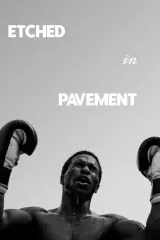
Top Cast

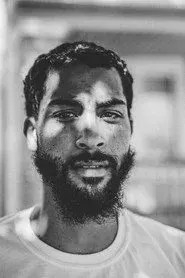

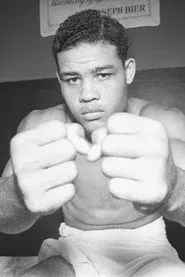


Trailer
Synopsis
In a neglected corner of Detroit, two young men — Dwane Taylor and Michael Futrell — navigate the world of youth combat sports and professional boxing while building a grassroots movement called Guns Down, Gloves Up. Over four years, the film follows their intertwined paths as they confront fatherhood, personal loss, and the legacy of family members who fought before them, offering an intimate look at a community caught between violence and the search for purpose.
Etched In Pavement Review: A Long-Form Look at Detroit's Fighting Spirit
John Sippel's Etched In Pavement arrives as a documentary that earns its runtime through sheer persistence. Filmed over four years in a Detroit neighborhood where boxing gyms double as community centers, the film tracks Dwane Taylor and Michael Futrell as they move from youth combat sports into professional rings and, eventually, into the organizers of Guns Down, Gloves Up — a street-level initiative that tries to reroute conflict into controlled sparring. The ambition is clear: to show how violence and purpose can coexist in the same breath, and how legacy weighs on men trying to father the next generation while still fighting their own pasts.
Direction and Scope
Sippel, who also writes, adopts an observational rhythm that rarely forces narrative arcs. The camera lingers in gyms, living rooms, and corner-store parking lots, letting conversations unfold without heavy-handed narration. That patience pays off in moments — a sparring session that turns into a therapy circle, a quiet exchange between Futrell and his son about fear — but it also means the film occasionally drifts. The four-year span is both a strength and a structural liability; we see growth, but the through-line sometimes feels more chronological than thematic. Sippel trusts his subjects to carry the weight, and they mostly do, yet a tighter edit might have sharpened the emotional stakes.
Performances and Presence
The cast is the film's bedrock. Taylor and Futrell are not performing; they are simply living, and that authenticity carries scenes that a scripted drama could only mimic. The inclusion of the Barrow family — Joe Louis's descendants — adds a historical gravity that the film wisely doesn't over-explain. Joyce Barrow-Henderson and Joe Louis Barrow Jr. provide context without becoming talking heads. Ozvaldo Rivera and Julio Hernandez round out the ensemble as fellow fighters and mentors, their faces etched with the same mixture of pride and weariness. If there's a flaw, it's that the film's intimacy sometimes blurs into insularity; we get little sense of the wider systems (police, schools, city policy) that shape these men's choices.
Story and Themes
The central tension — violence as both a trap and a language — is handled with nuance. Guns Down, Gloves Up is presented not as a miracle cure but as a fragile, daily negotiation. Fatherhood emerges as the quieter, more devastating thread: both men grapple with what they owe their children versus what the ring demands. The documentary avoids the "sports movie" redemption arc; losses aren't always lessons, and victories don't guarantee stability. That honesty is refreshing, even when the pacing lags in the second act.
Who Should Watch
Viewers drawn to character-driven, long-form documentaries like Minding the Gap or The Interrupters will find much to admire. Boxing aficionados get technical detail without fetishization. Those seeking a tight, issue-driven polemic may feel the film's refusal to prescribe solutions is a cop-out; it's more portrait than argument.
Pros
- Extraordinary four-year access yields genuine intimacy
- Taylor and Futrell are compelling, unguarded presences
- Avoids redemption-cliché tropes in favor of messy realism
- Historical context via the Barrow family adds depth
- Guns Down, Gloves Up scenes capture grassroots organizing at ground level
Cons
- Pacing drags in the middle third; chronological structure feels loose
- Limited examination of systemic forces beyond the gym
- Occasional insularity — few voices outside the immediate circle
- Thematic threads (legacy, fatherhood, policy) sometimes compete rather than converge
- May feel too diffuse for viewers wanting a clear argument or call to action
Verdict
Etched In Pavement is a patient, authentic portrait that respects its subjects' complexity, even when its observational approach sacrifices narrative momentum. Worth watching for its rare, unvarnished access and the quiet power of its central relationships.
Reader Rating
Be the first to rate this movie
Write a Review
Sign in to share what you thought — star ratings above need no account.
Frequently Asked
Is Etched In Pavement worth watching?
If you appreciate character-driven documentaries that prioritize immersion over exposition, yes. It offers rare, long-term access to a community using boxing as both survival tool and social glue, though its loose structure may test viewers wanting a tighter narrative.
What is Etched In Pavement about?
The film follows Detroit fighters Dwane Taylor and Michael Futrell over four years as they move through youth boxing, professional careers, and the creation of Guns Down, Gloves Up — a street-level program that channels conflict into supervised sparring — while grappling with fatherhood, loss, and family legacy.
Is Etched In Pavement suitable for kids?
The film is unrated (NR) and contains scenes of boxing violence, strong language, and mature themes around gun violence and grief. Parental discretion is advised; it's best for older teens and adults.
Who directed Etched In Pavement?
John Sippel directed and wrote the documentary, marking his feature debut after years of short-form and commercial work.
How long is Etched In Pavement?
The runtime is 91 minutes.
If you liked this, watch
Movie data provided by TMDB. This product uses the TMDB API but is not endorsed or certified by TMDB.