

Top Cast

Synopsis
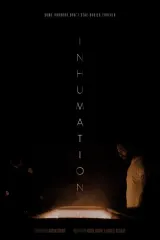
After being declared dead by medical professionals, Edward (Gabriel Rosales) awakens on an autopsy table — victim of a rare condition that mimics death with terrifying accuracy. Traumatized by the experience and dismissed by the system that nearly buried him alive, he becomes obsessed with ensuring his next death is permanent. With the help of Victoria (Sherri Eakin), a woman from his past, Edward embarks on a desperate, morally fraught mission to confront his mortality on his own terms.
As the line between medical anomaly and something more sinister blurs, the film explores how far a person will go to reclaim agency over their own ending.
Inhumation Review: A Short Burial with Long Shadows
Austin Gorski's Inhumation arrives as a 15-minute genre hybrid that punches above its weight class, blending medical horror with existential dread. The premise — a man pronounced dead prematurely due to a rare condition — offers fertile ground for body horror and psychological unraveling, and Gorski largely respects the intelligence of his audience by refusing to overexplain. The film opens in sterile clinical spaces before descending into something far more personal, using its constrained runtime to create a pressure-cooker atmosphere rather than a rushed sketch.
Direction & Atmosphere
Gorski demonstrates a keen eye for clinical unease. Early scenes in the morgue and examination room are lit with a cold precision that makes the protagonist's awakening feel like a violation of natural law. The sound design deserves particular praise: a low-frequency hum persists beneath dialogue, suggesting both medical machinery and something more primal. However, the short format forces compromises. Transitions between the hospital, Edward's home, and the film's final location occur with jarring speed, leaving little room for the dread to breathe. A few more seconds of silence in key moments would have amplified the horror considerably.
Performances & Character Work
Gabriel Rosales carries the film almost entirely on his shoulders as Edward, and he understands the assignment. His portrayal of a man confronting his own mistaken obituary avoids melodrama; instead, he plays the terror with a quiet desperation that feels earned. Sherri Eakin's Victoria serves as both anchor and enigma — her limited screen time hints at a shared history the script only gestures toward. The chemistry between them suggests a richer backstory than 15 minutes allows, which is both a compliment to the actors and a critique of the writing's economy.
Story & Who Will Enjoy It
The narrative's central tension — Edward's determination to "put his fears to rest" — functions as both literal and metaphorical quest. The science-fiction element (the rare condition) is introduced efficiently but never fully explored, leaving viewers to decide whether it's a metaphor for catalepsy, a commentary on medical fallibility, or something more supernatural. This ambiguity will delight fans of The Twilight Zone-style speculative fiction but frustrate those wanting concrete rules. The ending lands with a thud rather than a shock, opting for thematic resonance over narrative closure. Horror purists seeking gore or jump scares should look elsewhere; this is horror of the philosophical variety, closer to The Vanishing than Saw.
Pros
- Unique premise exploring rare medical condition with horror sensibility
- Strong lead performance by Gabriel Rosales conveying quiet desperation
- Effective atmospheric tension through sound design and clinical lighting
- Ambitious genre-blending for a micro-budget short film
- Thought-provoking themes of mortality, agency, and medical fallibility
Cons
- 15-minute runtime severely limits character and world development
- Sci-fi elements introduced but never fully explored or explained
- Pacing rushes critical transitions, undermining dread buildup
- Limited budget visible in production design and location scope
- Narrative ambiguity may frustrate viewers wanting concrete resolution
Verdict
Inhumation is an ambitious, well-acted short that suffers from its own brevity — its ideas deserve more room to breathe, but what's here suggests genuine talent behind the camera. Worth a watch for fans of cerebral horror, provided you adjust expectations for a 15-minute runtime.
Reader Rating
Be the first to rate this movie
Write a Review
Sign in to share what you thought — star ratings above need no account.
Frequently Asked
Is Inhumation worth watching?
If you enjoy cerebral, low-budget horror shorts with strong performances and don't mind ambiguous endings, yes. It's a calling card film that shows promise despite runtime constraints.
What is Inhumation about?
A man with a rare condition that mimics death is mistakenly pronounced dead, awakens during his own autopsy, and becomes obsessed with ensuring his next death is permanent — enlisting help from a woman in his past.
Is Inhumation suitable for kids?
No. The film deals with disturbing medical horror themes, autopsy imagery, and existential dread. It is unrated but clearly intended for mature audiences.
How long is Inhumation?
15 minutes. It is a short film, not a feature-length movie.
Where can I watch Inhumation?
As a 2026 theatrical short, festival screenings and limited theatrical runs are the most likely current availability. Check the film's official channels or festival circuits for viewing options.
If you liked this, watch
Movie data provided by TMDB. This product uses the TMDB API but is not endorsed or certified by TMDB.