


Top Cast

Giovanni Tortorici
Director
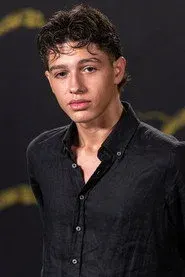
Salvatore Gallina
Giulio

Rachele Testagrossa
Ketty

Monica Bellucci
Madre di Giulio

Davide Cirri
Professore Italiano
Rocco Sanfilippo
Alberto
Anita Teresi
Rachel
Anita Palumbo
Compagni di classe Giulio
Martina Raccuglia
Compagni di classe Giulio
Irene Purpura
Compagni di classe Giulio
Miriam Ciriminna
Compagni di classe Giulio
Giulio Amico
Alessio
Synopsis
In Palermo, 2012, 16-year-old Giulio (Salvatore Gallina) drifts through a listless summer, disengaged from school and uncertain about his future. His routine shifts when he meets Ketty (Rachele Testagrossa), a more self-assured peer who seems to navigate adolescence with a confidence he lacks. Their tentative connection unfolds against a backdrop of cramped apartments, sunlit streets, and the quiet pressures of family — particularly Giulio’s mother (Monica Bellucci), whose presence looms in brief, charged moments. The film follows their intersecting paths without forcing dramatic confrontations, instead capturing the texture of a specific time and place where small choices feel monumental and the path forward remains unclear.
Ketticè (2026): A Quiet Portrait of Adolescent Drift
Ketticè (2026) arrives as a modest Italian-French drama that trusts silence more than spectacle. Writer-director Giovanni Tortorici sets his coming-of-age story in Palermo, 2012, following Giulio (Salvatore Gallina), a 16-year-old who drifts through school and summer with a palpable disaffection. The film’s 107-minute runtime feels deliberate, almost languid, mirroring its protagonist’s inertia. Whether that patience rewards the viewer depends largely on tolerance for a narrative that refuses conventional arcs.
Direction and Atmosphere
Tortorici captures Palermo’s sun-bleached streets and cramped apartments with a documentary-like intimacy. Handheld camerawork and natural light ground the film in a specific socio-economic texture — peeling plaster, distant traffic, the hum of a television in another room. There’s a refreshing absence of stylistic flourishes; the director lets scenes breathe, often holding on a face after dialogue ends. However, this restraint occasionally slips into inertia. Long stretches pass without discernible dramatic momentum, and the visual palette, while authentic, rarely transcends its own modesty. The film feels like a student thesis that earned a theatrical release — competent, observant, but lacking a distinct directorial voice.
Performances: Naturalism Over Charisma
The young cast carries the film’s naturalistic ambition. Salvatore Gallina portrays Giulio with a convincing blankness — shoulders slumped, eyes half-lidded — that reads as genuine teenage apathy rather than actorly choice. Rachele Testagrossa as Ketty provides a necessary counterweight; her assuredness feels earned, not scripted. Monica Bellucci, as Giulio’s mother, appears in only a handful of scenes but brings gravitas to a role that could have been a caricature of Mediterranean maternity. The supporting classmates (Anita Palumbo, Martina Raccuglia, Irene Purpura, Miriam Ciriminna) blend into a credible ensemble, their overlapping chatter capturing the cacophony of adolescence. Yet no performance ignites the screen; the film’s low-wattage approach keeps even its best moments at a simmer.
Story and Pacing: A Sketch, Not a Portrait
The official overview promises an "escape from monotony" through Giulio’s encounter with Ketty. In practice, that escape remains elusive. Their relationship develops through fragmented interactions — a shared cigarette, a swim, a terse argument — but the script never articulates what Ketty represents for Giulio beyond a vague alternative. Subplots involving a literature professor (Davide Cirri) and a friend named Alberto (Rocco Sanfilippo) surface and vanish without resolution. The film’s refusal to dramatize turning points may be intentional — life rarely offers neat epiphanies — but it leaves the viewer with a collection of moments rather than a story. The ending, deliberately open, will frustrate audiences expecting closure; it may resonate with those who recognize their own unresolved youth.
Who Will Connect With Ketticè
Viewers who appreciate European art-house pacing — think early Dardennes or Alice Rohrwacher — will find much to admire in the film’s refusal to manipulate. It’s a film for those who value texture over plot, who find truth in awkward silences and unglamorous settings. Conversely, anyone seeking emotional catharsis, clear character arcs, or a memorable score will likely find Ketticè (2026) tedious. Its strengths are subtle; its weaknesses are structural. As a debut feature, it announces a filmmaker with a sharp eye for milieu but an unproven grasp of narrative engine.
Pros
- Authentic, lived-in depiction of Palermo in 2012
- Naturalistic performances from the young ensemble cast
- Monica Bellucci brings depth to a limited role
- Refuses melodrama, trusting silence and gesture
- Cinematography captures texture over beauty
Cons
- Narrative momentum frequently stalls
- Key relationships remain underdeveloped
- Deliberate pacing may test viewer patience
- Lacks a distinct directorial voice or visual signature
- Open ending feels more like abandonment than ambiguity
Verdict
Ketticè (2026) is an observant, quietly crafted coming-of-age drama that privileges atmosphere over plot. Its naturalistic performances and authentic Palermo setting reward patient viewers, but its narrative inertia and lack of emotional payoff limit its broader appeal.
Reader Rating
Be the first to rate this movie
Write a Review
Sign in to share what you thought — star ratings above need no account.
Frequently Asked
Is Ketticè worth watching?
If you enjoy slow-burn European art-house dramas that prioritize atmosphere and realism over plot, yes. If you prefer clear story arcs and emotional resolution, likely not.
What is Ketticè about?
A 16-year-old boy in 2012 Palermo drifts through a listless summer until a more confident girl offers a glimpse of a different way to be young. The film observes their connection without dramatizing it.
Is Ketticè suitable for kids?
The film deals with adolescent themes — apathy, family tension, implied sexuality — in a restrained manner. No graphic content, but its pacing and maturity make it best for older teens and adults.
Who directed Ketticè?
Giovanni Tortorici wrote and directed the film, marking his theatrical feature debut.
Where was Ketticè filmed?
The film was shot in Palermo, Italy, using real locations to ground its 2012 setting.
If you liked this, watch
Movie data provided by TMDB. This product uses the TMDB API but is not endorsed or certified by TMDB.