

Top Cast
Trailer
Synopsis
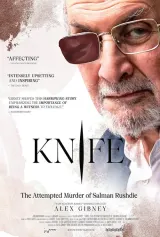
In August 2022, author Salman Rushdie was stabbed 15 times on stage at the Chautauqua Institution in New York, 33 years after a fatwa was issued against him. His wife, Rachel Eliza Griffiths, began filming immediately, capturing his harrowing hospitalization, grueling rehabilitation, and gradual return to writing and public life. Directed by Alex Gibney and written by Rushdie himself, the documentary blends Griffiths’ intimate footage with archival material to trace the attack’s physical and psychological aftermath.
The film follows Rushdie’s confrontation with mortality, his struggle to reclaim speech and mobility, and his reflections on the decades-long shadow of the fatwa. It offers a close-up view of a literary figure’s resilience, framed by the enduring tension between free expression and violent intolerance.
Knife: The Attempted Murder of Salman Rushdie — A Measured Portrait of Survival
Knife: The Attempted Murder of Salman Rushdie arrives as a documentary that could easily have succumbed to hagiography or sensationalism. That it largely avoids both is a credit to Alex Gibney’s disciplined direction, even if the film sometimes feels constrained by its own reverence for its subject. The 107-minute runtime is tight for such a sprawling story — the 1989 fatwa, decades of living under threat, the 2022 attack at the Chautauqua Institution, and a recovery filmed in real time by Rushdie’s wife, poet Rachel Eliza Griffiths — but Gibney resists the urge to over-explain, letting the footage and Rushdie’s own words carry the weight.
Direction and Structure
Gibney, a veteran of high-stakes nonfiction (Going Clear, Taxi to the Dark Side), employs a restrained visual language. Archival clips of Rushdie’s earlier public appearances contrast with Griffiths’ intimate, often handheld hospital and home recordings. The transition is jarring by design: the public intellectual reduced to a patient relearning speech and movement. Yet the film’s middle section, structured around Rushdie’s physical therapy sessions and psychological reckoning, occasionally lapses into a familiar recovery-narrative rhythm — montage, reflection, small victory, repeat. Where Gibney excels is in the quieter moments: Rushdie dictating notes for his memoir Knife, his dark humor intact, or Griffiths reading poetry to him in a dimmed room. These scenes feel earned, not staged.
Performance and Perspective
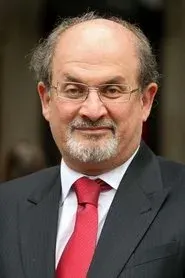
The "performance" here is Rushdie himself — wry, stubborn, visibly diminished yet intellectually sharp. His writer credit on the film raises inevitable questions about authorial control; the documentary never fully escapes the subject’s gaze. We hear little from the attacker’s background, the security failures at Chautauqua, or the broader geopolitical context of the fatwa’s persistence. This narrow focus serves the personal story but limits the film’s reach as a cultural document. Griffiths’ presence as both filmmaker and partner adds a layer of vulnerability that no outside crew could replicate, yet her dual role also means certain tensions — marital strain, the ethics of filming a spouse’s trauma — remain politely off-screen.
Who Will Connect
Viewers drawn to intimate survival stories or debates over artistic freedom will find much to admire. Those expecting a broader investigation into extremism, institutional negligence, or the fatwa’s evolving enforcement may leave wanting. The 15A certification reflects graphic medical imagery and disturbing descriptions of violence, not gratuitousness. Ultimately, Knife: The Attempted Murder of Salman Rushdie is a competent, often moving film that honors its subject’s resilience without fully interrogating the forces that tried to silence him. It’s a portrait, not an exposé — valuable, but incomplete.
Pros
- Unprecedented intimate access to Rushdie's recovery via Griffiths' footage
- Gibney's restrained direction avoids sensationalism
- Rushdie's wit and intellect remain vivid despite physical trauma
- Effective contrast between public figure and private patient
- Timely reminder of ongoing threats to artistic freedom
Cons
- Narrow perspective limits examination of security failures and extremist networks
- Subject's writer credit raises questions about narrative control
- Conventional recovery-narrative structure in middle act
- Marital and ethical complexities of spouse-as-filmmaker go unexplored
- Geopolitical context of fatwa's persistence treated superficially
Verdict
A disciplined, intimate survival portrait that benefits from extraordinary access but pulls its punches on the wider forces at play. Worth watching for Rushdie’s presence and Griffiths’ footage, less so for systemic insight.
Reader Rating
Be the first to rate this movie
Write a Review
Sign in to share what you thought — star ratings above need no account.
Frequently Asked
Is Knife: The Attempted Murder of Salman Rushdie worth watching?
Yes, if you value intimate survival stories and Rushdie's literary presence. It's a moving personal document, though not a comprehensive investigation.
What is Knife: The Attempted Murder of Salman Rushdie about?
The documentary covers the 2022 stabbing of Salman Rushdie, his physical and psychological recovery filmed by his wife Rachel Eliza Griffiths, and his reflections on decades living under a fatwa.
Is Knife: The Attempted Murder of Salman Rushdie suitable for kids?
No. The 15A certification reflects graphic medical imagery, descriptions of extreme violence, and mature themes. It's intended for older teens and adults.
Who directed Knife: The Attempted Murder of Salman Rushdie?
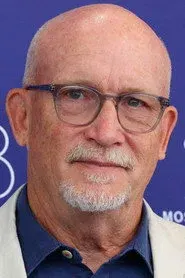
Alex Gibney, the Oscar-winning documentarian known for films like Going Clear, Taxi to the Dark Side, and The Inventor.
How long is Knife: The Attempted Murder of Salman Rushdie?
The runtime is 107 minutes.
If you liked this, watch
Movie data provided by TMDB. This product uses the TMDB API but is not endorsed or certified by TMDB.