

Top Cast

Synopsis
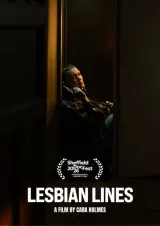
In 1980s and 1990s Ireland, where homosexuality was criminalized and lesbian lives were rendered invisible, a covert network of telephone helplines emerged. Lesbian Lines documents the women who built and operated these lines — volunteers who risked legal repercussions to offer connection, information, and survival strategies to callers across the country. Through present-day interviews with the organizers themselves, the film traces the network's evolution from coded classified ads to a sophisticated support system, revealing how the simple act of answering the phone became an act of defiance.
Lesbian Lines Review: A Vital Oral History of Irish Lesbian Resistance
Cara Holmes' documentary Lesbian Lines arrives as a necessary corrective to the erasure of queer Irish history. In just 76 minutes, the film reconstructs the clandestine telephone networks that became lifelines for lesbians in a deeply conservative Ireland. Through firsthand testimony from volunteers and callers — including Joni Crone, Heather Fleming, and Marina Forrestal — Holmes assembles a portrait of community forged in secrecy and sustained by the radical act of listening.
Direction and Approach
Holmes adopts a restrained, almost archival aesthetic: static interviews, period photographs, and the occasional reenactment of a phone call. This minimalism serves the material well, allowing the women's voices to carry the emotional weight without melodramatic scoring or intrusive narration. The director's decision to let each participant speak at length creates a cumulative power; we hear not just the logistics of running an illegal helpline but the texture of fear, hope, and dark humor that defined daily survival. However, the film's tight runtime occasionally feels like a constraint. Key developments — such as the transition from analog switchboards to early digital organizing, or the intersections with broader feminist and gay-rights movements — are sketched rather than explored, leaving a sense that a richer, longer version exists somewhere in the cutting room.
Performances and Testimonies
The cast of "Self" performers is the film's undeniable strength. Claire Hackett's recollection of coding language into classified ads, Ruth McCarthy's account of fielding calls from women in violent marriages, and Helen Slattery's dry wit about evading Garda surveillance — each testimony feels like a primary source document brought to life. Lauryn Canny, credited as a Lesbian Line Volunteer, provides a younger perspective that bridges the historical narrative to contemporary queer activism. The chemistry among these women, decades after the lines went silent, suggests bonds that transcend the project itself. Yet the documentary's exclusive focus on the helpline organizers means we hear little from the callers themselves, a notable absence that flattens the network's two-way nature and limits our understanding of its full impact.
Historical Context and Gaps
While Lesbian Lines excels at capturing the micro-history of its subject, it occasionally struggles to situate the helplines within Ireland's wider sociopolitical landscape. References to the 1983 constitutional amendment banning abortion, the 1993 decriminalization of homosexuality, and the Catholic Church's waning authority appear as background texture rather than analyzed forces. For viewers unfamiliar with Irish history, some stakes may feel under-explained. Conversely, the film's refusal to adopt a celebratory "progress narrative" — no triumphant montage of marriage equality, no tidy resolution — respects the ongoing precarity many interviewees still describe. This honesty is refreshing, even if it leaves the documentary feeling somewhat open-ended.
Who Should Watch
Lesbian Lines will resonate most with viewers interested in LGBTQ+ oral history, Irish social history, and grassroots organizing. Its 12A certification makes it accessible to younger audiences, though the subject matter — including references to suicide, domestic abuse, and state harassment — warrants parental guidance. Scholars and activists will appreciate the primary-source density; general viewers may find the talking-head format dry despite the compelling content. The film's lack of a traditional narrative arc (no clear villain, no legislative victory) may frustrate those expecting a conventional documentary structure, but that refusal to impose a neat storyline is arguably its most honest choice.
Pros
- Authentic, unfiltered first-person testimonies from helpline founders and volunteers
- Restrained direction that prioritizes subjects' voices over filmmaker interpretation
- Illuminates a virtually unknown chapter of LGBTQ+ and Irish social history
- Strong intergenerational perspective linking past activism to present
- Refuses simplistic progress narratives in favor of messy, ongoing truth
Cons
- 76-minute runtime compresses a complex decade-plus history into broad strokes
- Absence of caller perspectives limits understanding of the network's two-way impact
- Insufficient contextualization of broader Irish political/legal landscape for international viewers
- Talking-head format may feel visually static to audiences accustomed to more dynamic docs
- Key organizational evolutions (analog to digital, funding, burnout) only hinted at
Verdict
Lesbian Lines is an essential, if formally modest, documentary that preserves a crucial chapter of Irish queer history through the voices of the women who lived it. Its gaps are real but its testimony is irreplaceable.
Reader Rating
Be the first to rate this movie
Write a Review
Sign in to share what you thought — star ratings above need no account.
Frequently Asked
Is Lesbian Lines worth watching?
Yes, especially if you value LGBTQ+ oral history, Irish social history, or grassroots organizing stories. The firsthand testimonies are powerful and historically significant, though the film's brevity and static format may not satisfy viewers seeking a conventional narrative documentary.
What is Lesbian Lines about?
The documentary chronicles the underground telephone helplines created by and for lesbians in Ireland during the 1980s and 1990s, when homosexuality was criminalized. It features interviews with the women who built and ran these lifelines, revealing how they operated in secrecy to provide connection, resources, and survival support.
Is Lesbian Lines suitable for kids?
The film carries a 12A certification (UK/Ireland), meaning it's generally suitable for ages 12 and up with parental guidance. It discusses themes of suicide, domestic abuse, state harassment, and homophobia — handled sensitively but explicitly — so parents should consider their child's maturity level.
Who directed Lesbian Lines?
Cara Holmes directed the documentary. She employs a minimalist, interview-driven approach that centers the voices of the helpline volunteers — Joni Crone, Heather Fleming, Marina Forrestal, Claire Hackett, Ruth McCarthy, Helen Slattery, Louise Walsh, Nuala Ward, Carmel Winters, and Lauryn Canny.
Where can I watch Lesbian Lines?
As a 2026 theatrical release, Lesbian Lines will likely screen at film festivals (particularly LGBTQ+ and documentary-focused events) and in select arthouse cinemas in Ireland and the UK before potential streaming or broadcast acquisition. Check local festival programs and independent cinema listings.
If you liked this, watch
Movie data provided by TMDB. This product uses the TMDB API but is not endorsed or certified by TMDB.