
Top Cast







Synopsis
Miss Representation: Rise Up examines how digital platforms, political movements, and cultural narratives converge to undermine women’s mental health, bodily autonomy, and civic power. Through interviews with lawmakers, tech whistleblowers, activists, and media figures, the documentary traces the pipeline from algorithmic misogyny to legislative rollback, arguing that technology has become the primary accelerant of modern sexism.
The film moves from Silicon Valley boardrooms to Capitol Hill hearings, from teenage bedrooms to protest lines, presenting a mosaic of testimony that frames the current moment as a coordinated backlash rather than a series of isolated incidents. It stops short of prescribing specific policy fixes, instead urging collective awareness and civic engagement.
Miss Representation: Rise Up: Direction and Scope
Miss Representation: Rise Up arrives as a timely but uneven documentary that aims to connect the dots between algorithmic amplification, political backlash, and the erosion of women’s mental health. Director Jennifer Siebel Newsom returns to the theme of her 2011 breakout Miss Representation, widening the lens to include whistleblowers, legislators, and cultural critics. The 90-minute runtime feels both brisk and overstuffed; Newsom and co-writers Gretchen Miller and Camille Servan-Schreiber attempt to cover social media’s role in radicalizing misogyny, the post-Roe political landscape, and the psychological toll on girls — all while juggling a roster of high-profile interviewees. The result is a film that often mistakes breadth for depth, skimming over structural arguments in favor of emotional soundbites.
Interview Subjects: Access Over Insight
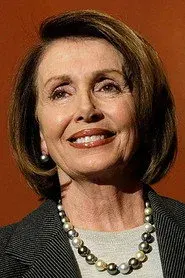
The cast list reads like a power summit: Hillary Clinton, Nancy Pelosi, Amy Klobuchar, Frances Haugen, Safiya Umoja Noble, Reshma Saujani, Jameela Jamil, Gretchen Carlson, Lisa Ling, and Jim Steyer. Their presence guarantees gravity, yet the format — largely talking-head close-ups against plain backdrops — flattens their distinct expertise into a chorus of agreement. Haugen’s testimony on Meta’s internal research and Noble’s work on algorithmic bias offer the film’s sharpest analytical moments, but they’re given only minutes before the narrative pivots to another luminary. Clinton and Pelosi deliver practiced talking points on legislative gridlock; Saujani and Jamil speak compellingly on the pressure to perform resilience. The documentary rarely lets tension breathe, cutting away just as a conversation might challenge its own thesis.
Thematic Execution: Urgency vs. Nuance
Where Miss Representation: Rise Up succeeds is in viscerally illustrating the feedback loop between online hate and offline policy. Montages of TikTok trends, congressional hearings, and protest footage create a palpable sense of siege. However, the film’s promotional framing — "cultural backlash against women’s mental health, agency, and political power" — promises a systemic critique that the final cut only gestures toward. Solutions are relegated to a closing montage of voting, therapy, and digital literacy tips, feeling more like a call to action than a rigorous exploration. The score, heavy on swelling strings, often dictates emotional beats that the editing hasn’t earned. For viewers already versed in these debates, the documentary offers validation but few revelations; for newcomers, it serves as a competent, if conventional, primer.
Who Should Watch
This is a film for organizers, educators, and anyone seeking a consolidated briefing on how technology accelerates gendered hostility. It works best as a discussion starter in classrooms or advocacy groups rather than a standalone analytical work. Casual viewers may find the parade of boldface names engaging, but the lack of narrative innovation or countervailing perspectives limits its staying power.
Pros
- Unprecedented access to high-profile political and tech figures
- Effectively visualizes the feedback loop between online misogyny and policy outcomes
- Frances Haugen and Safiya Umoja Noble segments provide rigorous, evidence-based analysis
- Timely framing of mental health as a political battleground
- Concise runtime keeps the pace brisk despite dense subject matter
Cons
- Talking-head format flattens diverse expertise into a monolithic consensus
- Solutions section feels perfunctory and disconnected from earlier analysis
- Rarely engages with counterarguments or complexities within feminist discourse
- Score and editing often manipulate emotion where argument would suffice
- Offers little new information for viewers already familiar with the literature
Verdict
Miss Representation: Rise Up assembles an impressive roster of voices to document a real and urgent crisis, but its breadth-over-depth approach and reliance on familiar documentary tropes prevent it from becoming the definitive analysis its subject deserves. Worth watching for the access it provides, less so for original insight.
Reader Rating
Be the first to rate this movie
Write a Review
Sign in to share what you thought — star ratings above need no account.
Frequently Asked
Is Miss Representation: Rise Up worth watching?
If you want a consolidated, star-studded overview of how technology amplifies misogyny and its political consequences, yes. If you’re looking for deep structural analysis or novel solutions, you may find it surface-level.
What is Miss Representation: Rise Up about?
The documentary explores the intersection of social media algorithms, political backlash, and the decline of women’s mental health and agency, featuring testimony from figures like Hillary Clinton, Frances Haugen, and Safiya Umoja Noble.
Is Miss Representation: Rise Up suitable for kids?
The film discusses misogyny, online harassment, reproductive rights, and mental health crises. It contains mature themes and some disturbing footage of online abuse; parental discretion is advised for viewers under 15.
Who directed Miss Representation: Rise Up?
Jennifer Siebel Newsom directed the film, co-writing with Gretchen Miller and Camille Servan-Schreiber. Newsom also directed the 2011 documentary Miss Representation.
Is Miss Representation: Rise Up a sequel to Miss Representation (2011)?
It functions as a thematic follow-up, updating the original’s focus on media representation to address the specific role of technology and the political shifts of the 2020s.
If you liked this, watch
Movie data provided by TMDB. This product uses the TMDB API but is not endorsed or certified by TMDB.