

Top Cast




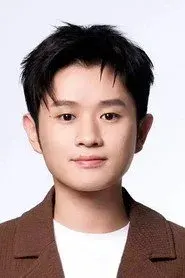
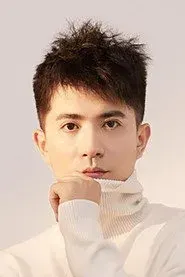
Synopsis
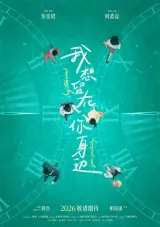
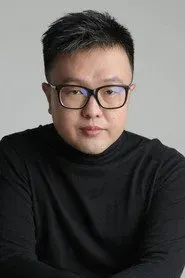
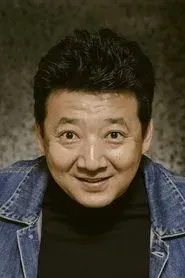
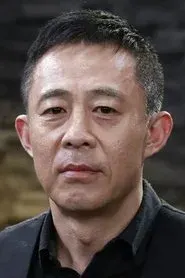
Ancient architecture restorer Jiang Nanshan (Bi Wenjun) lives a life measured in centuries — repairing temples, preserving history, waiting for wood to breathe. When he meets Li Ai (He Landou), a bright-eyed medical student whose urgency clashes with his patience, an unlikely romance blooms. But Li Ai carries a secret: she comes from a parallel world where time flows in reverse. As their connection deepens, the cruel geometry of their timelines reveals itself — her past is his future, her first kiss his last goodbye, and every moment they share pulls them further apart in opposite temporal directions.
With the help of a skeptical mentor (Hou Yong) and unexpected allies, Jiang Nanshan must decide whether love can exist when the physics of two worlds conspire to make every reunion a parting — and whether some things are worth restoring even when time itself says they cannot last.
我想留在你身边 Review: A High-Concept Romance That Struggles to Ground Its Ambition
我想留在你身边 arrives with a premise that sounds tailor-made for bittersweet genre alchemy: an ancient architecture restorer, Jiang Nanshan (Bi Wenjun), falls for a medical student, Li Ai (He Landou), only to discover she originates from a parallel world where time flows backward. Their timelines move in opposite directions — every meeting is her farewell, every parting his hello. It's a metaphor made literal, and on paper, the kind of setup that could sustain a film like Your Name or The Time Traveler's Wife. In practice, director Xiang Guo Qiang and writers Chang You and Takafumi Nanatsuki (a notable cross-cultural credit) deliver a film that is more interesting in outline than in execution.
Direction and Visual Language
Xiang's background shows in the film's most assured sequences: the restoration workshop scenes possess a tactile, lived-in quality, dust motes dancing through shafts of light as Jiang Nanshan coaxes life from fractured wood and stone. These moments suggest a quieter, more meditative film about craft and memory — the kind Hou Yong's cinematography excels at capturing. But the fantasy mechanics demand a different visual vocabulary, and the transition between the grounded and the speculative is rarely smooth. The "reverse world" is rendered through color grading shifts and inverted motion cues that feel more like music-video shorthand than integrated worldbuilding. The runtime (unconfirmed at press time) reportedly leans long, and the pacing drags whenever the script pauses to explain its own rules.
Performances: Earnest but Uneven
Bi Wenjun carries the film's emotional weight with a restrained, inward performance — Jiang Nanshan is a man accustomed to waiting, to watching things decay and rebuild, and Bi finds grace in that stillness. He Landou has a harder task: Li Ai must convey both the wonder of discovery and the tragedy of foreknowledge, often simultaneously. She manages the former better than the latter; the script gives her too many exposition-heavy monologues and too few quiet beats to simply exist in the paradox. The supporting cast — Hou Yong as a mentor figure, Wang Mian in a brief but sharp turn as a stand-up comedian who inadvertently voices the film's themes — outshine the leads in their limited screen time, suggesting a richer ensemble film lurking at the margins.
Story and Thematic Reach
The central conceit — love across opposing temporal arrows — is genuinely compelling, and the film earns points for not cheating its own logic in the final act. But the screenplay struggles to translate high concept into human stakes. The "rules" of the parallel world are explained repeatedly, often by characters who have no business knowing them, while the emotional architecture — why these two, why now, what they mean to each other beyond the gimmick — remains underbuilt. Takafumi Nanatsuki's involvement (known for Japanese tokusatsu and anime scripting) hints at a more genre-fluid approach that never fully materializes; the film feels caught between Chinese romance-drama conventions and a bolder, stranger narrative it never commits to.
Who Should Watch
Viewers drawn to speculative romance with a metaphysical bent will find enough to chew on, especially in the second half when the timeline mechanics sharpen into genuine narrative tension. Fans of Bi Wenjun or He Landou get committed performances in a vehicle that doesn't fully serve them. Anyone expecting a tight, emotionally devastating time-bending romance may leave wishing the film had trusted its silence more than its explanations.
Pros
- Bi Wenjun's restrained, grounded lead performance anchors the fantasy
- Tangible, atmospheric cinematography in the restoration workshop sequences
- Commits to its time-reversal logic without a cheat ending
- Intriguing cross-cultural writing credit (Takafumi Nanatsuki) adds texture
- Supporting cast (Hou Yong, Wang Mian) elevates limited material
Cons
- Exposition-heavy dialogue repeatedly explains rules instead of dramatizing them
- Reverse-world visual design feels like shorthand, not integrated worldbuilding
- Li Ai's emotional interiority underserved by script structure
- Pacing drags in middle act; runtime feels unearned
- Thematic potential of "opposite timelines" remains more metaphor than felt experience
Verdict
A conceptually ambitious romance hampered by uneven pacing and underdeveloped emotional stakes; worth a watch for genre fans and the lead performances, but unlikely to linger beyond its clever premise.
Reader Rating
Be the first to rate this movie
Write a Review
Sign in to share what you thought — star ratings above need no account.
Frequently Asked
Is 我想留在你身边 worth watching?
If you enjoy speculative romance with a metaphysical twist and can forgive uneven pacing, yes — the lead performances and core concept carry it. General audiences may find the exposition-heavy middle act a slog.
What is 我想留在你身边 about?
An ancient architecture restorer falls for a medical student who comes from a parallel world where time flows backward, forcing their romance to unfold across opposing temporal directions — her past is his future, and every meeting is a farewell.
Is 我想留在你身边 suitable for kids?
The film contains no graphic violence or explicit content, but its complex time-reversal premise and bittersweet romantic themes are best suited for teens and adults. No official certification is listed yet.
Who directed 我想留在你身边?
Xiang Guo Qiang directed the film, with a screenplay by Chang You and Takafumi Nanatsuki (a Japanese writer known for tokusatsu and anime series).
When was 我想留在你身边 released?
The film is a 2026 theatrical release from China. Exact release dates vary by territory.
If you liked this, watch
Movie data provided by TMDB. This product uses the TMDB API but is not endorsed or certified by TMDB.