
Top Cast




Trailer
Synopsis
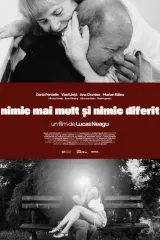
In a modest Romanian apartment, elderly couple Elena and Gabi navigate the quiet rhythms of a decades-long marriage. When a terminal diagnosis shatters their fragile equilibrium, they face a profound choice that challenges everything they believed about devotion, autonomy, and what it means to love someone through the end.
Told through a restrained lens that moves between present-day intimacy and fragmented memories of their younger selves, the film examines how a shared history becomes both a sanctuary and a prison when the future collapses into a single, irreversible decision.
Nothing more and nothing different: A Quiet Study of Love at Life's Edge
Lucas Neagu's Nothing more and nothing different arrives with a title that feels like a deliberate provocation — minimal, almost defiant in its refusal to dramatize. At 84 minutes, the film strips its premise to the bone: an elderly couple, Elena (Ana Ciontea) and Gabi (Marian Râlea), confront a terminal diagnosis and a "radical decision" that tests the architecture of their shared history. The marketing promises a reshaped bond; the film itself seems more interested in the friction of that reshaping.
Direction and Tone
Neagu, who also wrote the screenplay, adopts a rigorously observational style. Long takes, natural light, and a soundscape dominated by breathing and household creaks create an intimacy that can feel invasive. Romania's domestic spaces — cramped apartments, sterile hospital corridors — become characters themselves. There's a clear lineage to the Romanian New Wave's austerity (think The Death of Mr. Lazarescu or Child's Pose), but Neagu lacks the social breadth of those films; his gaze remains fixed on two faces, two bodies, two voices. The result is occasionally suffocating in the best way, occasionally merely suffocating.
Performances: The Film's Anchor
Ciontea and Râlea carry the weight with remarkable restraint. Ciontea's Elena is a study in suppressed terror — her hands tremble when she thinks Gabi isn't looking. Râlea plays Gabi as a man who has mistaken stoicism for strength, his silence more violent than any outburst. The younger counterparts (Daria Pentelie, Vlad Linta) appear in fragmented flashbacks that feel less like narrative scaffolding and more like ghost visitations. Áron Dimény and Johanna Adam as the parents, and Miruna Contiu as the daughter, are given too little screen time to register beyond functional roles. Vlad Popescu's doctor delivers the film's only exposition dump with clinical detachment — a mercy, perhaps.
Story and Pacing
The "radical decision" hinted in the overview is best left unspoiled, but its execution is where the film will divide viewers. Neagu refuses the catharsis of a grand confrontation; instead, we watch the decision metabolize in real time — across meals, medication schedules, sleepless nights. The 84-minute runtime is both a discipline and a constraint: the film ends before it overstays, but also before it fully excavates the ethical murk it raises. The final act leans into ambiguity that may feel like courage or evasion, depending on your tolerance for open doors.
Who Will Connect
Viewers drawn to chamber dramas about aging, mortality, and the quiet negotiations of long-term partnership will find much to admire. Those expecting narrative momentum, emotional release, or broader social context may find the film's refusal to explain itself frustrating. The 15 certification suggests mature themes handled without graphic content — accurate, but the emotional intensity warrants its own warning.
Pros
- Ana Ciontea and Marian Râlea deliver masterclasses in restrained, physical acting
- Neagu's observational direction creates palpable intimacy without sentimentality
- 84-minute runtime enforces narrative discipline — no wasted moments
- Sound design and natural lighting elevate the domestic setting into something sacred
- Flashback structure avoids nostalgia traps, serving thematic purpose
Cons
- Supporting characters remain underwritten, functioning as plot devices
- Central ethical dilemma resolves into ambiguity that may feel unearned
- Pacing's deliberate slowness risks testing patience despite short runtime
- Limited social context narrows the film's emotional scope to the purely personal
- Final act's open-endedness could read as narrative hesitation rather than artistic choice
Verdict
A formally disciplined, emotionally demanding chamber piece anchored by two extraordinary lead performances. Its refusal to provide easy answers will resonate deeply with some and alienate others — exactly as intended.
Reader Rating
Be the first to rate this movie
Write a Review
Sign in to share what you thought — star ratings above need no account.
Frequently Asked
Is Nothing more and nothing different worth watching?
If you appreciate slow-burn, character-driven dramas about aging and mortality with exceptional lead performances, yes. If you prefer narrative momentum or emotional closure, it may frustrate you.
What is Nothing more and nothing different about?
An elderly Romanian couple confronts a terminal illness diagnosis and must make a radical decision that tests the foundations of their decades-long marriage, explored through present-day intimacy and fragmented memories.
Is Nothing more and nothing different suitable for kids?
No. The 15 certification reflects mature themes of terminal illness, end-of-life decisions, and intense emotional distress — not appropriate for children or young teens.
How long is Nothing more and nothing different?
84 minutes — a concise runtime that serves the film's chamber-drama intimacy.
Where was Nothing more and nothing different filmed?
Romania, utilizing real domestic locations and clinical settings that ground the story in authentic, lived-in spaces.
If you liked this, watch
Movie data provided by TMDB. This product uses the TMDB API but is not endorsed or certified by TMDB.