

Top Cast
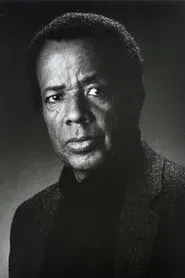
William Greaves
Director
Aaron Douglas
Self (archival footage)
Richard Bruce Nugent
Self (archival footage)
Ernest Crichlow
Self (archival footage)
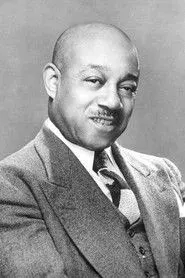
Eubie Blake
Self (archival footage)
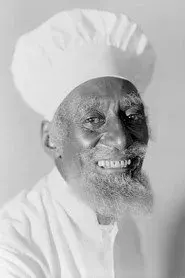
Leigh Whipper
Self (archival footage)
Arna Bontemps
Self (archival footage)
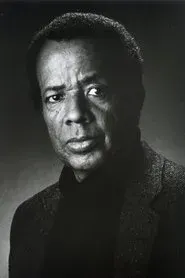
William Greaves
Self (archival footage)
James Van Der Zee
Self (archival footage)
Ida Mae Cullen
Self (archival footage)
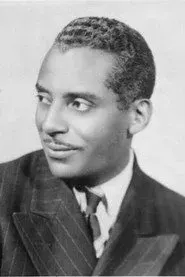
Noble Sissle
Self (archival footage)
Romare Bearden
Self (archival footage)
Trailer
Synopsis
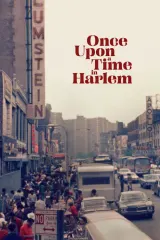
In 1972, filmmaker William Greaves convened a private gathering of the Harlem Renaissance's surviving luminaries — painters, poets, musicians, and chroniclers — and filmed the result. Decades after Greaves' death, that footage has been assembled into a feature-length documentary capturing an unrehearsed evening of conversation, music, and memory among figures like Eubie Blake, James Van Der Zee, Arna Bontemps, and Aaron Douglas.
The film presents the gathering largely as it unfolded: a living archive where history's makers reflect on their legacy, debate their era's meaning, and simply enjoy each other's company, offering viewers an intimate portal into a cultural movement usually encountered only through textbooks.
Once Upon a Time in Harlem Review: A Half-Century Wait for Greaves' Final Gift
Once Upon a Time in Harlem arrives like a letter postmarked 1972, delivered five decades late by a filmmaker who knew exactly what he was preserving. William Greaves — the pioneering documentarian behind Symbiopsychotaxiplasm — spent his final years assembling footage from a single evening: a 1972 gathering he orchestrated, bringing together the surviving architects of the Harlem Renaissance. The result is a 100-minute documentary that functions as both time capsule and testament.
Direction and Archival Alchemy
Greaves' hand is evident in the film's architecture, even posthumously. He didn't merely point a camera at legends like Eubie Blake, James Van Der Zee, and Arna Bontemps; he engineered a context — a party — where their conversations could breathe. The footage carries the grain and occasional audio hiccups of its era, but that texture becomes part of the film's honesty. Where a slicker restoration might sanitize, Greaves' choice to let the imperfections remain honors the spontaneity he cultivated. At 100 minutes, the runtime feels deliberate: long enough to settle into the room's rhythm, short enough to avoid reverence fatigue.
Performances That Weren't Performances
The cast list reads like a syllabus for Black cultural history, yet none of these figures are "performing." Aaron Douglas sketches quietly in a corner. Noble Sissle holds court at the piano. Richard Bruce Nugent — ever the provocateur — delivers wry asides that feel startlingly contemporary. The documentary's greatest strength is its refusal to mythologize; these are elders joking, debating, remembering, and occasionally forgetting. Greaves (who appears in his own footage) captures the Harlem Renaissance not as a movement frozen in textbooks, but as a living network of personalities still sharp, contradictory, and very much alive in 1972.
Who Should Seek This Out
Viewers expecting a conventional historical survey — talking heads, chronological markers, explanatory narration — will find something stranger and more valuable. This is a film for those willing to sit in a room with ghosts and listen. Its PG-13 rating suggests mild thematic elements, likely from candid period language. For scholars, artists, and anyone haunted by the question of how cultural memory survives, Once Upon a Time in Harlem offers a rare, unmediated encounter. Whether it coheres into a satisfying narrative arc or remains a glorious fragment is a question each viewer will answer differently.
Pros
- Unprecedented access to Harlem Renaissance figures in candid, unguarded moments
- Greaves' directorial intelligence shapes the material without imposing false narrative
- Archival imperfections preserved as historical texture rather than corrected away
- Rare depiction of Black cultural elders in leisure and dialogue, not just testimony
- Posthumous completion honors Greaves' stated artistic priorities
Cons
- Lacks conventional documentary signposts — may frustrate viewers wanting context or analysis
- Audio and visual quality varies with 1972 source material limitations
- No contemporary commentary to bridge 1972 perspectives to present discourse
- Pacing reflects a party's organic rhythm, not a film's dramatic structure
- Limited accessibility for audiences unfamiliar with the Harlem Renaissance's key figures
Verdict
A singular archival achievement that prioritizes presence over pedagogy; its value depends entirely on the viewer's willingness to dwell in unstructured historical intimacy rather than receive a curated lesson.
Reader Rating
Be the first to rate this movie
Write a Review
Sign in to share what you thought — star ratings above need no account.
Frequently Asked
Is Once Upon a Time in Harlem worth watching?
If you value raw historical witness over polished storytelling, yes. It offers an unrepeatable glimpse of cultural giants in conversation, but demands patience with its unstructured, archival nature.
What is Once Upon a Time in Harlem about?
The documentary presents footage from a 1972 gathering orchestrated by filmmaker William Greaves, bringing together living legends of the Harlem Renaissance — including Eubie Blake, James Van Der Zee, and Arna Bontemps — for an evening of unscripted conversation, music, and reflection.
Is Once Upon a Time in Harlem suitable for kids?
Rated PG-13, likely for period-appropriate language and mature thematic discussions. Older teens with interest in Black cultural history may find it rewarding, but younger children will likely find the format inaccessible.
Who directed Once Upon a Time in Harlem?
William Greaves, the influential documentarian best known for Symbiopsychotaxiplasm, directed and appears in the film. It was completed and released posthumously, over a decade after his 2014 death.
Does Once Upon a Time in Harlem have narration or interviews?
No. The film consists almost entirely of the 1972 gathering's direct footage — conversations, musical moments, and interactions — without contemporary talking heads, voiceover narration, or explanatory text.
If you liked this, watch
Movie data provided by TMDB. This product uses the TMDB API but is not endorsed or certified by TMDB.