

Top Cast
Synopsis
During a weeklong family vacation, a young boy (William Lange) grapples with the right moment to share a deeply personal secret. As the days pass, the idyllic setting contrasts with his mounting internal pressure, turning ordinary interactions into charged encounters. The film observes the quiet erosion of comfort as the unspoken truth looms over every shared meal, car ride, and bedtime routine.
With minimal exposition and a focus on atmosphere, Out. frames the boy’s dilemma as both a domestic drama and a psychological horror, asking whether readiness is ever truly possible — for the teller or the listeners.
Out. Review: A Quiet Horror That Whispers More Than It Screams
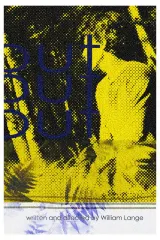
Out. arrives as a micro-budget curiosity, written, directed, and starred in by William Lange. The premise is deceptively simple: a boy on a weeklong family trip wrestles with the timing of a confession. The tagline — "Is now the right time?" — hints at a tension that never fully resolves into conventional horror beats. Instead, Lange builds dread through stillness, letting the camera linger on glances, half-finished sentences, and the oppressive normalcy of a vacation rental. For viewers accustomed to jump scares, this restraint may feel like inertia; for those who prize atmosphere, it’s the film’s strongest asset.
Direction and Atmosphere
Lange’s direction is unmistakably personal. Shooting on what appears to be a shoestring, he turns limitations into texture: grainy low-light interiors, the hum of a refrigerator, the way sunlight fractures through blinds. The horror here isn’t supernatural — it’s the terror of being known, of a secret that could shatter the fragile peace of a family unit. Yet the pacing occasionally drifts from deliberate to stagnant. Scenes that should simmer sometimes simply sit, and the runtime (unlisted but felt) stretches thin across a week that never quite accumulates dramatic weight. The film’s ambition to merge domestic drama with psychological horror is admirable, but the execution wavers between poetic and ponderous.
Performance: A Solo Endeavor
As The Boy, Lange carries the entire emotional load. His performance is internalized, reliant on micro-expressions — a swallowed word, a hand hovering over a doorknob. There’s no showy breakdown, just the quiet accumulation of pressure. The supporting family members (unnamed, uncredited) function more as mirrors than characters, which serves the allegorical intent but leaves the ensemble feeling schematic. When the script finally demands a confrontation, the lack of established dynamics softens the impact. Lange’s commitment is never in doubt, yet the role’s isolation limits the range he can display.
Narrative Ambiguity and Horror Roots
The film’s horror credentials rest on metaphor rather than monsters. The "something" the boy needs to say is never explicitly revealed in the marketing, and the film itself guards that secret closely. This ambiguity can be read as respect for the audience’s intelligence or as a refusal to commit. By the final act, the tension between what’s shown and what’s withheld becomes the central experience. Genre purists may find the payoff underwhelming; drama enthusiasts might appreciate the refusal to sensationalize. The blend of horror and drama is uneasy but intentional — a study of how fear lives in the mundane.
Who Should Watch
Out. is not a crowd-pleaser. It demands patience, tolerates silence, and rewards viewers who find horror in the things left unsaid. If you’re drawn to films like The Babadook or Saint Maud — where the supernatural is an extension of grief or repression — this may resonate. If you need clear stakes, tangible threats, or a definitive resolution, look elsewhere. As a calling card for a filmmaker willing to wear every hat, it signals a distinct voice still finding its volume.
Pros
- Distinctive atmospheric tension built on silence and suggestion
- William Lange's committed, internally focused lead performance
- Ambitious blending of domestic drama and psychological horror
- Effective use of micro-budget constraints to enhance realism
- Thought-provoking exploration of secrecy and family dynamics
Cons
- Deliberate pacing frequently crosses into stagnation
- Narrative ambiguity feels more like evasion than depth
- Supporting characters remain underdeveloped ciphers
- Low-budget visual limitations occasionally distract
- Lacks a satisfying emotional or thematic payoff
Verdict
Out. is an ambitious, intimately crafted horror-drama that prioritizes mood over mechanics. Its minimalist approach yields moments of genuine unease, but pacing issues and narrative opacity prevent it from fully cohering. Worth a watch for fans of quiet, metaphor-driven horror; others may find it too elusive.
Reader Rating
Be the first to rate this movie
Write a Review
Sign in to share what you thought — star ratings above need no account.
Frequently Asked
Is Out. worth watching?
If you appreciate slow-burn, metaphor-heavy horror like The Babadook or Saint Maud, Out. offers a unique, personal vision. Viewers seeking conventional scares or clear resolutions may find it frustrating.
What is Out. about?
The film follows a boy on a weeklong family trip who struggles to find the right moment to reveal a secret. The story explores the tension between the desire to be known and the fear of consequences.
Is Out. suitable for kids?
No. Despite its young protagonist, Out. deals with mature psychological themes, sustained dread, and ambiguous horror elements inappropriate for children.
Who directed Out.?
William Lange wrote, directed, and stars in the film as The Boy, making it a fully authorial project.
Where can I watch Out.?
As a 2026 theatrical release, availability will depend on festival runs and subsequent distribution deals. Check local independent theaters or streaming platforms closer to release.
If you liked this, watch
Movie data provided by TMDB. This product uses the TMDB API but is not endorsed or certified by TMDB.