

Top Cast


Synopsis
Struggling novelist Paul seeks out his estranged, affluent college roommate Greg and Greg's wife Amelia under the pretense of an interview for his next book. As the conversation unfolds in their isolated home, long-buried tensions resurface and a shared secret from their university days threatens to upend the fragile peace among them — and the safety of everyone in the room.
With each revelation, the power balance shifts, turning a polite reunion into a psychological standoff where motives blur and the past refuses to stay buried.
Paul and Greg and Amelia: A Tense Chamber Piece With Uneven Payoffs
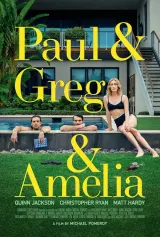
Paul and Greg and Amelia arrives as a lean, 87-minute drama that confines its four central characters to a single, pressure-cooker setting. Writer-director Michael Pomeroy sketches a promising premise: a blocked novelist (Matt Hardy as Paul) re-enters the orbit of his wealthy, charismatic college roommate Greg (Christopher Ryan) and Greg's enigmatic wife Amelia (Quinn Jackson), ostensibly for an interview that soon curdles into an excavation of a buried secret. The tagline — "What happened in that room?" — signals a mystery-box structure, but the film's real tension lives in the shifting power dynamics and the slow bleed of civility.
Direction and Atmosphere
Pomeroy keeps the visual language tight, using the limited locations — mostly a sleek, sterile living space — to amplify claustrophobia. The R rating allows for raw language and implied violence, yet the director often chooses restraint over spectacle, letting silence and awkward pauses do the heavy lifting. At 87 minutes, the runtime is a virtue; there's no fat, but the brevity also means some thematic threads (the nature of artistic parasitism, class resentment) are gestured at rather than explored. The score is sparse, occasionally intrusive, and the cinematography, while competent, rarely rises above functional.
Performances: A Game Ensemble
The cast is the film's strongest asset. Hardy conveys Paul's desperate neediness and intellectual arrogance with a jittery authenticity. Ryan's Greg is all polished menace, switching between magnanimity and cruelty in a heartbeat. Jackson, as Amelia, carries the film's emotional opacity; she's watchful, wounded, and finally unpredictable. Terra Layne's Suzy, a peripheral figure, adds a necessary outsider perspective but feels underwritten. The chemistry among the leads crackles in the first half, though the script occasionally forces them into declarative dialogue that spells out subtext the actors are already conveying.
Story and Pacing
The narrative hinges on a single revelation — the "old secret" — and the journey there is a series of escalating confrontations. The first act establishes stakes efficiently; the second act tightens the screws with a few genuinely unsettling turns. However, the third act leans into a climax that feels more contrived than inevitable, relying on a coincidence that strains credibility. The ending, ambiguous by design, may frustrate viewers seeking closure but respects the film's cynical worldview. Pacing is brisk, occasionally too much so; emotional beats aren't always given room to land.
Who Will Enjoy It
Fans of contained, dialogue-driven thrillers — think The Invitation or Coherence — will appreciate the craft. Viewers allergic to "people talking in rooms" or who demand clear moral resolution should look elsewhere. The film rewards patience with discomfort, not catharsis.
Pros
- Strong, committed performances from the core quartet
- Efficient 87-minute runtime with no filler
- Effective use of single-location claustrophobia
- Sharp dialogue in the first two acts
- Ambiguous ending that respects the material's bleakness
Cons
- Third-act revelation relies on a strained coincidence
- Thematic threads (class, art, guilt) introduced but underdeveloped
- Score occasionally overstates tension the visuals already convey
- Suzy's character feels like a narrative afterthought
- Pacing sometimes rushes emotional beats that need breathing room
Verdict
A well-acted, tightly wound chamber drama that generates genuine tension but stumbles in its final act with a contrived climax. Worth a watch for fans of minimalist psychological thrillers, though it doesn't fully capitalize on its promising setup.
Reader Rating
Be the first to rate this movie
Write a Review
Sign in to share what you thought — star ratings above need no account.
Frequently Asked
Is Paul and Greg and Amelia worth watching?
If you enjoy contained, dialogue-heavy psychological dramas with strong ensemble acting, yes. It's a tight 87-minute watch that delivers tension even if the payoff doesn't fully satisfy.
What is Paul and Greg and Amelia about?
A blocked novelist interviews his wealthy estranged college roommate and the roommate's wife, unearthing a dangerous secret from their shared past that threatens all of them.
Is Paul and Greg and Amelia suitable for kids?
No. The film carries an R rating for strong language, tense psychological situations, and implied violence. It's intended for mature audiences only.
Who directed Paul and Greg and Amelia?
Michael Pomeroy wrote and directed the film.
How long is Paul and Greg and Amelia?
The runtime is 87 minutes.
If you liked this, watch
Movie data provided by TMDB. This product uses the TMDB API but is not endorsed or certified by TMDB.