

Top Cast
Synopsis
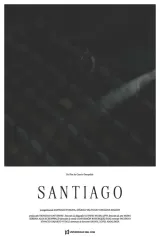
At his grandmother's request, a young man named Santiago enters a cinema searching for traces of the Brazilian actor from the 1950s whose name he inherited. The actor died decades ago, but tonight, the screen holds an impossible promise: that cinema itself might resurrect him, if only for the duration of a film.
What follows is a brief, reverent encounter between grandson and ghostly namesake, mediated by the projector's beam — a meditation on legacy, naming, and the particular magic of a darkened theater where the past refuses to stay buried.
Santiago (2026) Review: A Miniature Meta-Cinema Experiment
At just 13 minutes, Santiago (2026) barely qualifies as a theatrical release, and that brevity shapes everything about the experience. Writer-director Cássio Garayalde constructs a delicate meta-narrative: a young man (Santiago Fukuda) enters a movie theater at his grandmother's urging to find the 1950s Brazilian actor whose name he carries, only to watch that actor materialize on screen. The premise is ripe with possibility — cinema as séance, inheritance as haunting, the screen as a porous membrane between generations — but the runtime forces Garayalde to sketch rather than sculpt.
Direction and Concept
Garayalde wears both writer and director hats, and the film feels like a personal dispatch, possibly autobiographical in its emotional coordinates. The theater setting is used economically: the ticket booth (Catalina Soldati's Boletera), the auditorium darkness, the projected light as resurrection device. There's a tactile affection for the ritual of moviegoing — the velvet seats, the beam of the projector, the way a darkened room collapses time. But the short format compresses what could be a layered meditation on diaspora, artistic legacy, and the ghosts we name our children after into a single, somewhat literal gesture. The "bringing back to life" conceit plays out exactly as the synopsis promises, with little subversion or deepening.
Performances and Texture
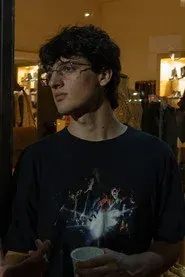
Fukuda carries the film's quiet center with a stillness that suits the material's reverent tone. He doesn't overplay the wonder; his Santiago watches more than he reacts, which feels right for a character encountering a phantom namesake. Márcia Valduga's Abuela appears only briefly but anchors the emotional stakes — her request is the engine, her memory the fuel. Soldati's Boletera provides a grounded, almost bureaucratic counterpoint to the supernatural premise, a nice touch. The film's visual language is clean but unshowy; the projection sequences hint at a richer, grainier past without fully committing to a distinct period aesthetic. At 13 minutes, there's no room for texture to accumulate.
Who Will Connect
Cinephiles drawn to films-about-film — the Cinema Paradiso lineage, the meta-theatricality of The Purple Rose of Cairo — will recognize the lineage here, even if the execution is more modest. Viewers with immigrant family histories may feel the specific weight of a name carried across borders and decades. But casual audiences expecting a narrative short with traditional dramatic arcs may find it slight, more a concept note than a complete story. The ATP certification suggests broad accessibility, yet the film's concerns are quietly niche.
Pros
- Inventive meta-cinema premise with emotional resonance
- Strong central performance from Santiago Fukuda
- Affectionate, tactile rendering of the moviegoing ritual
- Efficient use of limited locations and cast
- Thematic ambition disproportionate to its runtime
Cons
- 13-minute runtime prevents thematic depth or narrative complication
- Concept executes literally rather than surprisingly
- Period recreation feels suggested rather than realized
- Supporting characters remain functional rather than lived-in
- May feel slight to viewers unfamiliar with short-film conventions
Verdict
A sincere, conceptually neat micro-short that gestures toward profound themes of cinematic memory and inherited identity but lacks the runtime to fully inhabit them. Worth a watch for cinephiles and short-film completists; others may find it more a sketch than a story.
Reader Rating
Be the first to rate this movie
Write a Review
Sign in to share what you thought — star ratings above need no account.
Frequently Asked
Is Santiago (2026) worth watching?
If you enjoy experimental short films about cinema's relationship to memory and identity, yes. At 13 minutes, it's a low time investment with a clever premise, though it feels more like a proof-of-concept than a fully realized narrative.
What is Santiago (2026) about?
A young man visits a movie theater at his grandmother's request to find the 1950s Brazilian actor he was named after. The film explores whether cinema can literally bring that ancestor back to life on screen for one night.
Is Santiago (2026) suitable for kids?
The film carries an ATP rating (suitable for all audiences) and contains no objectionable content. However, its slow, meditative pace and meta-cinematic themes may not engage younger viewers.
Who directed Santiago (2026)?
Cássio Garayalde wrote and directed the film. It appears to be a personal, possibly autobiographical project given the specific cultural and familial themes.
How long is Santiago (2026)?
The film runs 13 minutes, making it a theatrical short rather than a feature-length movie.
If you liked this, watch
Movie data provided by TMDB. This product uses the TMDB API but is not endorsed or certified by TMDB.