

Synopsis
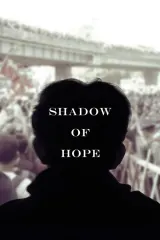
In Australia, a young Burmese man watches his country descend into chaos after a military coup. Unable to return home, he uses encrypted apps, social media, and small‑scale fundraising to stay connected with friends and family still inside Myanmar, turning his exile into a quiet act of resistance.
The documentary follows his daily routine — monitoring news, coordinating a livestream protest, sending money — offering a window into how diaspora communities sustain hope when physical return is impossible.
Shadow of Hope: A Brief but Potent Dispatch
Shadow of Hope arrives as a five‑minute documentary that tries to compress a sprawling political tragedy into a single, intimate portrait. Director Mitchell Nielsen follows a young Burmese man living in Australia, cut off from his homeland by the 2021 military coup. The film’s tagline — “When return is impossible, resistance isn’t.” — sets an urgent tone, but the runtime forces hard choices about what can be shown and what must be left implied.
Direction and Visual Economy
Nielsen’s direction is disciplined; every shot feels purposeful, from the cramped apartment where the protagonist scrolls through encrypted messages to the stark Australian coastline that frames his isolation. The handheld camera work conveys immediacy without slipping into shaky‑cam cliché. However, the brevity means there is no room for contextual exposition — viewers unfamiliar with Myanmar’s recent history may feel unmoored. A few title cards or archival inserts could have anchored the personal story without sacrificing the film’s lean aesthetic.
Performance and Voice
Because the documentary centers on a single subject, the “performance” is essentially the subject’s willingness to speak on camera. He is articulate, his frustration palpable, and his moments of quiet resolve land with emotional weight. Yet the film never lets us hear from family members still inside Myanmar, nor from fellow exiles, which narrows the perspective to a solitary testimony. That intimacy is powerful, but it also limits the documentary’s claim to represent a broader resistance movement.
Narrative Scope and Audience Fit
The story arc is essentially a snapshot: a man watches news feeds, sends money, organizes a protest livestream, and wrestles with guilt. It’s compelling as a micro‑study of diaspora activism, yet the lack of a clear narrative progression — no turning point, no resolution — may leave some viewers wanting more. Shadow of Hope works best for audiences already invested in Myanmar’s struggle or for educators seeking a concise case study of digital resistance. Casual documentary fans might find it too fragmentary to stand alone.
Overall, the film succeeds as a vivid, if incomplete, dispatch from the front lines of a hidden war. Its strength lies in raw immediacy; its weakness is the inevitable truncation that a five‑minute runtime imposes.
Pros
- Intimate, immediate cinematography that conveys isolation
- Compelling central subject with authentic voice
- Effective use of digital communication as visual motif
Cons
- Runtime too short to provide necessary historical context
- Single‑perspective narrative limits representation of the wider movement
- No clear narrative arc or resolution, may feel incomplete
Verdict
A concise, emotionally charged snapshot of exile activism that feels urgent but leaves the broader context frustratingly out of frame.
Reader Rating
Be the first to rate this movie
Write a Review
Sign in to share what you thought — star ratings above need no account.
Frequently Asked
Is Shadow of Hope worth watching?
If you are interested in Myanmar’s recent political crisis or diaspora activism, the film offers a vivid, personal glimpse. General documentary viewers may find it too brief to stand alone.
What is Shadow of Hope about?
It follows a young Burmese man in Australia who uses digital tools to support resistance efforts back home after the 2021 military coup, highlighting the emotional toll of forced exile.
Is Shadow of Hope suitable for kids?
The film carries a PG rating and contains no graphic violence, but its political themes and tense subject matter are best suited for mature teens and adults.
How long is Shadow of Hope?
The documentary runs just 5 minutes.
Who directed Shadow of Hope?
Mitchell Nielsen directed the film.
If you liked this, watch
Movie data provided by TMDB. This product uses the TMDB API but is not endorsed or certified by TMDB.