

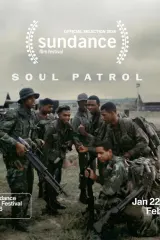
Top Cast





Trailer
Synopsis
In Soul Patrol, the surviving members of the Vietnam War’s first all‑Black special‑operations unit gather for the first time in decades to recount their covert missions behind enemy lines. Through candid interviews, archival combat footage, and on‑location visits to former battlefields, the film pieces together a hidden chapter of military history that has long been omitted from official narratives.
The documentary follows the veterans as they confront memories of secrecy, loss, and brotherhood, raising the question of whether public acknowledgment can finally bring closure to lives shaped by silence.
Soul Patrol: A Documentary Reckoning
Soul Patrol arrives as a 100‑minute documentary directed and written by J.M. Harper, chronicling the Vietnam War’s first Black special‑operations team as they reunite decades later to recount their covert missions. The film leans heavily on first‑person testimony, archival footage, and on‑location interviews, aiming to fill a gap in mainstream military history.
Direction and Structure
Harper adopts a conventional talking‑head format punctuated by grainy combat reels and present‑day reunions. The pacing is steady, but the narrative occasionally stalls when the film lingers on ceremonial moments rather than probing the psychological toll of secrecy. A tighter edit could have sharpened the contrast between the soldiers’ youthful bravado and their later reflections.
Performances and Presence
The ensemble — Danielle Lyn as Mia, Michael Oloyede as Mattox, Deion Smith as Brock, Okea Eme‑Akwari as Reid, Elijah Richardson as Mackey, Myles Simms‑Aur as Emanuel — delivers raw, unscripted authenticity. Their chemistry feels earned; the veterans speak over each other, laugh, and sometimes fall silent, which conveys camaraderie more convincingly than any reenactment could. Mark Nguyen and Imee Cuison appear briefly as a NVA soldier and a Vietnamese woman, offering fleeting but necessary perspective from the other side.
Cinematography and Sound
Visually, the film mixes handheld digital interviews with archival 16mm footage, creating a tactile contrast that underscores the passage of time. The sound design leans on ambient jungle recordings during the veterans’ recollections, a subtle but effective cue that immerses the audience without overwhelming the dialogue. However, occasional audio level mismatches between archival clips and contemporary interviews distract from the immersion.
Storytelling Choices
The documentary’s central question — whether reckoning with the past can bring peace — is posed early but never fully resolved. Harper presents the veterans’ testimonies without a strong analytical framework, leaving viewers to draw their own conclusions. While this restraint respects the subjects’ agency, it also means the film lacks a clear thematic through‑line, making the final act feel more like a reunion video than a cohesive argument.
Historical Context and Gaps
While the documentary succeeds in preserving personal narratives, it offers limited exposition on the broader strategic role of Black special‑ops units in Vietnam. The absence of historian commentary or declassified documents means the film functions more as a memoir collection than a comprehensive historical record. For audiences unfamiliar with the era, supplemental reading will be necessary to grasp the full significance of the team’s missions.
Who Will Appreciate It
Viewers interested in overlooked chapters of American military history, especially the intersection of race and special operations, will find valuable material here. Scholars and students of oral history may appreciate the primary‑source richness. Casual documentary fans seeking a tightly crafted, narrative‑driven experience might find the loose structure and limited contextual analysis underwhelming.
Pros
- Authentic first‑person accounts from the actual veterans
- Rare archival footage that illuminates a hidden military chapter
- Strong ensemble chemistry that conveys genuine camaraderie
- Effective use of sound design to evoke the jungle environment
Cons
- Narrative lacks a clear analytical framework or thesis
- Pacing drags during ceremonial reunion sequences
- Limited historical context beyond personal recollections
- Occasional audio level inconsistencies between archival and new material
Verdict
Soul Patrol offers an important, if uneven, oral history of a neglected unit; its raw testimonies are compelling, but the film’s loose structure and limited analysis keep it from becoming a definitive documentary. Worth watching for viewers drawn to untold military stories, though it may leave others wanting tighter storytelling.
Reader Rating
Be the first to rate this movie
Write a Review
Sign in to share what you thought — star ratings above need no account.
Frequently Asked
Is Soul Patrol worth watching?
If you are interested in untold Vietnam War stories and oral history, the film provides valuable firsthand testimony, though its loose structure may frustrate viewers seeking a tightly edited documentary.
What is Soul Patrol about?
The documentary reunites the Vietnam War’s first Black special‑operations team to recount their covert missions and reflect on the impact of decades of silence.
Is Soul Patrol suitable for kids?
The film contains war footage, discussions of combat trauma, and mature themes; it is best suited for teen and adult audiences.
Who directed Soul Patrol?
J.M. Harper directed and wrote the documentary.
How long is Soul Patrol?
The runtime is 100 minutes.
If you liked this, watch
Movie data provided by TMDB. This product uses the TMDB API but is not endorsed or certified by TMDB.