
Synopsis
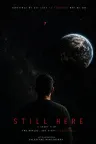
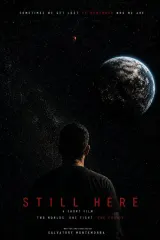
In a surreal landscape that blurs the line between memory and oblivion, a young man drifts through fragmented recollections, searching for a lost piece of himself. The film follows his quiet quest across stark, dreamlike environments, offering glimpses of a past he cannot fully grasp.
As he navigates an endless void, each encounter with a memory fragment raises questions about identity, regret, and the possibility of return, all within a concise ten‑minute runtime.
Still Here: A Ten‑Minute Exploration of Memory
Still Here arrives as a compact, ten‑minute meditation on loss and identity, directed and written by Salvatore Montemorra. The film’s tagline — “Sometimes we get lost to remember who we are” — sets an ambitious philosophical tone for a runtime that barely exceeds a commercial break.
Direction and Visual Language
Montemorra uses a minimalist visual palette, alternating between stark, desaturated voids and warm, fragmented memories. The camera often lingers on empty corridors and reflective surfaces, creating a sense of spatial disorientation that mirrors the protagonist’s internal state. While the composition is deliberate, the short length limits the ability to develop a visual motif beyond the opening and closing shots.
Narrative and Writing
The script leans heavily on voice‑over narration to convey the young man’s search for something he “thought he had lost.” Because the story is confined to a single perspective, the exposition feels both intimate and constrained. The central metaphor — an endless void representing forgotten self — is clear, yet the resolution arrives abruptly, leaving several thematic threads unresolved. For a piece this brief, the narrative economy is understandable, but it also prevents deeper emotional resonance.
Sound Design and Atmosphere
A sparse score, built around low‑frequency drones and occasional piano motifs, underscores the film’s meditative pace. Sound design effectively distinguishes the memory sequences from the void, using subtle reverberation shifts. However, the reliance on a single recurring theme can become repetitive across the ten‑minute span.
Editing and Pacing
The edit moves in measured beats, allowing each image to breathe before cutting to the next fragment. This deliberate pacing reinforces the contemplative mood, yet the lack of rhythmic variation can make the middle section feel static. A tighter trim or a contrasting tempo might have heightened the sense of urgency in the protagonist’s quest.
Thematic Ambition vs. Execution
Montemorra aims to tackle identity, regret, and the elasticity of memory within a micro‑budget framework. The ambition is evident in the layered symbolism — mirrors, corridors, fading light — but the execution occasionally feels like a sketch rather than a fully realized statement. The film hints at a richer mythology that a longer format could explore.
Who Might Appreciate It
Viewers who enjoy experimental shorts, philosophical sci‑fi, or visual poetry will find Still Here a thought‑provoking diversion. Those expecting a conventional plot, character arcs, or dialogue‑driven drama may feel underwhelmed by the film’s abstract approach.
Pros
- Striking minimalist cinematography that conveys isolation
- Effective sound design distinguishing memory from void
- Clear, thought‑provoking central metaphor
- Concise runtime respects the viewer’s time
Cons
- Narrative resolves too abruptly, leaving themes underdeveloped
- Repetitive musical motif over the full ten minutes
- No credited cast makes performance assessment impossible
- Pacing feels static in the middle section
Verdict
Still Here is an ambitious, visually striking short that succeeds more as a mood piece than a complete story. Its brevity limits character depth, but the film’s atmospheric craft makes it worth a watch for fans of experimental cinema.
Reader Rating
Be the first to rate this movie
Write a Review
Sign in to share what you thought — star ratings above need no account.
Frequently Asked
Is Still Here worth watching?
If you enjoy short, experimental films that prioritize atmosphere over plot, it offers a compelling visual experience; otherwise, its abstract nature may feel unsatisfying.
What is Still Here about?
A young man wanders through a surreal void and fragmented memories, searching for a lost part of his identity in a ten‑minute meditation on loss and self‑discovery.
Is Still Here suitable for kids?
The film contains no explicit violence or language, but its abstract, melancholic tone and philosophical themes are more appropriate for mature audiences.
Who directed Still Here?
Salvatore Montemorra directed and wrote the film.
How long is Still Here?
The runtime is 10 minutes.
If you liked this, watch
Movie data provided by TMDB. This product uses the TMDB API but is not endorsed or certified by TMDB.