

Top Cast
Trailer
Synopsis
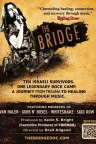
In the wake of the October 7 attacks, a group of young Israeli survivors travels to Los Angeles to attend Rock ’n’ Roll Fantasy Camp, an intensive program where they write, rehearse, and perform original music alongside professional musicians. Over the course of a week, the participants confront grief, fear, and isolation through collaborative songwriting, searching for a path from trauma toward healing.
The documentary follows their journey without narration or expert commentary, capturing rehearsals, candid conversations, and a final public concert that tests whether music can truly bridge the gap between survival and living.
The Bridge (2026) Review: Music as a Fragile Lifeline
The Bridge (2026) arrives with a premise that is both timely and inherently cinematic: a group of young Israeli survivors of the October 7 attacks travel to Los Angeles for Rock ’n’ Roll Fantasy Camp, where they collaborate with professional musicians in search of catharsis. Director Brad Allgood has unfettered access to a raw, unfolding process, yet the film’s 70-minute runtime forces a compression that occasionally feels more like a highlight reel than a deep immersion.
Direction and Approach
Allgood adopts a fly-on-the-wall aesthetic, letting the participants’ interactions drive the narrative. There are no talking-head interviews with experts, no overt narration — just the camp’s workshops, jam sessions, and late-night conversations. This restraint is admirable; it avoids the didacticism that plagues many issue-driven documentaries. However, the absence of contextual framing (historical, political, or psychological) means the viewer must bring their own knowledge to fill the gaps. The camera often lingers on faces during moments of vulnerability, but the editing rarely allows a scene to breathe long enough for genuine intimacy to develop. The result is a film that feels respectful yet oddly distant, as if Allgood is afraid to push past the surface of the trauma he documents.
Performances: Real People, Real Stakes
The cast — Yaniv Avitan, Raz Shifer, Dov Engel, Bar Rudaeff, Valeria Dvorkin, Ben King, David Klein, Yakir Uzan, Tuval Haim, Sagi Ara — are not actors but the survivors themselves. Their presence is the film’s greatest asset. When Avitan picks up a guitar for the first time since the attack, or when Shifer hesitates before sharing lyrics about loss, the authenticity is undeniable. Yet the film’s structure treats them as a collective rather than individuals; we learn fragments of their stories but rarely enough to distinguish their arcs. The professional musicians (including King and Klein) serve as mentors, but their roles feel under-explored — are they there to teach, to witness, or to heal themselves? The documentary never quite answers.
Story and Thematic Depth
The central thesis — that music can bridge trauma and resilience — is compelling, but The Bridge struggles to interrogate it. We see breakthroughs: a survivor writing a chorus that articulates grief, a group harmonizing on a cover of “Lean on Me.” These moments are moving, yet the film sidesteps harder questions. Does the camp’s fantasy-camp gloss (celebrity guests, staged performances) risk trivializing the participants’ experiences? Can a week-long intensive produce lasting change, or is it a temporary salve? Allgood hints at these tensions — a brief argument about song choice, a survivor’s confession that the music feels “too happy” — but pulls back before they can complicate the narrative. The ending, a concert for friends and family, aims for triumph but lands closer to ambiguity, which may be the most honest note the film strikes.
Who Will Connect With This Film
Viewers drawn to music-as-therapy documentaries (Alive Inside, The Music of Strangers) will find familiar emotional beats. Audiences seeking a nuanced portrait of October 7’s aftermath may feel the film’s apolitical stance either refreshing or evasive, depending on expectation. The concise runtime makes it accessible for educational or community screenings, though its brevity also limits its capacity as a definitive document. Ultimately, The Bridge is a well-intentioned, competently made snapshot that gestures toward profundity without fully grasping it.
Pros
- Authentic, unguarded moments from real survivors
- Respectful, non-exploitative fly-on-the-wall direction
- Compelling premise with clear emotional stakes
- Concise runtime avoids fatigue
- Effective use of music as narrative thread
Cons
- Insufficient character development for ensemble cast
- Avoids political/historical context that could deepen understanding
- Rushes through complex emotional arcs due to short runtime
- Camp’s "fantasy" framing occasionally clashes with gravity of trauma
- Ending feels more performative than transformative
Verdict
The Bridge offers a sincere, if surface-level, look at music’s therapeutic potential for trauma survivors. Its restraint is both a strength and a limitation — respectful but rarely revelatory. Worth watching for its humanity, but don’t expect a deep dive.
Reader Rating
Be the first to rate this movie
Write a Review
Sign in to share what you thought — star ratings above need no account.
Frequently Asked
Is The Bridge worth watching?
If you’re interested in music therapy documentaries or contemporary Israeli perspectives, yes — it’s a sincere, brief watch. If you want deep psychological or political analysis, you may find it lacking.
What is The Bridge about?
Young Israeli survivors of the October 7 attacks attend Rock ’n’ Roll Fantasy Camp in LA, using collaborative music-making as a tool for healing and resilience.
Is The Bridge suitable for kids?
The film deals with trauma, grief, and terrorism aftermath; while not graphic, themes are mature. Parental discretion advised for viewers under 13.
Who directed The Bridge?
Brad Allgood directed the documentary.
How long is The Bridge?
70 minutes.
If you liked this, watch
Movie data provided by TMDB. This product uses the TMDB API but is not endorsed or certified by TMDB.