

Top Cast


Synopsis
As a mysterious light sweeps across Los Angeles, causing people to vanish without a trace, two teenagers — Theo and Olivia — race toward a hilltop radio tower to send a final broadcast to anyone still listening. Meanwhile, a young man and his grandmother stay behind in their apartment, confronting the silence of a world that's almost gone. With no explanation for the phenomenon and time running out, each group faces a different kind of ending.
The Myth of Sisyphus: A Micro-Budget Apocalypse
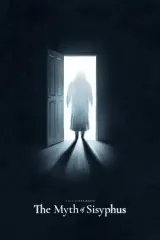
The Myth of Sisyphus arrives as a 19-minute micro-budget sci-fi drama that punches above its weight class, even if it doesn't always land the emotional knockout it aims for. Writer-director Eze Baum (who also appears on screen as Eze) constructs a quiet end-of-the-world scenario where Los Angeles residents vanish into blinding light, leaving a handful of survivors to grapple with finality. The premise is ripe for existential dread, but the short runtime forces a sprint through character arcs that deserve a marathon.
Direction & Scope
Baum's direction shows ambition that outstrips resources. The vanishing effect — people dissolving into white light — is deployed sparingly and effectively, creating unease without expensive VFX. The radio tower location provides a strong visual anchor, and the cinematography captures the eerie stillness of an emptied city. However, the film's micro-budget roots show in inconsistent lighting, occasional audio hiccups, and a handful of scenes where the limited crew can't quite sell the scale of the catastrophe. Baum's choice to keep the apocalypse intimate — no news broadcasts, no military response — is smart, but the script occasionally overcompensates with exposition-heavy dialogue that feels more like a stage play than cinema.
Performances & Chemistry
The cast carries the film's emotional weight with varying success. Phoenix Vinar as Theo brings a raw, jittery energy that fits a teenager facing oblivion; his scenes with Agatha Davies' Olivia have a lived-in authenticity, their banter feeling like genuine teenage deflection. Sandi Cantor as Didi (the grandmother) delivers the film's most grounded performance, conveying decades of resignation in few lines. Nick Cigan as Nick and Baum himself as Eze are serviceable but underwritten, their arcs truncated by the runtime. The ensemble's chemistry is the film's strongest asset — when the script lets them breathe, you believe these people know each other.
Story & Themes
The narrative splits between the teens' trek to the tower and the grandmother-grandson duo's stationary vigil. This structure creates a nice thematic tension: action vs. acceptance, broadcasting vs. receiving. The title's philosophical nod to Camus is explicit but not heavy-handed; the film asks whether meaning exists in a final act of communication. Yet the 19-minute container strangles the exploration. Key emotional beats — a revealed secret, a sacrifice, the broadcast itself — arrive without sufficient setup, robbing them of impact. The ending aims for poetic ambiguity but lands closer to abruptness.
Who Should Watch
Fans of low-fi, idea-driven sci-fi (think Primer or Coherence on an even tighter shoestring) will appreciate the ingenuity. Viewers seeking polished performances or a fully realized apocalypse may find it frustrating. It's a calling-card film — evidence of a filmmaker with voice and vision who needs a longer canvas.
Pros
- Ambitious high-concept premise executed on minimal resources
- Strong central performances from Vinar, Davies, and Cantor
- Effective use of a single striking location (radio tower)
- Thought-provoking philosophical undercurrent (Camus reference)
- Intimate, character-focused take on apocalypse tropes
Cons
- Runtime too short to develop characters or earn emotional beats
- Visible budget constraints in lighting, audio, and effects
- Exposition-heavy dialogue that feels theatrical rather than cinematic
- Abrupt ending that reads as incomplete rather than ambiguous
- Supporting characters (Nick, Eze) severely underwritten
Verdict
An ambitious micro-budget short with a compelling premise and genuine moments of human connection, but its 19-minute runtime suffocates the emotional and philosophical depth the story demands. Worth a watch for indie sci-fi completists, but feels more like a proof of concept than a complete meal.
Reader Rating
Be the first to rate this movie
Write a Review
Sign in to share what you thought — star ratings above need no account.
Frequently Asked
Is The Myth of Sisyphus worth watching?
If you enjoy micro-budget, idea-driven sci-fi shorts and can forgive rough edges, yes. It shows clear directorial voice but feels like a calling card rather than a fully realized story.
What is The Myth of Sisyphus about?
In a near-future Los Angeles, people vanish into blinding light. Two teens race to a radio tower for a final broadcast while a grandmother and grandson face the end quietly at home. It's a 19-minute drama about communication and meaning at the apocalypse.
Is The Myth of Sisyphus suitable for kids?
No official rating exists, but themes of existential dread, implied mass disappearance, and intense emotional situations make it inappropriate for young children. Teens and up with parental guidance.
How long is The Myth of Sisyphus?
19 minutes. It's a theatrical short film, not a feature.
Who directed The Myth of Sisyphus?
Eze Baum, who also wrote the script and appears in a small acting role.
If you liked this, watch
Movie data provided by TMDB. This product uses the TMDB API but is not endorsed or certified by TMDB.