
Top Cast











Synopsis
Mark A. Altman’s documentary assembles an all-star lineup of Star Trek alumni—from William Shatner and George Takei to Jonathan Frakes and Brent Spiner—to recount the franchise’s 60-year journey from canceled cult series to global multimedia phenomenon. Through exclusive interviews and newly unearthed archival materials, the film explores the creative battles, network politics, and bold artistic choices that shaped each era, from the original 1966 series through the modern streaming revival.
Without relying on a traditional narrator, the documentary lets the participants tell their own stories, weaving together personal anecdotes, behind-the-scenes conflicts, and reflections on Star Trek’s enduring cultural legacy. The result is a chronological tapestry that celebrates the franchise’s optimism while occasionally peeking behind the curtain of its production struggles.
The Sixty Year Mission: How Star Trek Changed Television and the World – A Documentary That Boldly Goes Where Many Have Gone Before
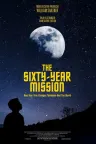
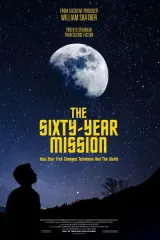
The Sixty Year Mission: How Star Trek Changed Television and the World arrives as a feature-length documentary timed to the franchise’s 60th anniversary. Directed and written by Mark A. Altman, a longtime Trek chronicler, the film assembles an impressive roster of franchise veterans—William Shatner, George Takei, Walter Koenig, Jonathan Frakes, Brent Spiner, Gates McFadden, Robert Picardo, Christina Chong, Denise Crosby, and Nana Visitor—all appearing as themselves to reflect on six decades of cultural impact. The tagline “Truth is Stranger than Science Fiction” promises revelations, but the documentary’s execution walks a fine line between celebratory retrospective and critical excavation.
Direction and Archival Ambition
Altman’s direction leans heavily on talking-head interviews intercut with never-before-seen archival footage, a familiar formula for franchise documentaries. The pacing is brisk, covering the original series’ cancellation, the film era, the spin-off explosion, and the modern streaming resurgence. However, the narrative often feels like a greatest-hits compilation rather than a cohesive thesis. While the access to rare materials is commendable, the film occasionally sacrifices depth for breadth, glossing over contentious periods—such as the creative battles behind Star Trek: The Motion Picture or the network interference that shaped Voyager—in favor of a more harmonious “family reunion” tone. The lack of a stated runtime (still unconfirmed) suggests the theatrical cut may have been trimmed for pacing, potentially leaving deeper analysis on the cutting room floor.
Performances: Nostalgia vs. Insight
The cast’s participation is the documentary’s strongest asset. Shatner’s charismatic self-mythologizing, Takei’s eloquent activism, and Frakes’ director’s-eye perspective provide genuine moments of candor. Yet the format—each star essentially delivering a curated anecdote—limits confrontation. Denise Crosby’s reflections on leaving TNG and Nana Visitor’s take on DS9’s serialized risks are highlights, but they’re framed as personal journeys rather than systemic critiques. Christina Chong’s inclusion as a newer voice (from Strange New Worlds) bridges eras, yet her screen time feels tokenistic. The film shines when interviewees challenge the mythos—Spiner’s dry wit on Data’s evolution, McFadden on Crusher’s marginalization—but these flashes are too brief.
Who Should Beam Aboard?
For die-hard fans, The Sixty Year Mission delivers a polished, affectionate valentine packed with Easter eggs and emotional callbacks. Casual viewers may appreciate the cultural-history angle—how Trek influenced technology, diversity, and serialized storytelling—but the documentary assumes considerable prior knowledge. Scholars of television history might find the analysis surface-level compared to academic works like The Star Trek Encyclopedia or the unauthorized Chaos on the Bridge. Ultimately, the film succeeds as a commemorative artifact but struggles to transcend its promotional origins. It’s a competent, enjoyable watch that rarely surprises—much like a familiar episode you’ve seen a dozen times.
Pros
- Unprecedented access to nearly every major living Trek star across eras
- Rare archival footage not seen in previous documentaries
- Strong emotional resonance for longtime fans
- Effective bridging of classic and modern series perspectives
- Polished production values suited for theatrical presentation
Cons
- Avoids tough questions about franchise missteps and creative interference
- Talking-head format becomes repetitive over feature length
- Newer cast members (e.g., Christina Chong) feel underutilized
- Narrative prioritizes celebration over critical analysis
- Assumes deep prior knowledge, alienating casual viewers
Verdict
A well-crafted but safe retrospective that satisfies nostalgia more than it challenges assumptions. Essential for Trek completists, optional for everyone else.
Reader Rating
Be the first to rate this movie
Write a Review
Sign in to share what you thought — star ratings above need no account.
Frequently Asked
Is The Sixty Year Mission: How Star Trek Changed Television and the World worth watching?
If you're a Star Trek fan, yes—it's a lovingly assembled tribute with great interviews. If you're new to the franchise, you may find it inaccessible and overly reverential.
What is The Sixty Year Mission: How Star Trek Changed Television and the World about?
It's a documentary chronicling Star Trek's 60-year history through exclusive cast interviews and unseen archives, covering its creation, cancellation, revival, and cultural impact.
Is The Sixty Year Mission: How Star Trek Changed Television and the World suitable for kids?
Likely yes—it's a documentary with no graphic content, but younger children may lose interest due to its interview-heavy format and assumed franchise knowledge.
Who directed The Sixty Year Mission: How Star Trek Changed Television and the World?
Mark A. Altman, a journalist and producer known for previous Star Trek documentaries like The Captains and Chaos on the Bridge, wrote and directed this film.
Does The Sixty Year Mission cover the modern streaming series like Discovery and Strange New Worlds?
Yes, the documentary spans the entire 60-year timeline, including the current Paramount+ era, with input from newer cast members like Christina Chong.
If you liked this, watch
Movie data provided by TMDB. This product uses the TMDB API but is not endorsed or certified by TMDB.