

Top Cast
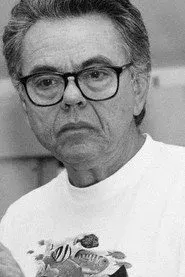
Zelito Viana
Director

Marília Pêra
Self (archive footage)

Sandra Pêra
Self (archive footage)
Nina Morena
Self (archive footage)
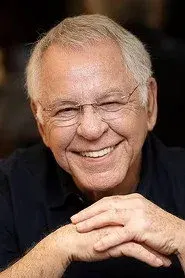
Nelson Motta
Self (archive footage)
Esperança Motta
Self (archive footage)
Ricardo Graça Mello
Self (archive footage)
Manuel Pêra
Self (archive footage)
Dinorah Marzullo
Self (archive footage)

Hebe Camargo
Self (archive footage)

Marco Nanini
Self (archive footage)

Héctor Babenco
Self (archive footage)
Synopsis
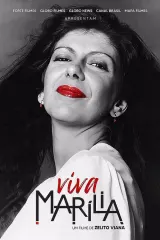
Viva Marília chronicles the life and career of iconic Brazilian actress Marília Pêra through a tapestry of archival footage spanning the 1960s to the 1980s. The documentary intertwines her artistic milestones — from theatrical breakthroughs to television stardom — with the shifting political and social landscape of Brazil under military dictatorship and its aftermath.
Featuring appearances by family members, collaborators, and cultural figures like Nelson Motta and Hebe Camargo, the film paints a portrait of an artist who navigated censorship, cultural revolution, and personal triumphs, offering a window into a transformative era of Brazilian arts.
Viva Marília: An Archival Tribute to a Brazilian Icon
Viva Marília (2026) arrives as a documentary celebration of one of Brazil's most beloved stage and screen actresses, Marília Pêra. Directed by veteran filmmaker Zelito Viana and written by cultural journalist Nelson Motta, the film assembles a wealth of archival footage to trace Pêra's career against the backdrop of Brazil's turbulent decades from the 1960s through the 1980s. At a concise 80 minutes, it aims to be both a historical primer and a loving homage, but the result feels more like a curated scrapbook than a probing biography.
Direction and Archival Craft
Viana's approach is reverent, stitching together television clips, theatrical recordings, and interview snippets featuring Pêra herself alongside contemporaries like Marco Nanini, Hebe Camargo, and her sister Sandra Pêra. The editing rhythm respects the material's vintage texture, avoiding slick modern interventions. However, the film's reliance solely on existing footage means it never breaks out of the "greatest hits" format. There's no new perspective, no uncomfortable questions, and the historical context — while efficiently delivered — often serves as mere backdrop rather than analytical lens. For viewers unfamiliar with Brazilian political history, the rapid jumps between dictatorship-era censorship and the cultural explosion of the 1970s may feel underserved.
Performances and Presence
The true draw remains Pêra's magnetic presence, even in grainy archives. Her comedic timing, dramatic intensity, and sheer command of the stage leap across decades. The inclusion of family members and collaborators adds intimate texture, particularly Nina Morena and Ricardo Graça Mello reflecting on shared creative risks. Yet the documentary's "self" casting — everyone appears as themselves via archive — creates a closed loop of admiration. Nelson Motta's narration, drawn from his writing, offers literary flair but rarely challenges the hagiographic tone. A more critical voice, perhaps from a younger generation of artists influenced by Pêra, could have added necessary friction.
Who Will Enjoy Viva Marília
This is a film made for devotees. If you already cherish Marília Pêra's work, the compilation of rare performances and personal anecdotes will delight. Students of Brazilian cultural history may appreciate the efficient timeline of artistic resistance under authoritarian rule. Casual viewers, however, might find the insider references and lack of explanatory depth alienating. The PG-13 rating suggests mild thematic elements, but the content is largely accessible to mature teens interested in theater history. Ultimately, Viva Marília functions as a warm, if uncritical, invitation to explore a towering figure's legacy — best paired with a deeper dive into her actual films and plays.
Pros
- Rich archival footage showcases Marília Pêra's magnetic stage presence across decades
- Efficiently contextualizes her career within Brazil's turbulent political history
- Intimate contributions from family and close collaborators add personal texture
- Concise 80-minute runtime respects the viewer's time without padding
- Zelito Viana's direction preserves the vintage authenticity of the source material
Cons
- Hagiographic tone avoids critical examination of Pêra's choices or contradictions
- Relies entirely on existing footage — no new interviews or fresh perspectives
- Assumes audience familiarity with Brazilian history and cultural references
- Historical context often feels decorative rather than analytically integrated
- May feel insular for viewers without prior affection for the subject
Verdict
Viva Marília is a heartfelt but uncritical archive-driven tribute that will satisfy fans of Marília Pêra and Brazilian theater history, though its lack of analytical depth may leave newcomers wanting more context. It's a warm introduction to a legend, not a definitive biography.
Reader Rating
Be the first to rate this movie
Write a Review
Sign in to share what you thought — star ratings above need no account.
Frequently Asked
Is Viva Marília worth watching?
If you admire Marília Pêra or Brazilian theater history, yes — it's a loving compilation of rare performances. For general audiences, it may feel too niche and uncritical to stand alone as a compelling documentary.
What is Viva Marília about?
The film documents the career of actress Marília Pêra from the 1960s through the 1980s, using archival clips to connect her artistic evolution to Brazil's political and social upheavals during those decades.
Is Viva Marília suitable for kids?
Rated PG-13, it contains mild thematic elements related to dictatorship-era censorship and artistic struggle. Mature teens interested in theater or history may appreciate it, but younger children likely won't engage.
Who directed Viva Marília?
Zelito Viana, a veteran Brazilian filmmaker, directed the documentary. The screenplay was written by Nelson Motta, a prominent music journalist and cultural commentator.
Does Viva Marília include new interviews?
No. The film is constructed entirely from archival footage — television appearances, theatrical recordings, and past interviews — featuring Marília Pêra and her contemporaries as themselves.
Movie data provided by TMDB. This product uses the TMDB API but is not endorsed or certified by TMDB.