
Top Cast
Trailer
Synopsis
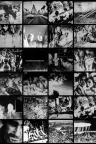
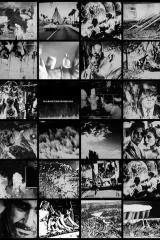
Experimental filmmaker Péter Lichter reassembles the complete audio of Orson Welles' legendary 1938 "War of the Worlds" radio broadcast — the Halloween prank that convinced countless Americans a Martian invasion was underway — and pairs it with a kaleidoscopic visual archive. AI-generated landscapes, drone surveillance footage, fragments of Hollywood blockbusters, video-game renders, and scraped internet clips collide with Welles' breathless news-bulletin delivery, creating a media-archaeological artifact that interrogates how format manufactures belief.
No new narration or dialogue is added; the 1938 broadcast runs uninterrupted while the imagery shifts restlessly between the synthetic and the documentary, the cinematic and the vernacular. The film traces a lineage from radio's golden age to today's algorithmic hallucinations, asking whether the panic of 1938 was an anomaly or a preview.
War of the Worlds (2026) Review: A Haunting Media Archaeology Experiment
War of the Worlds (2026) is not a conventional adaptation of H.G. Wells' novel, nor a straightforward documentary about the infamous 1938 panic. Instead, Hungarian experimental filmmaker Péter Lichter constructs a 60-minute collage that treats Orson Welles' original Mercury Theatre broadcast as both raw material and ghostly narrator. The result is a disorienting, often hypnotic meditation on how media formats manufacture credibility — and how easily we surrender to them.
Direction and Form
Lichter's approach is rigorously conceptual. He layers AI-generated visuals, drone cinematography, clips from feature films and video games, and ephemeral internet detritus over the unaltered 1938 audio. The juxtaposition is deliberately unstable: a shaky smartphone clip of a suburban street dissolves into a polished CGI tripod; a 1950s newsreel aesthetic bleeds into a first-person shooter HUD. This instability is the point. Lichter refuses to let the viewer settle into any single visual grammar, mirroring the broadcast's own tactic of mimicking authoritative news formats. At 60 minutes, the piece sustains its premise without overstaying, though the relentless density can feel exhausting rather than enlightening in the final stretch.
Performance and Audio
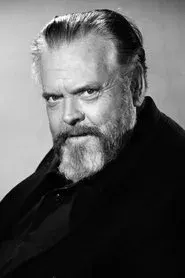
The "performance" belongs entirely to Orson Welles, dead since 1985. His 1938 narration — urgent, measured, performatively journalistic — remains startlingly potent. Hearing it divorced from its original context and forced to comment on imagery it never anticipated (drone swarms, glitching deepfakes) creates a productive friction. Welles becomes an unwitting prophet of synthetic media. Yet the film never quite decides whether to critique him, mourn him, or simply exhibit him. That ambiguity is both a strength and a cop-out.
Who Should Watch
This is niche viewing. Audiences expecting a narrative sci-fi thriller will be baffled. But for viewers interested in media theory, found-footage practice, or the genealogy of misinformation, War of the Worlds offers a dense, provocative text. It plays like a video essay that escaped the classroom and colonized a cinema screen — ambitious, flawed, and impossible to ignore.
Pros
- Innovative reuse of historic audio as critical commentary
- Visually dense collage rewards repeat viewing
- Sharp conceptual link between 1938 radio format and modern AI media
- Brisk 60-minute runtime respects the material's intensity
Cons
- Relentless visual switching can induce fatigue over clarity
- Ambivalent stance toward Welles' original hoax feels unresolved
- Lacks accessibility for viewers unfamiliar with media theory
- AI-generated segments vary wildly in aesthetic quality
Verdict
A rigorous, unsettling collage that repurposes the 1938 panic broadcast as a lens on synthetic media. Essential for experimental cinema and media-studies audiences; alienating for anyone seeking conventional storytelling.
Reader Rating
Be the first to rate this movie
Write a Review
Sign in to share what you thought — star ratings above need no account.
Frequently Asked
Is War of the Worlds (2026) a remake of the 1953 or 2005 films?
No. It is an experimental collage film built entirely around the original 1938 Orson Welles radio broadcast audio, combined with contemporary and AI-generated visuals.
What is War of the Worlds (2026) about?
The film uses the 1938 'War of the Worlds' panic broadcast as a foundation to explore how media formats — from radio news bulletins to AI video — manufacture authority and trigger belief.
Is War of the Worlds (2026) suitable for kids?
Not recommended for children. The dense, disorienting audiovisual style and themes of media manipulation are aimed at adult audiences interested in experimental cinema.
How long is War of the Worlds (2026)?
The film runs 60 minutes.
Who directed War of the Worlds (2026)?
Hungarian experimental filmmaker Péter Lichter directed the film.
If you liked this, watch
Movie data provided by TMDB. This product uses the TMDB API but is not endorsed or certified by TMDB.