
Synopsis
A woman moves through unnamed cities, her journey captured in fragmented observational footage. Meanwhile, a man's letters — read in voiceover — reach across the distance, addressing her with a mix of longing, observation, and quiet confession. The two threads never visually intersect; the film lives in the gap between her movement and his words.
With You (2026) Review: A Fleeting Epistolary Experiment
At just five minutes, With You (2026) barely qualifies as a short film — it's more of a cinematic haiku. Director Samantha Chater, who also writes, constructs a dialogue between image and text: a woman's travel footage unspools while a man's letters arrive in voiceover. The premise is intimate, even tender, but the runtime forces a compression that feels less like discipline and more like truncation.
Direction and Form
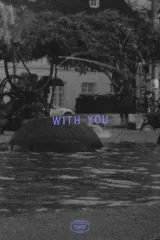
Chater's choice to separate visual and verbal tracks creates a deliberate distance. The woman is seen but not heard; the man is heard but not seen. This asymmetry could suggest emotional disconnect, or simply the mechanics of long-distance connection. Visually, the travel footage is competent but rarely transcendent — cityscapes, transit windows, anonymous streets. There's no strong visual grammar to distinguish one location from another, which may be the point (displacement, blur) but reads as under-curated. The letters, delivered in a measured male voice, carry literary weight but lack specificity; they feel written for the film rather than extracted from life.
What Works and Who It's For
The film's strength is its restraint. It doesn't over-explain. Viewers who appreciate experimental nonfiction — think of the quieter works of Chantal Akerman or the essayistic shorts of Ross McElwee — may find a resonant core here. But the brevity undermines immersion. Just as the correspondence begins to accumulate emotional sediment, the film ends. There's no third act, no shift in perspective, no formal surprise. It's a single gesture, held.
With no cast credited and no festival pedigree yet public, With You exists in a liminal space: too slight for traditional distribution, perhaps destined for micro-cinema programs or online curated platforms. Its audience score remains unknown, and that's appropriate — this isn't a film that courts consensus.
Pros
- Inventive separation of image and voice creates productive tension
- Restrained, non-explanatory approach respects viewer intelligence
- Letter-writing voiceover has literary texture and emotional weight
Cons
- Five-minute runtime prevents emotional or formal development
- Travel footage feels generic, lacking visual distinction or curation
- Letters read as written-for-film rather than authentic correspondence
- No structural progression — the film simply stops
Verdict
A sincere but slight epistolary experiment that gestures toward intimacy without the runtime to earn it. Worth a watch for fans of minimalist documentary form, but unlikely to linger.
Reader Rating
Be the first to rate this movie
Write a Review
Sign in to share what you thought — star ratings above need no account.
Frequently Asked
What is With You (2026) about?
A woman's travel footage plays alongside a man's letters read in voiceover, exploring distance and connection through separated image and sound.
How long is With You (2026)?
The film runs exactly five minutes.
Is With You (2026) a documentary?
Yes, it's classified as a documentary, though its experimental form blurs the line with essay film and video art.
Who directed With You (2026)?
Samantha Chater, who also wrote the film.
Is With You (2026) worth watching?
If you enjoy ultra-short experimental nonfiction, yes. If you prefer narrative coherence or emotional arc, probably not.
If you liked this, watch
Movie data provided by TMDB. This product uses the TMDB API but is not endorsed or certified by TMDB.