

Top Cast








Trailer
Synopsis
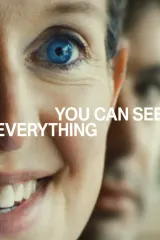
Thirty-four days before reporting to prison, Theranos founder Elizabeth Holmes invites a film crew led by Nathan Fielder and Lance Oppenheim to document her final weeks of freedom. The project expands into a three-year endeavor that blurs documentary and performance: actors Amanda Seyfried and Christopher Abbott are hired to portray Holmes and her partner Billy Evans, while the real Holmes and Evans participate on camera. The result is a layered, often disorienting exploration of image, control, and the stories we tell to survive.
You Can See Everything Review: Fielder's Meta-Maze
You Can See Everything arrives as Nathan Fielder's most ambitious formal experiment yet: a 174-minute documentary that folds its own making into the story, casting actors to play the very people who are also playing themselves. The premise is irresistible — Elizabeth Holmes, weeks from surrendering to prison, grants access to a crew led by Fielder and Lance Oppenheim. What follows is less a profile than a hall of mirrors, where every "authentic" moment is shadowed by a staged counterpart.
Direction and Structure
Fielder's signature discomfort comedy mutates here into something stranger and more solemn. The three-year span allows the film to track not just Holmes's legal countdown but the erosion of the project's own boundaries. Oppenheim's presence as both collaborator and on-screen participant adds a layer of documentary ethics debate that the film wisely refuses to resolve. Yet the runtime is a genuine liability; the middle act sags under repetitive rehearsal sequences that feel more like Fielder indulging his process than serving the narrative. The A24 executive cameos (Gary Wilmes, Phillip Andre Botello) read as inside-baseball satire that may alienate viewers unfamiliar with the studio's mythology.
Performances: Real vs. Rehearsed
The casting coup — Amanda Seyfried and Christopher Abbott mirroring Holmes and Billy Evans — pays off in uncanny, unsettling ways. Seyfried doesn't mimic; she interprets, capturing Holmes's vocal fry and unblinking gaze without caricature. Abbott finds a quiet desperation in Evans that the real Evans, understandably guarded, cannot or will not show. The friction between the "real" and "performed" versions becomes the film's richest vein. Holmes herself remains opaque, whether by nature or calculation, and the film's refusal to crack her open may feel like a cop-out or a deliberate statement, depending on your patience for ambiguity.
Who Will Enjoy It
Fans of The Rehearsal and Exit Through the Gift Shop will recognize the lineage. Viewers seeking a conventional Elizabeth Holmes documentary — clearer, tighter, more investigative — should look elsewhere. This is a film about the impossibility of capturing truth when the subject performs for survival and the filmmaker performs for art. It demands, and sometimes exhausts, active spectatorship.
Pros
- Audacious formal experiment that pushes documentary boundaries
- Seyfried and Abbott deliver haunting, layered mirror performances
- Unique access to Holmes during a pivotal, high-stakes window
- Provokes genuine questions about performance, truth, and complicity
Cons
- 174-minute runtime feels self-indulgent; middle act drags
- Blurred reality/fiction lines may alienate or confuse general audiences
- Inside-baseball A24 satire narrows accessibility
- Refuses to penetrate Holmes's opacity — may feel like evasion
- Uneven pacing; rehearsal sequences overstay their welcome
Verdict
A fascinating, overlong meta-documentary that turns its own making into the subject. Brilliant in patches, self-indulgent in others — essential for Fielder devotees, frustrating for anyone wanting a straight story.
Reader Rating
Be the first to rate this movie
Write a Review
Sign in to share what you thought — star ratings above need no account.
Frequently Asked
Is You Can See Everything worth watching?
If you admire Nathan Fielder's work (The Rehearsal, Nathan for You) and enjoy films that interrogate their own construction, yes. If you want a clear, concise Elizabeth Holmes documentary, look elsewhere.
What is You Can See Everything about?
It follows Elizabeth Holmes in the weeks before her prison sentence, but evolves into a three-year meta-project where actors re-enact scenes alongside the real participants, blurring documentary and performance.
Is You Can See Everything suitable for kids?
No. The film is rated R for language and mature themes surrounding fraud, legal consequences, and psychological pressure. It's intended for adult audiences.
Is You Can See Everything a comedy or a documentary?
It's classified as a documentary, but operates in a hybrid space — part documentary, part staged re-enactment, part conceptual art. Expect uncomfortable humor, not traditional comedy.
Where can I watch You Can See Everything?
As a 2026 A24 theatrical release, it will debut in cinemas before likely streaming on Max or Paramount+ later. Check local listings for showtimes.
If you liked this, watch
Movie data provided by TMDB. This product uses the TMDB API but is not endorsed or certified by TMDB.