
Choosing a Level 2 EV Charger: Key Considerations
Deciding whether to invest in a Level 2 EV charger depends on various factors including battery size, daily driving habits, and installation considerations.
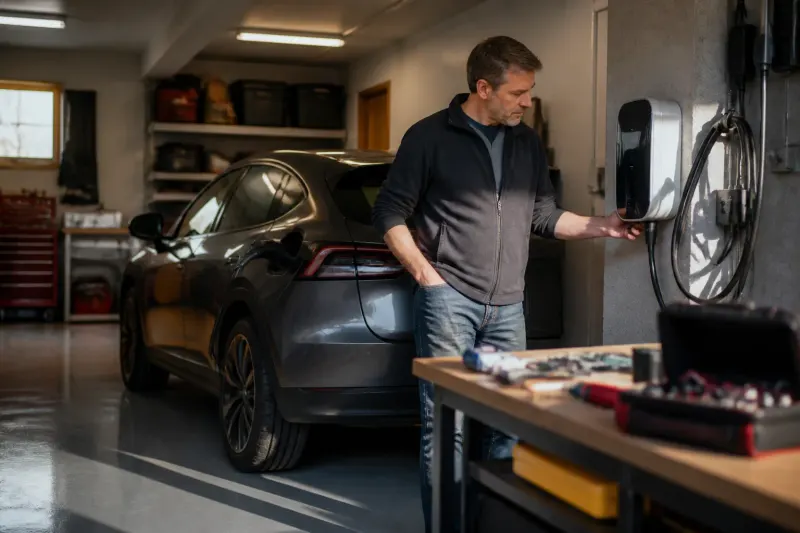
Introduction: The Shift to Electric Vehicles
As electric vehicles (EVs) grow in popularity, many drivers are left wondering about the best charging solutions for their needs. Owning an EV is not only beneficial for the environment but also economical—charging your vehicle through household electricity can cost significantly less than traditional fossil fuels. However, the question remains for many: should one opt for a standard outlet or invest in a faster Level 2 charger?
Understanding Your EV: Battery Size and Usage
When deciding whether a Level 2 charger is necessary, the primary factors to consider are the type of EV in question and its battery specifications. Are you driving a small city car like the Fiat 500e with a compact 38 kWh battery? Or perhaps it's a longer-range vehicle like the Tesla Model 3 (with a battery capacity of 79 kWh) or the Volvo EX30 (69 kWh)? Bigger battery options such as the GMC Sierra EV (155 kWh) also come into play alongside plug-in hybrids like the Toyota Prius Prime (14 kWh) or Toyota RAV4 Prime (18 kWh).
These distinctions are crucial since battery capacity influences how quickly and efficiently your EV can be charged. Standard 15A 120-volt AC outlets deliver around 1.8 kW, translating to prohibitively long charging times: under 10 hours for plug-in hybrids and as much as 86 hours for high-capacity vehicles like the GMC Sierra EV.
Charging Times: Standard Outlet vs. Level 2 Charger
Charging times vary dramatically between standard outlets and Level 2 chargers. A standard household outlet takes:
- Fiat 500e: approximately 21 hours
- Tesla Model 3: about 43 hours
- GMC Sierra EV: a whopping 86 hours
Utilizing a Level 2 charger can dramatically reduce these times:
- 16-amp, 240-volt model: up to 3.5 kW, cutting charging time in half.
- 32-amp, 240-volt charger: provides 7.4 kW, allowing the Tesla Model 3 to charge in about 11 hours and the GMC Sierra EV in about 22 hours.
- 48-amp system: delivers up to 11.5 kW for quicker recharges; however, this depends on the EV's compatibility.
Level 2 Charger Specifications
| Charger Type | Output (kW) | Charging Time for Tesla Model 3 | Charging Time for GMC Sierra EV |
|---|---|---|---|
| Standard Outlet (120V) | 1.8 | 43 hours | 86 hours |
| 16-amp (240V) | 3.5 | 21.5 hours | 43 hours |
| 32-amp (240V) | 7.4 | 11 hours | 22 hours |
| 48-amp (240V) | 11.5 | 7.5 hours | 15 hours |
Daily Driving Habits and Range Considerations
Your daily mileage is a pivotal factor in determining whether you need a Level 2 charger. If your daily driving typically uses only a fraction of your EV's range, a standard outlet may suffice. In stark contrast, for those with extensive commutes or usage that depletes the battery significantly—like driving over 100 miles a day—you may find that charging via a regular outlet falls short.
Safety Benefits and Installation Considerations
Level 2 chargers offer more than just faster charging; they come with several safety advantages. Unlike standard home chargers, which may lack robust safety measures, dedicated Level 2 chargers include features such as grounding and DC leakage protection. These safeguards allow for safe operation even if a home has existing wiring issues.
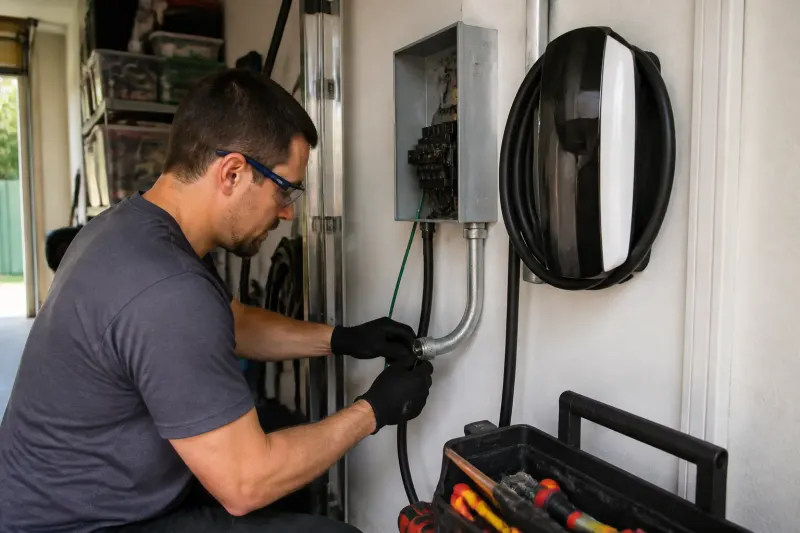
Moreover, while many new homes with 200-amp electrical mains are compatible with Level 2 chargers, those with only 100-amps may require an upgrade, which often comes with a hefty price tag. Typical Level 2 chargers are priced between $250 and $700 based on their amperage and features. Installation itself can range widely in cost, potentially spanning hundreds to thousands depending on how complex the job is.
Budgeting for Charging Equipment
Budgeting for a Level 2 charger requires a thorough evaluation of devices and installation costs. Options include:
- A single-vehicle 240V charger: typically priced between $250 to $700.
- The installation cost: which can vary significantly, potentially requiring substantial investment.
It’s advisable to consider whether pre-existing circuits like those for large appliances can be adapted for use with Level 2 chargers. This can save on installation complexity and costs, but a qualified electrician should verify all configurations.
When Level 2 Chargers Aren't Necessary
Despite the advantages of Level 2 chargers, they are not essential for all EV owners. If you drive less than 50 miles daily or own a small battery vehicle or plug-in hybrid, charging through a standard 120V outlet can satisfactorily meet your needs.
It is key to know your EV's maximum AC charging speed and align it with a Level 2 charger that meets or exceeds that capacity, budget permitting. If your existing wiring can support a compatible charger without major modifications, purchasing one that plugs in directly could be the most economic solution.
Key Takeaways
- Charging on standard household outlets is inefficient for large battery EVs, with charging times exceeding three days in some cases.
- Level 2 chargers can dramatically shorten charging times — up to 11.5 kW is possible based on the model of the charger.
- Installation of Level 2 chargers can require significant budget and planning, especially with older home electrical systems.
- Understanding your daily driving habits is crucial in determining whether a Level 2 charger is necessary or if a standard outlet will suffice.
Conclusion: Making an Informed Decision
Choosing between a standard outlet and a Level 2 charger involves understanding both your EV’s specifications and how you utilize your vehicle. For owners of smaller battery EVs and plug-in hybrids, a standard outlet may suffice, while drivers with more extensive needs will find Level 2 chargers indispensable. Careful consideration of charging times, safety features, and installation costs will also ensure a more efficient and secure charging experience.
Frequently Asked Questions