
Comparing the Apple iPhone 17e and iPhone 17: Features, Specs, and Prices
This article compares the Apple iPhone 17e with the iPhone 17, focusing on their design, display, battery life, performance, and camera capabilities to help you decide.
Introduction: iPhone Lineup and Variants
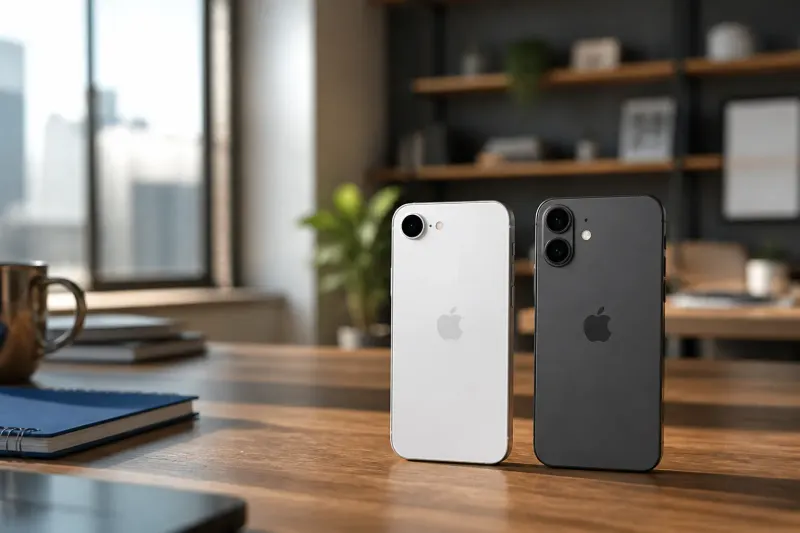
As the Apple iPhone 18 Pro and 18 Pro Max take the spotlight, the iPhone 17e and iPhone 17 represent more affordable options in the current iPhone lineup. With a notable price difference of approximately €650 for the iPhone 17e compared to €900 for the iPhone 17, many potential buyers are left pondering which model is the better investment. Understanding the differences and benefits of each can help inform that decision.
Design
Both the iPhone 17e and iPhone 17 feature a premium design with a Ceramic Shield 2 front, aluminum frame, and glass back. The size differences between the two models are as follows:
- iPhone 17e: 146.7 x 71.5 x 7.8 mm, weighing 169 g
- iPhone 17: 149.6 x 71.5 x 8.0 mm, weighing 177 g
The iPhone 17e sports a 6.1-inch display, while the iPhone 17 has a slightly larger 6.3-inch panel, making the iPhone 17e feel more compact in hand. Both devices retain an IP68 rating for water and dust resistance, enabling immersion in up to 6 meters of water for up to 30 minutes.
While the compact nature of the iPhone 17e is appealing, it is considered a tie in the design category, given the premium feel and durability of both models.
Display Specifications
Display performance is a noteworthy difference between the two models:
| Feature | iPhone 17e | iPhone 17 |
|---|---|---|
| Screen Size | 6.1 inches | 6.3 inches |
| Type | Super Retina XDR OLED | LTPO Super Retina XDR OLED |
| Resolution | 1170 x 2532 pixels | 1206 x 2622 pixels |
| Refresh Rate | 60Hz | 120Hz |
| Brightness | 814 nits | 1012 nits |
The iPhone 17e features a 60Hz refresh rate and an impressive display but lacks the smoother visuals provided by the iPhone 17’s 120Hz ProMotion panel. The enhanced brightness and HDR capabilities found in the iPhone 17 cater to multimedia enthusiasts, giving it a clear advantage in display quality.
Battery Life
Battery specifications further differentiate the two models:
| Model | Battery Capacity | Active Use Score |
|---|---|---|
| iPhone 17e | 4,005 mAh | 15:30 hours |
| iPhone 17 | 3,692 mAh | 14:59 hours |
The iPhone 17e not only has a larger battery but also benefits from a smaller display, contributing to a longer Active Use Score. However, the iPhone 17 performs better in video streaming and gaming scenarios, making this category a draw overall.
Charging Capabilities
Charging speeds remain consistent yet vary slightly between the two models:
| Model | Wired Charging Speed | Wireless Charging Speed |
|---|---|---|
| iPhone 17e | Up to 26W | 15W (Qi) |
| iPhone 17 | Up to 29W | 25W (Qi2) |
Both models support fast charging via USB-PD, but the iPhone 17 recharges slightly faster in both wired and wireless testing scenarios. This gives it a slight edge when it comes to charging capabilities.
Audio Performance
In terms of audio, both the iPhone 17e and iPhone 17 feature hybrid stereo speaker systems which support Dolby Atmos and spatial audio. Their loudness and audio quality are nearly identical, providing clear vocals and a balanced sound profile. Thus, when it comes to audio output, both phones perform impressively.
Performance Comparisons
Both models are powered by the Apple A19 chipset, but there are differences in GPU cores:
- iPhone 17e: 4-core GPU
- iPhone 17: 5-core GPU
Despite the difference in GPU cores, day-to-day performance is mostly similar, with only minor distinctions in gaming and graphics-intensive tasks favoring the iPhone 17 due to its extra GPU core. Benchmark scores support this observation:
| Benchmark | iPhone 17e | iPhone 17 |
|---|---|---|
| AnTuTu | 102,035,687 | 102,109,773 |
| Geekbench | 69,296 | 69,360 |
| 3D Mark Wild Life | 4,226 | 5,134 |
The performance difference, while present, is only truly felt in more demanding scenarios. General usage remains consistent across both devices.

Camera Systems Comparison
Camera capabilities vary significantly between the phones:
- iPhone 17e: 48MP rear camera without ultrawide and an older 12MP selfie camera.
- iPhone 17: Enhanced 48MP rear camera, ultrawide support, and an 18MP multi-aspect selfie camera.
In daylight settings, both offer similar quality, but the iPhone 17 excels with sharper detail in zoomed shots, and its ultrawide lens offers added versatility. Night mode performance is competent on both, but results lean toward the iPhone 17, especially in low-light situations.
Video Quality
Both iPhones can record video up to 4K60 with their all cameras. While the iPhone 17 has an additional camera for ultrawide video, both phones provide comparable results in standard shooting. This again illustrates the iPhone 17's superior versatility.
Specifications Overview
| Feature | iPhone 17e | iPhone 17 |
|---|---|---|
| Display Size | 6.1 inches | 6.3 inches |
| Refresh Rate | 60Hz | 120Hz |
| Battery | 4,005 mAh | 3,692 mAh |
| Charging Speed Wired | 26W | 29W |
| Charging Speed Wireless | 15W | 25W |
| GPU Cores | 4-core | 5-core |
| Rear Camera | 48MP | 48MP + ultrawide |
| Selfie Camera | 12MP | 18MP |
Key Takeaways
- The iPhone 17e is priced around €650, making it a budget-friendly option.
- The iPhone 17 is priced at €900 with superior features.
- The iPhone 17e has a larger battery capacity at 4,005 mAh and longer Active Use Score.
- The iPhone 17 offers faster charging and better display performance.
- Camera capabilities significantly favor the iPhone 17, which includes an ultrawide lens.
Conclusion
The choice between the iPhone 17e and the iPhone 17 ultimately comes down to user preference. The iPhone 17 is clearly superior in display quality, camera versatility, and overall charging efficiency. Meanwhile, the iPhone 17e appeals to those looking for a more compact and cost-effective iPhone while still delivering a premium experience. For many users, the decision will revolve around how much emphasis they place on camera performance, display fidelity, and budget considerations.
Frequently Asked Questions