
Destro AI: Harmonizing Robots and Humans in Logistics
Destro AI is transforming logistics by integrating robots and human workers efficiently, with significant funding backing their innovative approach.
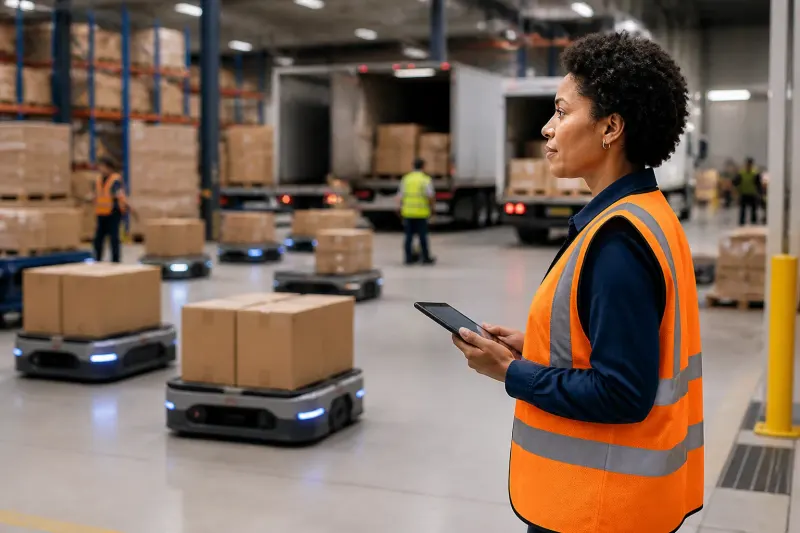
Innovative Approach to Robotics
Destro, a startup emerging from stealth mode, emphasizes that the key to deploying robots effectively is not merely to build new robots. Instead, Destro has developed an AI intelligence layer that enables robots to function efficiently in logistics environments while simultaneously directing human workers. Founder Manthan Pawar, a robotics veteran with a master's degree in robotics from NYU Tandon, explained that this unique approach sets Destro apart from most robotics companies that focus primarily on engineering hardware. He stated, “One of the biggest reasons we are winning against robotics companies is because we are not a robotics company.”
Understanding Customer Needs
Pawar's extensive experience in the U.S. supply chain and robotics industry has shaped Destro’s mindset. The company aims to comprehend its clients’ challenges deeply rather than merely presenting technological solutions. The outcome of this approach is impressive: Destro is on track to achieve cash flow positivity by the end of 2026. Richard Brunelle, director of automation for Yusen Logistics, played a crucial role in shaping Destro’s initiatives, leading to a targeted focus aligned with real-world logistics challenges.
Addressing Core Logistics Issues
During his collaborations with Destro, Brunelle highlighted how Yusen's operations involved significant logistical challenges like cross-docking, which entails efficiently unloading goods for subsequent deliveries. When he met with Pawar, both recognized that their shared hurdles presented an excellent opportunity for Destro to pivot its technology. Destro's dedication to tailoring their solutions to cross-docking environments led to exciting synergies.
The Pilot Program
The partnership kicked off with a pilot program at one of Yusen's facilities in the Pacific Northwest, utilizing three cart-moving robots designed by Miva Robotics. These robots operate under Destro's Vision operating system, which incorporates open-weight vision-language-action models. Through these AI systems, the robots interpret camera images and related instructions to control their movements, enhancing operational efficiency as human workers unload goods from trucks into assorted carts.
Enhanced Workflow Coordination
What truly sets Destro's solution apart is its ability to coordinate workflows among humans, carts, and trucks through its Mothership operating system. “We make that operation less labor-intensive, and we get away from the paper,” Brunelle stated, emphasizing that Destro’s integration has led to systematic operations, improving productivity. In contrasting their solution with competitors, Brunelle remarked on how other startups either had limited capabilities or required too much human intervention, making Destro’s comprehensive orchestration abilities a game changer.
Expansion Plans and Upcoming Projects
Building on the successful pilot, Destro is moving forward to deploy 26 robots completely at Yusen’s facility. Additionally, they plan to initiate another pilot with 17 robots at a Southern California site. Pawar aims to replicate the cross-dock loading workflow model across thousands of warehouses that face similar labor challenges, indicating a bold and expansive vision for Destro’s technologies.

Funding and Future Prospects
Destro's innovative approaches caught the attention of investors, resulting in an $8 million seed funding round led by Base10 Partners and Bonfire Ventures, with additional backing from CoFound Partners. This financial boost will support Destro's growth and potential expansion, as they seek to implement their system in various logistic settings.
Challenges Ahead
Despite the initial successes, Destro is not without challenges. The company's primary hurdle remains the manipulation and dexterity needed for more complex logistical tasks. The current robotic platforms and available open-source models often lack the necessary precision. As future developments occur in robotic capabilities, the industry faces uncertainty about whether more advanced tools will be accessible to Destro or if companies will prioritize their proprietary solutions. Pawar remains optimistic, focusing on the added value Destro provides through their complex operational harness around robotics.
Navigating the Landscape of Robotics
For the time being, Destro is focusing on addressing the practical challenges of automation rather than competing with cutting-edge robotics builders. Brunelle maintains that applications of advanced technology, such as bipedal humanoid robots, have not yet yielded strong operational cases in his field. The priority remains on solutions that enhance operational efficiency, consistency, and adaptability.
Upcoming Presentation
As part of the ongoing effort to showcase their innovative concepts in robotics and automation, Destro is set to present at the upcoming TechCrunch Disrupt event, scheduled for October 13-15, where they will highlight their unique role as a "non-robot robotics company." The event aims to illustrate how their technology can reshape logistics by bridging the gap between human and robotic workflows.
Key Takeaways
- Destro leverages an advanced AI layer to enhance logistics operations.
- Plans to deploy over 40 robots in two Yusen facilities highlight their growth.
- The startup secured $8 million in seed funding to support its expansion.
- The technology aims to simplify cross-docking operations, a significant logistics challenge.
- Destro is scheduled to present at TechCrunch Disrupt on October 13-15.
Frequently Asked Questions