
Google Home's MCP Integration: Third-Party AI Agents Now Welcome
Google has opened its smart home platform to third-party AI agents with the new Model Context Protocol. This integration allows AI tools to access and control devices efficiently.
Introduction to Google Home’s New Integration
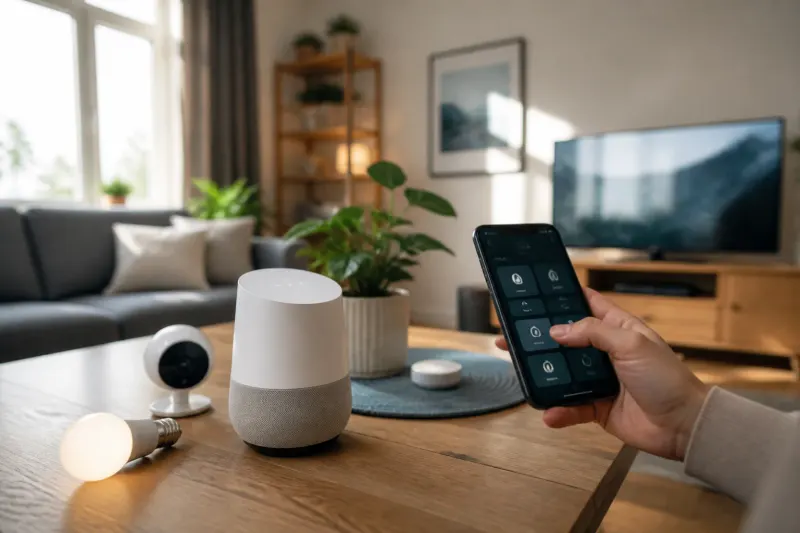
Google has taken a significant step in smart home technology by allowing third-party AI agents to integrate with its Google Home platform through the new Model Context Protocol (MCP). This integration opens the door for advanced AI capabilities, enabling tools like Claude and Open Claw to access and control connected devices within a user’s home ecosystem.
What Is the Model Context Protocol (MCP)?
The Model Context Protocol is a new feature that empowers third-party AI agents to monitor and manage smart devices effectively. According to Taylor Lehman, the group product manager at Google Home & Nest, MCP allows any AI agent supporting the protocol to securely work with all devices connected to Google Home, using their event history for enhanced functionality. This development permits an AI agent to take on more proactive roles by accessing real-time data and historical events, enabling complex interactions and analysis.
MCP integration enables functionalities such as:
- Cross-camera analysis, allowing users to inquire about activities in their home, for example, what their child did when they arrived home from school.
- Device state history tracking, which helps users understand patterns, like how many loads of laundry were done in a week.
- Voice message capabilities, where the AI can send audio confirmations through Google Home speakers after completing tasks.
- Custom dashboard creation to facilitate device control tailored to individual preferences.
How Will This Change Smart Home Management?
With the introduction of third-party AI agents, Google is shifting how smart home management is conducted. While the Gemini for Home assistant will continue to serve as the primary interface for interacting with Google Home devices, MCP integration adds a complementary layer of control. This allows users to work with their preferred AI agents while simultaneously utilizing Google's native services.
The integration enhances the capacity for intelligent decision-making in a connected environment. For instance, users will now be able to use their chosen AI to troubleshoot devices, propose automation improvements, and recognize patterns in device usage, all aimed at transitioning smart home systems from mere command-and-control functions to contextual and proactive systems.
Security and Privacy Considerations
It's important to note that granting an AI agent access to control real-world devices such as smart locks and thermostats raises security and privacy concerns. Google has implemented safety measures within the MCP to mitigate this risk, including:
- Rate limits to restrict the pace at which commands can be executed, reducing the potential for misuse.
- Prohibitions on sensitive actions, such as unlocking doors, without secure verification processes.
However, Taylor Lehman cautioned that connecting an agent with Home MCP could lead to unforeseen behaviors, urging users to carefully review Google’s developer policies and terms of service before granting access.
Initial Availability and Pricing
The MCP integration is currently available to Google Home Premium Advanced users in the United States at a cost of $20 per month or $200 per year. The rollout will occur gradually over the coming weeks. To set up this service, users must create a project on Google Cloud and configure it to utilize Home MCP.
Implications for Smart Home Development
This move positions Google as a pivotal player in the smart home framework, extending beyond just consumer interactions with smart devices. The new integration aligns with Google's broader strategy to function as the foundational layer for various smart home applications, similar to how AWS serves as an infrastructure backbone for much of the tech industry.
By announcing MCP integration, Google has also paved the way for developers to utilize its Antigravity coding tool to create custom AI agents tailored for smart homes. This infrastructural approach enables companies to build innovative consumer services while relying on Google’s extensive device data management capabilities.
Despite this ambitious push, developers’ willingness to engage with Google’s infrastructure following a history of launched and abandoned smart home projects remains uncertain. The success of this initiative hinges on whether developers perceive Google as a reliable platform in the long run.
Supported AI Agents and Their Functions
| AI Agent | Functions |
|---|---|
| Claude | Cross-device analysis, task automation, device state history tracking |
| Open Claw | Custom dashboard creation, voice messaging, advanced device interactions |
| Gemini for Home | Primary assistant for home interaction, voice command execution |
Key Takeaways
- Google’s MCP integration allows third-party AI agents like Claude and Open Claw to control smart home devices.
- This service is currently available for Google Home Premium Advanced users in the US at $20/month or $200/year.
- Safety measures, including rate limits and restrictions on sensitive actions, are in place to enhance user security.
- Google aims to provide a foundational layer for smart home developers, similar to how AWS operates for tech services.
- The introduction of MCP could lead to more proactive and intelligent smart home systems.
Future Prospects
As Google embarks on this new chapter in smart home technology, the success of the MCP integration will depend on user adoption and developer engagement. If Google can convince developers to trust and invest in its platform, this could potentially lead to a variety of innovative applications, transforming the way consumers interact with their home technology and creating a more intuitive smart environment.
Frequently Asked Questions