
Multi-agent AI systems take over supply chain execution
Enterprises are replacing static dashboards with multi-agent AI that autonomously reroutes freight, rebalances inventory and allocates docks. Live deployments at Lenovo, a mid‑size auto parts maker and Fujitsu/Rohto show 30‑94 % improvements, while strict guardrails and simulation advances keep risk in check.
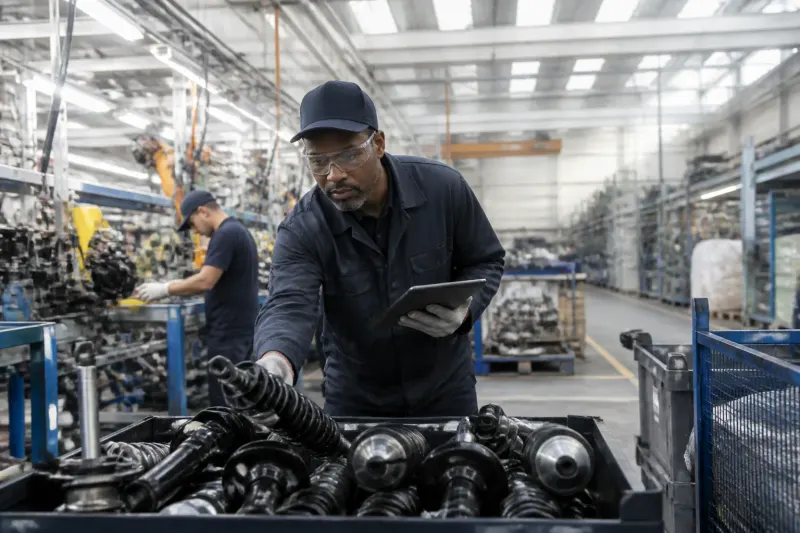
Supply‑chain leaders are moving beyond predictive dashboards that only suggest actions — multi‑agent AI systems now execute freight re‑routing, safety‑stock rebalancing and dock allocations directly inside ERP platforms. The shift is driven by diminishing returns from static tools and the need for real‑time, autonomous decision‑making across global networks.
Why static dashboards are losing ground
Traditional demand models surface recommendations, yet human planners still approve every move. Multi‑agent architectures replace that approval layer by ingesting live telemetry — carrier ETAs, yard‑camera feeds, WMS events — and acting within predefined operational boundaries. The result is a continuous execution loop that reacts in minutes instead of weekly scheduling runs.
Live deployments show measurable gains
Lenovo’s global iChain
Lenovo linked an Order Fulfilment Agent and a Risk Management Agent to its transaction backbone across 180 markets, 30+ factories and 100 logistics centres. Reported outcomes include fulfilment decisions three times faster, disruption response four times faster, risk‑assessment accuracy at 85 % and a 30 % increase in delivery accuracy.
Mid‑size automotive parts manufacturer (Simor Consulting)
Five specialised agents operated across 15 countries and 200 suppliers for an 18‑month production run. On‑time delivery rose from 82 % to 94 %, and the disruption agent spotted supply threats 48 hours before manual teams. Communication agents worked smoothly with known vendors but required a learning period for unfamiliar suppliers.

Fujitsu & Rohto Pharmaceutical routing trial
A virtual‑network exercise cut transport costs by up to 30 %. Both companies have scheduled an expanded live‑chain trial running from January 2026 through March 2027 to test the same agents on physical shipments.
General multi‑agent layers coordinate multiple functions
Industrial manufacturers are building supervisory agents that oversee several operational domains at once.
- Kohler deployed a supervisor agent that coordinates demand, inventory and planning spaces via Databricks.
- Belden engineered a multi‑tier supplier graph with task agents that respond to transport incidents, aiming for autonomous execution and master‑data correction in later phases.
Guardrails keep autonomous actions in check
Unchecked agents can compound errors across purchasing and shipping systems, so enterprises install hard tripwires before enabling direct system writes:
- Transport rerouting scripts operate only within strict cost ceilings and SLA delta limits.
- Inventory adjustments that exceed predefined financial values or volume percentages pause for manual planner authorisation.
- Supplier‑facing communication agents stay in draft mode for unvetted accounts until interaction accuracy surpasses set benchmarks.
- Automated warehouse execution remains largely confined to simulation models rather than unassisted floor operations.

Simulation paves the way for physical AI
Research from MIT and Symbotic demonstrated a 25 % throughput increase using multi‑robot path coordination inside simulated e‑commerce distribution centres. NVIDIA released its Multi‑Agent Intelligent Warehouse reference architecture to showcase cross‑fleet planning methods. Production sites still separate robotic movement from autonomous transaction clearing, but Rohto’s upcoming live‑chain trial through March 2027 will be the next public test of bounded execution loops.
| Case study | Scope | Key result |
|---|---|---|
| Lenovo iChain | 180 markets, 30+ factories, 100 logistics centres | Fulfilment 3× faster; disruption response 4× faster; risk accuracy 85 %; delivery accuracy +30 % |
| Automotive parts (Simor) | 15 countries, 200 suppliers, 18‑month run | On‑time delivery 82 % → 94 %; disruption detection 48 h early |
| Fujitsu & Rohto routing trial | Virtual network, expanded live trial Jan 2026‑Mar 2027 | Transport cost reduction up to 30 % |
| MIT & Symbotic simulation | Simulated e‑commerce DCs | 25 % throughput increase via multi‑robot coordination |
Key Takeaways
- Multi‑agent AI moves supply chains from recommendation to autonomous execution.
- Real‑world deployments at Lenovo, a mid‑size auto parts maker, and Fujitsu/Rohto show double‑digit gains in speed, accuracy and cost.
- Supervisory agents (Kohler, Belden) coordinate demand, inventory and supplier networks simultaneously.
- Hard guardrails — cost ceilings, SLA limits, draft‑mode communications — prevent runaway errors.
- Simulation breakthroughs (MIT/Symbotic, NVIDIA) are the proving ground before physical warehouse autonomy.
What’s next for multi‑agent supply chains
The next 12‑18 months will test whether bounded autonomy can scale from pilots to everyday operations. Rohto’s live‑chain trial ending March 2027 and the gradual rollout of NVIDIA’s warehouse reference architecture will reveal how quickly enterprises trust agents with financial‑grade decisions. As guardrails mature and simulation fidelity improves, expect more manufacturers to hand over routine execution — freeing planners to focus on strategy rather than approvals.
Frequently Asked Questions