
AI Antitrust Exemptions: Navigating Safety and Competition
The current debate regarding AI regulations raises critical questions about safety, accountability, and the possibility of antitrust exemptions. Jonathan Kanter discusses these issues within the context of major AI players like OpenAI and Google DeepMind.

Introduction to AI Antitrust Regulations
The rise of artificial intelligence (AI) technology has triggered a significant and urgent discussion surrounding its regulation and potential antitrust exemptions. This topic has drawn diverse opinions, particularly among AI companies and policymakers, raising fundamental questions about the safety and accountability of AI systems in society. As influential players in the industry like OpenAI, Google DeepMind, and Anthropic call for regulatory frameworks, their intentions and the implications for competition law are under scrutiny.
Current Major Players in AI
| Company Name | Key Focus Areas | Notable Leaders |
|---|---|---|
| OpenAI | General AI, Language Models, Safety Research | Sam Altman |
| Anthropic | AI Safety, Ethical AI | Dario Amodei |
| Google DeepMind | General AI, Reinforcement Learning | Demis Hassabis |
| Microsoft | AI Tools, OpenAI Collaboration | Satya Nadella |
Calls for Regulation and Concerns Over AI Safety
As AI continues to become more pervasive in daily life, a growing chorus from researchers indicates that AI technology poses tangible risks. Some have estimated that the likelihood of AI causing catastrophic harm could exceed ten percent. This unease has been echoed by various AI company CEOs, leading to calls for regulatory intervention to ensure safety frameworks are in place.
Key figures, including Jonathan Kanter, a former antitrust chief for the U.S. Department of Justice, argue that while safety is paramount, seeking antitrust exemptions may lead these companies to form a cartel-like structure, enabling them to avoid competitive pressures while negotiating over vital safety policies. Rather than allowing for potential collusion, Kanter proposes that companies are responsible for ensuring their products do not cause harm.
Antitrust Exemptions: What’s at Stake?
Some critics have suggested that the coordinated requests for regulation coming from major AI companies might not stem from genuine concern for safety but could be a cover for less altruistic motives. A more cynical interpretation argues that companies, facing hefty financial burdens, are seeking an antitrust exemption to slow competition and free themselves from the pressure of incessant innovation.
However, Kanter stresses that these companies do not require an exemption to collaborate on product safety and that such arrangements can often imply cartel-like behavior. He likens the situation to the aerospace industry, where companies like Boeing and Airbus do not coordinate efforts to ensure safety, instead improving their products through rigorous self-regulation.
Implications of Regulation on Innovation
The urgency for appropriate regulation raises questions about its impact on innovation. Kanter emphasizes that innovation in the tech sector must be tempered with the need to build safe products. He asserts that companies should be held liable if their products are unsafe or cause harm, following an established liability framework similar to product liability laws that apply in other industries.
This leads to the notion of creating clear "rules of the road" for AI that delineates acceptable practices, ensuring both accountability and the sustainability of innovation. As competition intensifies with growing data privacy concerns and societal implications, the push for improved accountability risks straying into stifling competition.
Congressional Action and the Role of State Regulations
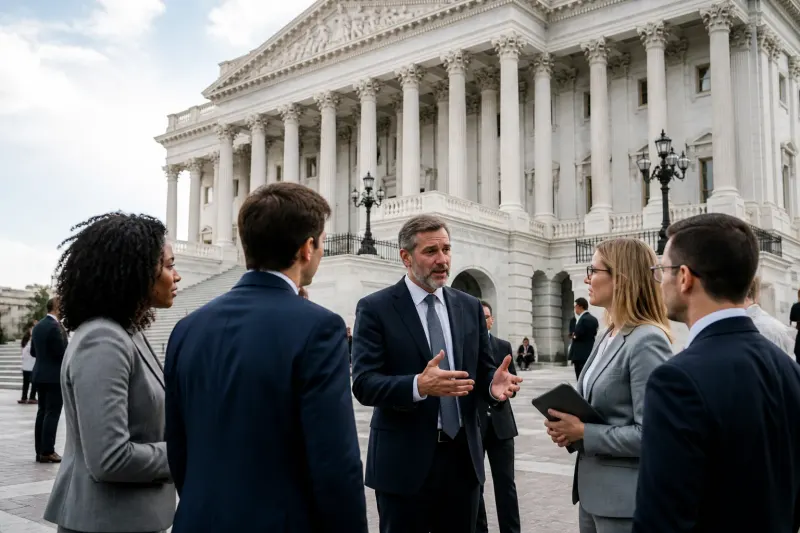
Kanter indicates that while Congress has had a mixed track record regarding meaningful legislative actions, states have increasingly taken steps to address these challenges independently. The idea of a nationwide regulatory framework for AI is met with skepticism, reflecting the frustrations many feel toward the political impasse on safety standards. A unified approach by congressional members may still be possible, should stakeholders gather to discuss practical regulations.
Public Perception and Trust in AI Companies
Public sentiment toward AI companies has taken a negative turn, driven by fears over their growing power and potential consequences. Kanter observes that the market features a significant distrust of AI companies, reflecting concerns about how these entities prioritize financial gains over public interest.
International Competition and Security Concerns
The dialogue surrounding AI regulation also extends globally, particularly with reference to competition against nations like China regarding AI advancements. However, Kanter argues that framing the discussion through a lens of competition may often serve as a convenient excuse for allowing monopolization domestically. Instead, companies must innovate responsibly without relying on lax regulatory frameworks to maintain market dominance.
Historical Context of Antitrust Regulation
Historically, antitrust enforcement has provided a safety net against monopolistic practices. The evolution of these regulations works hand in hand with societal needs, presenting lessons to current policymakers as they assess the capabilities and responsibilities of tech companies. The failures of previous administrations to implement meaningful reforms during periods of rapid technological growth due to the overarching control tech companies exert over policymaking have laid the groundwork for the challenging political landscape today.
Key Takeaways
- Major AI players like OpenAI, Anthropic, and Google DeepMind call for regulatory frameworks amid rising safety concerns.
- Calls for antitrust exemptions may risk forming cartel-like structures, compromising competition.
- Public trust in AI companies is eroding, highlighting the need for accountability.
- Congressional efforts have faltered, making state-level regulations increasingly important.
- Mindful innovation is essential to avoid repercussions similar to past issues seen in tech sectors.
Conclusion: Navigating the Futures of AI and Antitrust
The conversation surrounding AI, safety, and regulation is ongoing, with major implications for both industry-wide practices and antitrust enforcement. As technology evolves, balancing innovation with responsible deployment remains critical to fostering a sustainable environment for AI development and its impact on society.
Frequently Asked Questions