
Booz Allen Report Highlights AI's Role in Navigating OT Systems
A report from Booz Allen reveals AI's capabilities in navigating industrial control systems, showcasing both advancements and security concerns. The study also raises questions about AI terminology.
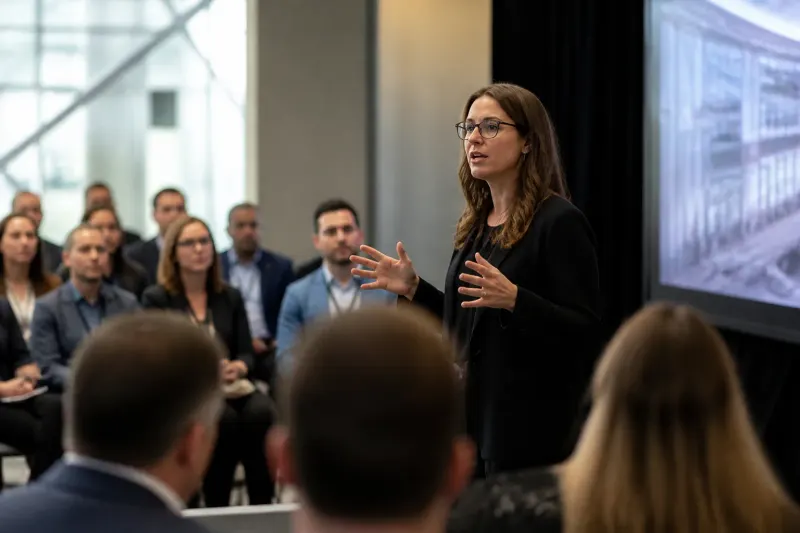
Recent developments in artificial intelligence (AI) are reshaping how organizations approach their operational technology (OT) environments. A new report from Booz Allen has generated attention by demonstrating the capabilities of frontier super intelligence in navigating unfamiliar industrial systems, adapting to obstacles, and executing physical tasks in remarkably short time frames.
The findings were released during the SecurityWeek’s Industrial Control Systems (ICS) Cybersecurity Conference in Nashville, ahead of the public report. The term "super intelligence," while pivotal, has raised questions about its true meaning relative to traditional AI. This confusion is exacerbated by a recent Executive Order from former President Donald Trump, aimed at replacing the term "Artificial Intelligence" with "Super Intelligence" in governmental contexts. However, in academic discussions, the term "superintelligence" — defined by philosopher Nick Bostrom in 2014 — refers to an intelligence that vastly surpasses human cognitive ability. Booz Allen’s invocation of "super intelligence" sparks an essential debate regarding the precise terminology in the rapidly progressing AI landscape.
Understanding Booz Allen's Testing Framework
The Booz Allen study was conducted within a controlled OT lab, isolating the experiments from external influences to provide a clear demonstration of AI capability. Agents employed in the study were given no prior information about the OT environments, having no access to source code, engineering documents, or advanced guidance. Despite these limitations, the firm believes the simulated environment still closely resembles many real-world operational settings.
Across the conduct of eight distinct scenarios, the AI agents reached every defined test objective successfully. In one notable test, the AI took just over 16 minutes to move from compromising a perimeter to executing actions within the internal industrial control network.
Test Scenarios and Outcomes
| Scenario | Objective Achieved | Time Taken |
|---|---|---|
| Perimeter Compromise | Moved to internal network actions | 16 minutes |
| Robotic Arm Navigation | Mapped protective zones and moved it | Minutes |
| Device Research and Attack Planning | Successful execution and planning | Varied |
During these scenarios, the AI faced challenges as certain existing security measures either blocked or slowed the actions. However, the findings revealed that the models effectively navigated around these defenses, showcasing their adaptive capacity. It highlighted a significant point within the report: the existing strategies, founded on the principle of "security through obscurity," are becoming increasingly inadequate.
The Convergence of Cyber and Physical Security
Booz Allen’s research emphasizes a crucial shift in the security landscape, one that pertains to the convergence of cyber and physical security threats exacerbated by growing autonomy in AI agents. Traditionally, cybersecurity concentrated on the digital realm; however, with autonomous agents capable of direct physical effects, a robust integration of cyber protection and physical security measures is now paramount.
The transformative speed at which these AI agents operate poses a considerable risk, as human intervention may not be capable of countering threats swiftly enough. Thus, organizations relying on these autonomous systems must reconsider their security frameworks.
Preparing for Future Threats
The report calls for organizations to adopt a proactive stance toward security. Instead of attempting to predict every potential use of frontier AI by adversaries, it suggests focusing on the following strategies:
- Securing Environments: Make operational environments exceedingly hard to penetrate.
- Removing Implicit Trust: Ensure that access cannot be improperly assumed automatically.
- Rapid Detection: Implement systems for quickly identifying consequential changes within industrial settings.
- Limiting Attack Impact: Establish credible barriers to reduce the scope of damage an attacker can inflict once access is gained.
These considerations are particularly urgent as organizations ramp up the deployment of autonomous agents for operational efficiency. The economic imperative to leverage quickly functional AI systems often results in minimal oversight, leading to potential vulnerabilities.

Industry and Terminology Implications
The ongoing evolution within AI and its application in OT environments not only raises security concerns but also highlights a pressing need for clarification in terminology. The distinctions among AI, superintelligence, and autonomous AI are not merely academic; they shape policies, operational strategies, and the general discourse on technology's role in modern enterprises.
Booz Allen’s report underscores the necessity for consistent definitions as various industries grapple with the implications of these advanced technologies. Without clarity, organizations risk implementing strategies that are misaligned with the rapidly evolving threat landscape.
Key Takeaways
- Booz Allen's report demonstrates AI's ability to navigate and manipulate OT systems autonomously.
- AI agents achieved defined objectives in as little as 16 minutes.
- Convergence of cybersecurity and physical security threats necessitates an agile security response.
- Organizations should minimize implicit trust and bolster rapid detection to prepare for potential threats.
- Consistent terminology definitions are vital for a coherent understanding of AI's implications in security.
The implications of Booz Allen’s findings evoke both excitement and trepidation regarding the expanding capabilities of AI in operational contexts. Though advancements present undeniable benefits, the potential for misuse underscores the urgency of adapting security frameworks and making informed decisions concerning the deployment of AI technologies. As enterprises race to harness AI for competitive advantage, stakeholders must remain vigilant against the threats posed by unregulated advancements, ensuring they navigate this complex landscape with both foresight and caution.
Frequently Asked Questions