
Intero Biosystems Develops Mini Human Intestines for Drug Testing
Intero Biosystems is pioneering the use of laboratory-grown human intestinal organoids for drug testing, aiming to reduce the reliance on animal models and enhance drug safety.
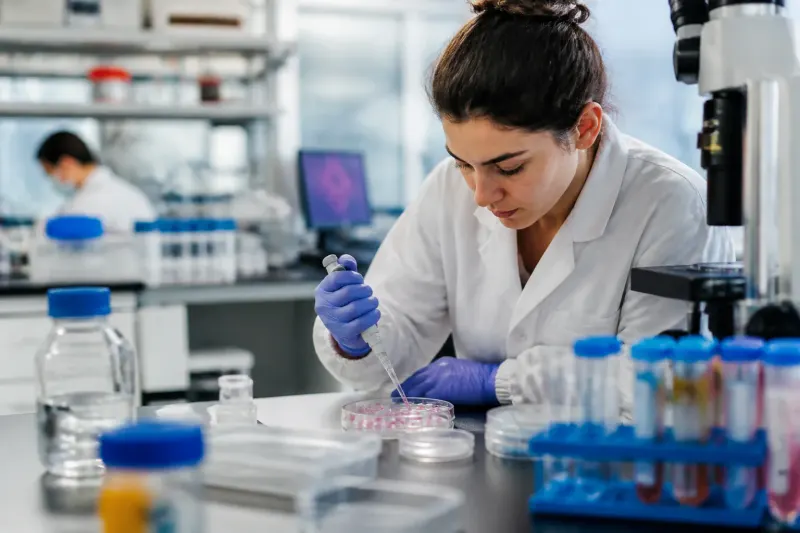
Revolutionizing Drug Testing with Human Organoids
Developing new drugs is notoriously challenging — studies suggest that most drug candidates fail during clinical trials. A major reason for this high failure rate is the reliance on traditional animal models, which do not always accurately predict human responses due to significant biological differences. To address this pressing issue, Intero Biosystems, a startup based in Denver, is innovating drug testing methods by creating functional human intestinal organoids, or lab-grown miniature intestines.
Introducing GastroScreen: A New Testing Model
Intero's flagship product, GastroScreen, is designed to provide a more relevant model for human biology in drug testing. These organoids contain multiple cell and tissue types that exactly replicate aspects of the human intestine, unlike simpler models that only represent part of the gut. According to Madeline Eiken, co-founder and CTO, "Most drugs fail clinical trials, and I think it’s pretty easy to appreciate that we are neither mice nor flat layers of cells."
Each organoid is approximately one millimeter across and can be shipped in tubes containing around 100 organoids at a time to various customers, including pharmaceutical, biotech, food, and chemical companies. These customers can use the organoids to simulate healthy intestinal function or to replicate disease-like conditions, enabling comprehensive testing of how compounds affect gut tissue.
Applications and Use Cases
Intero does not only sell the organoids; it also provides essential supplies, such as nutrient mixes and chemicals necessary for growing and experimenting with the organoids. Furthermore, the startup runs laboratory studies for its clients, offering a range of services, including custom experiment design and data delivery. This multifaceted approach primarily focuses on drug safety and disease research. For instance, clients can expose the organoids to drug candidates to study potential harm to gut tissue or investigate how organoids representing specific conditions respond to various compounds.
Startup Background and Financial Growth
Founded in 2024, Intero Biosystems has quickly laid a foundational base, currently employing seven staff members and collaborating with fewer than 10 customers. In just a year, it raised $2.3 million in a pre-seed funding round and has attracted more than $400,000 in revenue from the fourth quarter of last year through the third quarter of this year.
Regulatory Support for Alternatives to Animal Testing
Growing regulatory support for non-animal testing methods is encouraging the development and adoption of technologies like those produced by Intero. In April 2025, the U.S. Food and Drug Administration (FDA) announced plans to minimize its reliance on animal testing in drug development. This initiative promotes alternatives such as organoids, organs-on-chips, and AI-based computational models. In March 2026, the FDA issued draft guidance on how drug developers should validate new approach methodologies, known as NAMs, reinforcing the framework for validating non-animal testing methods in regulatory submissions.

Competitive Landscape and Unique Positioning
Intero is not alone in its efforts to create more human-relevant models of the intestine. Other companies, like Altis Biosystems and InSphero, develop similar technologies around stem cell-derived intestinal models and patient-derived organoid systems. In contrast, firms like MIMETAS focus on organ-on-chip technology that employs microfluidic systems to simulate human tissue environments. However, Intero differentiates itself by emphasizing the complexity and scalability of its models. GastroScreen, rather than being derived from human tissue obtained through procedures like colonoscopies, utilizes induced pluripotent stem cells that can be generated from a regular blood sample.
Building Evidence for Effectiveness
When the topic of predictive accuracy arises, CEO Charlie Childs highlights that the company is still in the process of gathering robust validation for their organoid model. The startup is currently in the second phase of a three-stage validation process. The initial phase established that GastroScreen emulates key human gut tissues, while the ongoing phase tests the organoids with well-documented drug compounds. Early results show that GastroScreen is responding as expected to agents known to impact intestinal inflammation and compounds established to be harmful to gut tissues. The final validation stage will involve direct comparisons between GastroScreen results and existing animal and clinical data from several pharmaceutical companies.
Future Aspirations in Drug Development
Looking ahead, Intero aims to ramp up its production capabilities significantly. Presently, the company can cultivate a few thousand organoids per batch, with plans to automate its manufacturing processes to facilitate the production of hundreds of thousands of organoids per batch. The long-term vision extends even further into personalized medicine, where individual patients' cells could be used to create tailored organoids for drug testing before actual treatments are administered. Intero’s most ambitious aspiration is to develop an artificial intestine, a project that would build on the scale of manufacturing and patient-specific data generated through its organoid technology.
Key Takeaways
- Intero Biosystems is creating human intestinal organoids for drug testing.
- The company's flagship product, GastroScreen, enables better prediction of human responses to drugs.
- Intero has gained regulatory support for non-animal testing methods.
- The startup aims to scale production significantly and move into personalized medicine.
- Intero’s growth trajectory includes ambitions for developing an artificial intestine.
Frequently Asked Questions