
Future of Space Politics: A Mishmash of Ideas and Cultures
What will governance look like on Mars? Experts suggest it will be a blend of Earth cultures and existing treaties, challenging our current ideas of sovereignty.

Introduction
As humanity eyes the cosmos for potential settlement, the question of governance across distant worlds arises. Will future colonists be ruled by an emperor like the iconic Paul Atreides from “Dune: Part Three”? Or will governance take the form of corporate power, akin to the billionaires shaping Mars bases in shows like “For All Mankind”? Perhaps a rebel alliance or cooperative undertaking will emerge instead. Astrobiologist Jacob Haqq Misra offers insights into what space politics might actually resemble, forecasting a complex blend of terrestrial cultures and governance models.
Emerging Governance Models in Space
According to Misra, the first phases of colonization will not have a single dominant governance model. Instead, a “mishmash legal framework” will develop from the various Earth cultures involved in space settlement. "You’re going to have Earth cultures represented, and ideas about governance that will shape how people coexist peacefully in space,” he noted during an episode of the Fiction Science podcast. He argues that this multiplicity is not detrimental—it may, in fact, foster innovative approaches to governance.
Elon Musk’s Vision for Martian Governance
Elon Musk, founder of SpaceX, has long envisioned human settlement on Mars, yet he remains uncertain about the implications for governance. In 2016, during a tech conference, he joked about becoming the "king of Mars," but later clarified that he expects a direct democracy to be the most viable framework. Such a system would allow individuals to vote directly on pertinent issues rather than relying on representatives, which he believes could reduce corruption.
- Musk proposed that a law would require a majority vote—60% to enact it—while having an easier procedure for removal (requiring only 40% support).
- He suggested incorporating sunset provisions on laws to ensure that regulations do not persist indefinitely if they are not deemed beneficial.
Outer Space Treaty and Its Implications
Despite Musk's assertions, the establishment of governance on Mars may not be straightforward due to the constraints imposed by the Outer Space Treaty. This influential accord, in effect since the late 1960s and signed by over 110 nations—including prominent space nations such as the United States, Russia, and China—declares that celestial bodies cannot be claimed by any nation for sovereignty or ownership.
This treaty complicates Musk's aspirations for a singular political structure on Mars. Misra elaborates on the treaty's implications: “The treaty bears legal liabilities for national space activities," emphasizing that any governmental or corporate efforts to claim sovereignty over extraterrestrial territory would be difficult without breaching international law. In contrast to this view, Robert Zubrin, president of the Mars Society, posits that the treaty allows signatories to refrain from interfering with Martian settlement.
Lessons from Earth: The Antarctic and Maritime Treaties
The anticipation of governance on Mars finds parallels in the historical precedents set by treaties governing both Antarctica and maritime laws. Misra draws attention to the Antarctic Treaty System, established over 70 years ago, which freezes territorial claims in exchange for cooperative scientific endeavors. This framework reflects practical decision-making regarding the claims of sovereignty and administration, leading Misra to suggest that similar arrangements may evolve on Mars.
- The Antarctic Treaty's 58 signatory nations have collectively agreed to prioritize scientific research and prevent conflicts over territorial claims.
- Misra believes a similar model could apply to Mars, where excessive militarization and territorial disputes can be avoided, leading to potential agreements surrounding governance and resources.
Moreover, contemporary treaties such as the U.N. Convention on the Law of the Sea illustrate principles for coordinated resource management in marine environments and could offer insights for future lunar and Martian settlements. While the United States has not ratified this treaty, it still follows many of its guidelines out of pragmatic necessity. Misra predicts that a combination of Earthly lessons and space-age cooperation will guide future settlement processes.
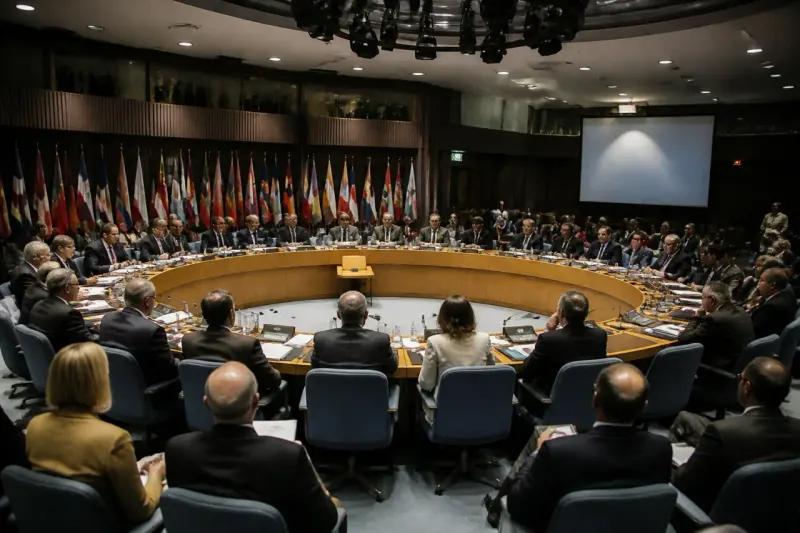
Future Possibilities for Mars Governance
Misra suggests that, ideally, cooperation and collaboration would define new governance structures, contrasting with Musk's desire for direct democracy. He envisions a scenario akin to settlements in Antarctica, noting that initial colonies could benefit from hybrid governance models reminiscent of international cooperation seen on the International Space Station (ISS). Here, modules belong to different nations, and laws vary depending on the module one operates within, allowing for distinct legal frameworks to coexist.
Such a configuration would yield a diverse political landscape on Mars, characterized by numerous influences and governance models coexisting. “A Martian mishmash” might emerge, reflecting local governance that evolves based on the residents’ specific needs, preferences, and realities of Martian life, a consensus on practical arrangements rather than a dominant framework.
Potential Legal Loopholes and the Future of Sovereignty
Despite the constraints posed by existing treaties, several pathways could enable a more defined sovereign framework on Mars. Misra suggests that a nation might willingly withdraw from the Outer Space Treaty and assert sovereignty over the territory it controls. Alternatively, a company like SpaceX could relocate its operations to a jurisdiction not bound by the treaty. Furthermore, in a hypothetical scenario, Congress could legislate to renounce U.S. claims to particular regions on the Moon or Mars, offering a means for gradual independence for Martian colonists.
Similar to past discussions on statehood, a discourse among future Martian inhabitants could yield unforeseen models of governance. Misra surmises, “The Martians should decide,” leaving room for the potential emergence of new perspectives that arise from living on Mars and dealing with its unique challenges.
Key Takeaways
- The future of governance on Mars will likely be a mishmash of legal frameworks influenced by Earth cultures.
- The Outer Space Treaty prohibits territorial claims, complicating singular governance visions.
- Lessons from the Antarctic Treaty System may provide a model for cooperative governance in space.
- New governance models could emerge as Martian settlers adapt to their environment.
- Misra emphasizes that the residents of Mars should ultimately determine their governance structures based on their unique circumstances.
Conclusion
As discussions surrounding space colonization cement their place in contemporary discourse, the questions of governance, sovereignty, and cooperation become paramount. While fictional representations provide entertainment and provoke thought, the complexities of establishing a sustainable and functioning society on Mars reveal the necessity of learning from both terrestrial governance and historical frameworks. The vision for space politics remains fluid, shaped by evolving ideas reflecting a converging of cultures and ideals on our journey into the cosmos.
Frequently Asked Questions