
Tesla Roadster: A New Era of Flying Electric Supercars
Tesla's next-generation Roadster has made waves with its incredible demonstration, featuring flight capabilities and record speed, but faces uncertain production timelines.
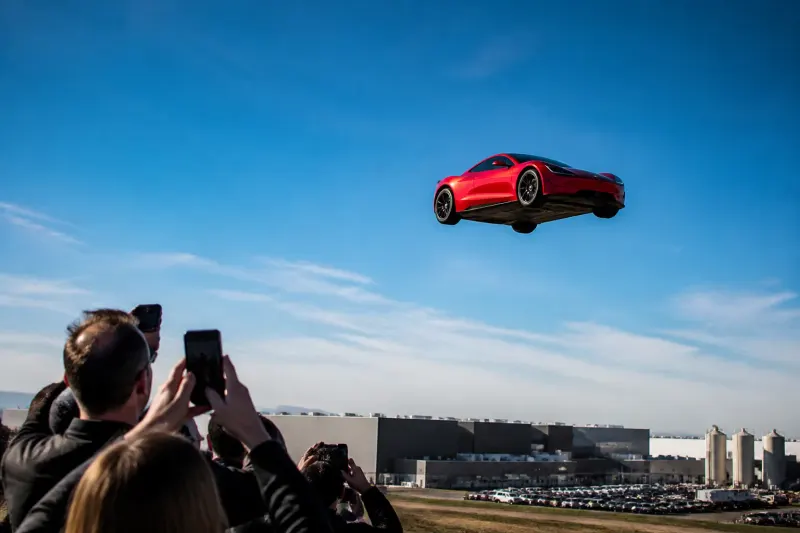
Tesla's next-generation Roadster has made headlines with its groundbreaking demonstration in Waco, Texas, showcasing features that verge on the fantastical. During this launch event, the Roadster performed acrobatic maneuvers, drove upside down, and accelerated to 60 mph in under a second, captivating the audience and setting a new benchmark for electric vehicles.
The Incredible Display
The event lasted less than 30 minutes and resembled a stunt show more than a serious product launch. Elon Musk, Tesla's CEO, proclaimed that this was not merely a car but an experience. The car ascended a remarkably tall, multi-story ramp and, using its impressive downforce, clung to the vertical surface before flipping around at the peak. Utilizing its cold-gas thrusters, the Roadster gently descended back to the ground, demonstrating its unique operational capabilities.
Flight Mechanics
The Roadster is equipped with a fan-based suction system developed in collaboration with SpaceX, generating an astonishing two Gs of suction force. Its attitude-control thrusters and main rear thrusters work together to grant it rocket-like capabilities. According to Tesla’s VP of Engineering, Lars Moravy, the vehicle can perform a stunning “kick flip” over Tesla’s lineup, including models such as the Model 3, Model Y, Cybertruck, Semi, and Cybercab.
Technical Specifications and Innovations
The Tesla Roadster features two ultra-high pressure air tanks with a combined volume of 600 liters that hold approximately 250 kilograms of air. This system allows the vehicle to execute various aerial maneuvers without specialized chemical propellants. The compressed air is crucial for delivering the necessary thrust to sustain flight and perform its impressive stunts.
Production Timeline and Regulatory Challenges
Musk stated that the Roadster is expected to go into production by 2028. However, the realization of such a car will likely face significant regulatory hurdles from agencies like the Federal Aviation Administration and National Highway Traffic Safety Administration if it is to be allowed on public roads. Even with the promise of manufacturing by 2028, skepticism remains high, especially considering the long development timeline since its initial announcement in 2017.
Design Philosophy and Engineering
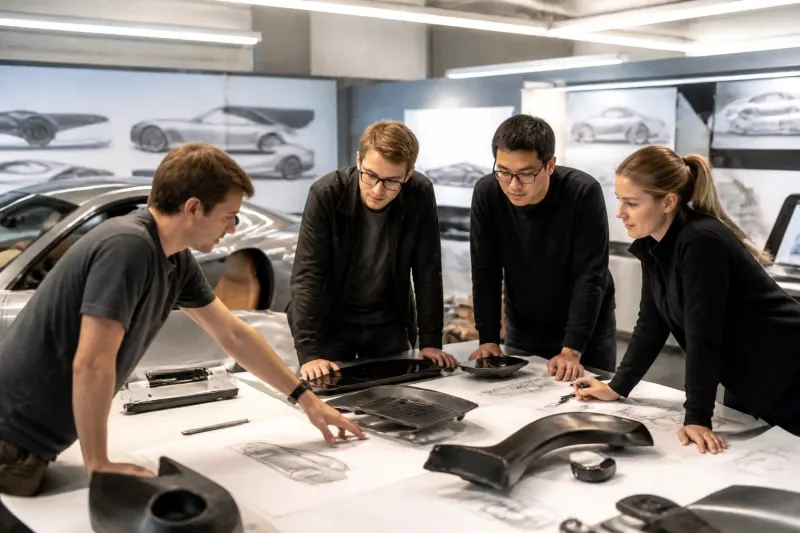
Describing the Roadster as “the last best driver’s car,” Musk pointed out that Tesla’s design process was heavily influenced by aerospace technology, including insights from the SR-71 reconnaissance aircraft. The two-seater vehicle has its seats molded directly into the chassis, utilizing a steer-by-wire system for steering, brakes, and throttle. Key design elements also include a retractable rear wing for enhanced downforce.
Performance Claims and Expectations
Musk claims that the Roadster can accelerate from 0-60 mph in just 0.81 seconds. He emphasized that reducing the vehicle's mass while increasing the applied force is key to achieving such extraordinary acceleration. Furthermore, he teased that the production model might even improve on this figure, hinting at possible speeds nearing Mach 0.5 during tests.
The Road to Market and Competitors
Initially announced as a surprise addition at the 2017 Tesla Semi event, the Roadster was presented with ambitious specifications that seemed outrageous at the time: a target of 0-60 mph in 1.9 seconds, a top speed exceeding 250 mph, and a battery capacity of 200 kWh for a range of up to 620 miles. However, as production timelines slipped, Tesla's focus shifted to more mainstream models like the Model Y, while other companies advanced their electric supercars, such as Rimac with the Nevera and Porsche with the Taycan.
Market Dynamics and Outlook
The electric hypercar landscape has changed significantly during Tesla's delay in producing the Roadster. Companies like BYD have introduced their track-ready vehicles, presenting strong alternatives to Tesla’s long-awaited return to the performance segment. Musk has minimized the Roadster's potential impact on Tesla’s finances, referring to it as a “small potato situation.” However, the launch appears to be as much about engineering collaboration with SpaceX as a standalone product.
Key Takeaways
- Tesla's Roadster can accelerate from 0-60 mph in under a second.
- The vehicle features a SpaceX-developed suction system capable of generating two Gs of force.
- Production is expected to begin in 2028, facing potential regulatory challenges.
- The Roadster was first announced in 2017 and has seen numerous delays.
- Competition in the hypercar market has increased significantly during the Roadster's development phase.
The latest iteration of the Tesla Roadster encapsulates not just innovation in automotive engineering but represents a paradigm shift in personal transport. While the actual usability of this flying car remains uncertain, the technology and imagination behind it continue to fuel excitement in the electric vehicle community.
Frequently Asked Questions