
Hisense UR8 TV Review: RGB Mini LED Offers Brightness and Color
The Hisense UR8 TV impresses with RGB Mini LED technology, delivering exceptional brightness and features at an accessible price point, while facing challenges in color reproduction.
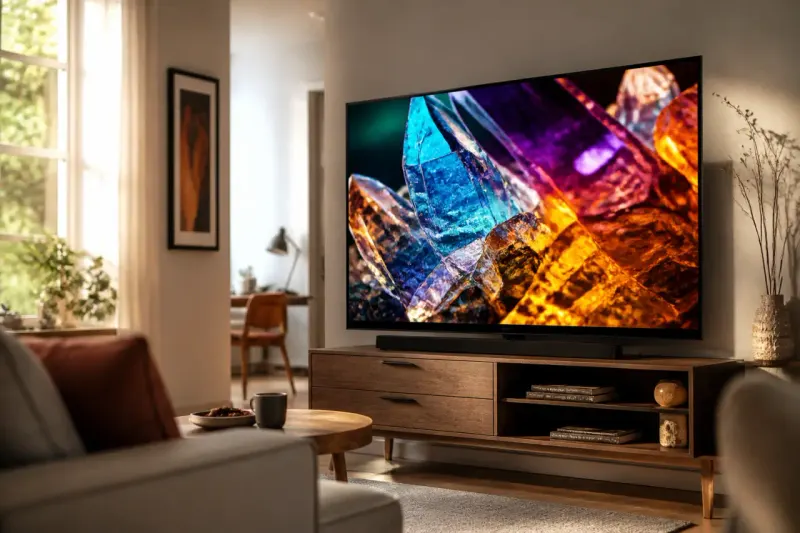
The Hisense UR8 TV emerges as a noteworthy contender in the world of home entertainment, prominently featuring the innovative RGB Mini LED technology aimed at delivering enhanced brightness, vibrant colors, and improved contrast. With a starting price of $1,299 for the 55-inch model, the UR8 offers enticing specifications designed to appeal to consumers looking for high performance at an accessible price point.
A Closer Look at the Design
Hisense has adopted a simple yet effective design approach for the UR8, characterized by slim bezels that frame the display neatly and a functional central pedestal stand. This emphasis on a clean aesthetic contributes to the overall solid construction. While the UR8 may not be the slimmest television available, its design prioritizes practicality without unnecessary embellishments.
RGB Mini LED Technology Explained
At the heart of the UR8 is its RGB Mini LED backlight, a significant evolution from traditional Mini LED televisions. Instead of relying solely on white LEDs, the UR8 incorporates individual red, green, and blue LEDs directly into the backlight system. This approach aims to enhance the television's color range and overall performance while retaining the brightness advantages associated with LED technology. This advancement is particularly relevant when competing against OLED displays, known for their superior contrast and color reproduction.
Performance Metrics: Brightness and Color Accuracy
In testing conditions, the Hisense UR8 displays its strengths in peak brightness, achieving around 2,097 nits in Filmmaker Mode and approximately 2,394 nits in Standard Mode. These numbers are impressive for a television in the UR8's price segment, essentially outperforming many competitors in terms of HDR performance, especially in brighter scenes with vibrant sunlight and vivid colors.
Throughout real-world viewing experiences, the UR8 proved efficient in managing backlight control. Compared to traditional Mini LED TVs, which are often criticized for blooming—where bright objects create noticeable halos against dark backgrounds—the UR8 minimizes such distractions effectively. Scenes from movies like "Spider-Man: Brand New Day" show a commendable balance between darker sections of the picture and bright highlights, with deep blacks and preserved detail.
Color Reproduction Challenges
However, despite the promising metrics provided by laboratory measurements—covering around 95.1% of the BT.2020 color space and 145.2% of the UHDA-P3 color space—the real-world color performance leaves something to be desired. Observations reveal that while colors appear natural and vibrant in many instances, they sometimes lack the boldness demonstrated by rivals like Samsung's conventional Mini LED QN80H. This gap indicates that RGB Mini LED might not fully deliver on its potential in day-to-day viewing situations.
Motion Handling and Audio Performance
When it comes to motion handling, the UR8 maintains a generally smooth experience. However, some blurring and texture loss is noticeable during rapid camera movements. In practical terms, this means while the television performs admirably with movies and sports, fast-paced content can reveal its limitations. Audio-wise, the UR8 handles Dolby Atmos and DTS sound formats adequately, providing clear dialogue and decent bass. However, the soundstage feels somewhat narrow, and some audio presets may sound harsh. The best results come from using the Standard audio mode, which proves suitable for most viewing situations. Still, for those wanting superior sound quality, pairing the UR8 with a dedicated soundbar is advisable.
Smart TV Features: Google TV and More
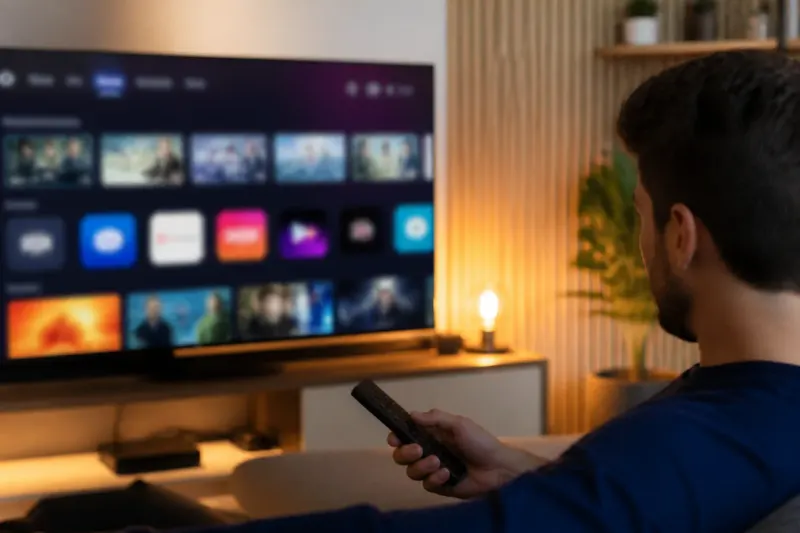
The Hisense UR8 runs on Google TV, allowing users to access popular streaming applications such as Netflix, Disney+, Apple TV, Prime Video, and YouTube. The user interface is intuitive and responsive, making navigation easy for most users. Google TV's voice search feature and Gemini capabilities further enhance the experience, enabling viewers to directly search for content and even generate images. This versatility is a welcome addition, catering to modern viewing habits while ensuring the platform remains user-friendly.
Model Variants and Pricing Strategy
The UR8 debuted in various sizes, ranging from 55 inches to a massive 100 inches. The initial pricing strategy set the 55-inch model at $1,299 and extended to nearly $6,000 for the largest variant. However, as the market fluctuates, the UR8 has seen substantial price reductions, making it much more competitive. Currently, the 65-inch model is available for about $1,499, while the 55-inch model has been discounted to around $999, presenting an attractive offer in light of its RGB Mini LED technology and array of features.
Competing Alternatives in the Market
A potential buyer considering the Hisense UR8 should also take into account notable competitors such as the LG C6 OLED and Samsung QN80H. The LG C6 is recommended for those prioritizing film-quality visuals. Its OLED technology ensures perfect blacks and superior pixel-level contrast, capabilities that RGB Mini LED hasn’t yet matched. Meanwhile, Samsung's QN80H delivers impressive performance with conventional Mini LED, showcasing bolder colors while also excelling in brightness and backlight control, making it a practical alternative for those uncertain if RGB Mini LED is essential for their viewing pleasure.
Key Takeaways
- The Hisense UR8 is priced starting at $1,299 for the 55-inch model, also available in sizes up to 100 inches.
- Peak brightness reaches approximately 2,394 nits, enhancing HDR performance significantly.
- Color reproduction, while backed by impressive laboratory metrics, fails to consistently deliver in real-world viewing.
- Good audio performance exists, though a dedicated soundbar is suggested for optimal sound quality.
- The TV runs on Google TV for a user-friendly smart experience with popular streaming access.
Final Thoughts
Hisense’s UR8 makes a compelling case for RGB Mini LED technology, combining bright, impactful HDR performance with solid backlight management. While it showcases features ideal for gaming and general viewing—with robust connectivity options like four HDMI 2.1 ports and an integrated Google TV platform—it must contend with OLED displays that excel in color accuracy and contrast. Ultimately, for consumers prioritizing brightness at a good price point, the Hisense UR8 represents a solid choice, albeit with a few limitations to keep in mind against established competitors.
Frequently Asked Questions