
Labour's Upcoming Budget: Key Proposals and Economic Context
Chancellor John Healey will unveil the first Labour Budget on October 28, 2026, outlining plans amid rising costs and economic challenges.
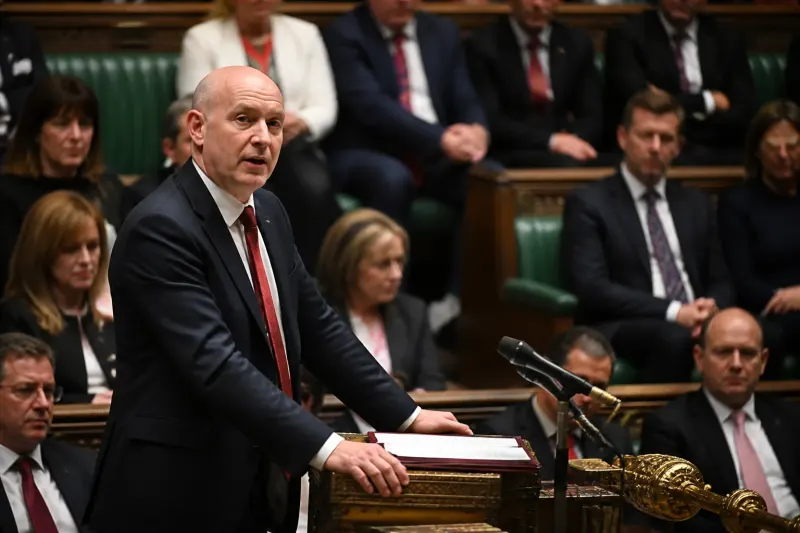
Chancellor John Healey is set to present Chancellor of the Exchequer's first Budget on 28 October 2026, outlining Labour's tax and spending plans amid significant economic pressures. The government faces high borrowing costs, prompting discussions around tax adjustments, although Healey has not ruled out potential increases.
What to Expect from the Budget
As the date approaches, speculation regarding the Budget is mounting, although the government is trying to keep predictions to a minimum. Healey, alongside Prime Minister Andy Burnham, must strike a balance between delivering support to households and honoring commitments to increase defense spending. Simultaneously, they are bound by Labour's manifesto promises concerning taxation.
The new leadership has pledged to adhere to fiscal rules established by the previous chancellor, Rachel Reeves, which include:
- Not borrowing to fund day-to-day public spending by the end of this parliament.
- Ensuring that government debt decreases as a share of national income by the end of this parliament.
Although the Office for Budget Responsibility (OBR) forecasted a headroom of £23.6 billion for the initial goal, analysts suggest that this gap has narrowed considerably, with some estimating it could be as low as £12 billion. The Institute for Fiscal Studies (IFS) echoes this sentiment, attributing the reduction mainly to escalating borrowing costs and rising inflation, but notes a possible increase in tax revenue due to higher pay leading individuals into more demanding tax brackets.
Key Proposals
Bank Taxes
With UK banks reporting significant profits, there are expectations that Healey will increase taxes on the sector. Bank executives have been vocal about the need for higher taxation, with the potential options on the table including:
- Raising the 3% surcharge on profits, which was previously reduced from 8% under the former Conservative government.
- Increasing the bank levy that is determined by the size of their balance sheets.
Your First Home Scheme
More details around the Your First Home scheme are anticipated, a scheme designed to aid first-time buyers in England. Under this program, prospective homeowners will be able to purchase a new-build home with a mere 2.5% deposit and will have access to a loan, amounting to 20% of the home's value, to assist with the overall costs.
Capital Gains Tax Changes
There has been considerable speculation regarding possible adjustments to Capital Gains Tax (CGT), which applies to profits earned from asset sales. Currently, the rates are set at 18% for basic-rate taxpayers and 24% for higher-rate and additional-rate taxpayers. Reports suggest that Healey has rejected ideas to elevate CGT rates to match income tax levels, preserving the current tax structure for the foreseeable future.
Changes Impacting Businesses
Businesses could see shifts in taxation processes as well. Online retail platforms like Amazon and eBay may soon bear the responsibility for collecting taxes owed by traders utilizing their services. Funds raised from these taxes are projected to be directed towards decreasing business rates for traditional High Street shops. Furthermore, tax implications for business owners transferring their companies to successors may be on the horizon, a move that could increase their tax burden.

Fuel Duty and Energy Bills
Fuel duty has remained unchanged since the Conservatives implemented a freeze in March 2022. This freeze was maintained by Labour's government, with Healey having previously indicated that discussions regarding rising petrol and diesel costs would be central to the upcoming Budget. With household energy bills projected to experience their largest increase in four years—an expected rise of £276—there remains uncertainty about the potential for government assistance aimed at households receiving certain benefits.
Mansion Tax Considerations
The High Value Council Tax Surcharge, commonly referred to as the mansion tax, is set to come into effect for properties in England valued above £2 million starting April 2028. There had been discussions about extending this tax to properties valued over £1.5 million, though it appears Healey has opted to forego any changes in this area.
Current Economic Landscape
The UK's economic growth has shown signs of resilience despite various challenges, with a reported increase of 0.6% in the first quarter and 0.5% in the second quarter of the year. Recent data indicates modest growth of 0.1% in August following a 0.4% increase in July. This growth comes amid rising energy prices driven by geopolitical tensions, particularly the US-Israel conflict, which has led to reduced oil supply through the crucial Strait of Hormuz and consequently higher fuel costs.
Inflation has also surged to 3.1%, the highest rate in five months, exceeding the Bank of England's target of 2%. With interest rates on hold at 3.75% for the past six months, the Bank suggests rate hikes are on the table should energy costs continue to exert pressure on the economy.
Budget Delivery and Aftermath
Chancellor Healey's Budget speech is scheduled to commence around 12:30 PM UK time, following Prime Minister's Questions, lasting approximately one hour. The speech will be broadcast live on BBC iPlayer and the BBC News website. Following the presentation, Opposition Leader Kemi Badenoch will respond, leading to a period of parliamentary debate lasting four days before voting on the measures occurs.
Should MPs approve the proposed tax changes, these adjustments could take effect immediately. However, the government will still need to secure passage of a finance bill to make these changes permanent.
Key Takeaways
- The first Budget under Chancellor Healey is set for 28 October 2026.
- The government may face pressure to increase taxes on bank profits.
- The Your First Home scheme aims to help first-time buyers with a 2.5% deposit and a 20% loan.
- Household energy bills are projected to rise by £276 in January 2027.
- Inflation currently stands at 3.1%, surpassing the Bank of England's target.
This upcoming Budget poses challenges and opportunities as Labour navigates through pressing economic issues while adhering to fiscal discipline and promoting social support measures.
Frequently Asked Questions