
Addressing Space Debris: Ensuring a Sustainable Orbit
Space debris poses a growing threat as satellite numbers rise. This article explores sustainability efforts and global initiatives to clean Earth's orbit.
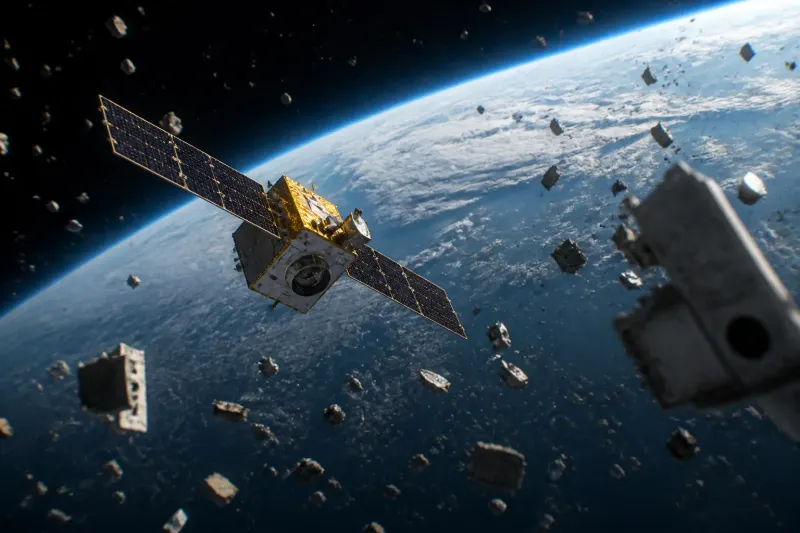
The increasing commercialization of space is reshaping Earth's orbit, placing growing importance on sustainability in managing space debris. As of now, approximately 16,000 active satellites are in orbit, a number projected to soar to 60,000 by 2035, according to Novaspace. This surge highlights the urgent need for stringent and effective strategies for maintaining a safe and clean operating environment in space.
The Current State of Space Debris
Currently, there are more than 1.2 million pieces of debris larger than 1 centimeter in Earth's orbit, posing significant risks to operational satellites and crewed spacecraft. The increasing congestion in space threatens to compound the risks of collisions that could lead to the Kessler Syndrome, a catastrophic cascade of events resulting from high-impact debris collisions.
Balancing Expansion with Sustainability
Space exploration has transitioned from being solely the province of nation-states to an arena increasingly populated by commercial entities. Advances in technology have drastically reduced launch costs and increased the efficiency and cost-effectiveness of satellites. This has led to a significant rise in the number of satellites, notably in low Earth orbit (LEO), where vast constellations of thousands of satellites are now commonplace.
Future plans suggest the launch of even larger constellations along with the introduction of space-based data centers, predicted within the next few years. This shift could further exacerbate congestion, highlighting the essential need for sustainable practices in space expansion.
Strategies for Mitigating Space Debris
To ensure sustainability in space, a comprehensive approach to mitigating space debris is necessary. This includes:
- Minimizing Future Debris Creation: New space missions must be engineered to limit the introduction of additional debris. This encompasses every stage of a satellite's lifecycle, from launch to decommissioning.
- Reducing Orbital Lifetimes: Satellites that are no longer operational should not remain in orbit for extended periods. Current guidelines suggest a deorbit timeline of less than five years instead of the traditional twenty-five years.
- Preventing In-Orbit Collisions: Effective Space Situational Awareness (SSA) and Space Traffic Coordination (STC) systems are imperative. SSA involves the mapping and tracking of satellites and debris, while STC manages the traffic to prevent collisions. When potential risks are identified, operators can implement collision avoidance maneuvers.
Innovative Technologies for Debris Mitigation
Extending the operational life of satellites through innovations like electric propulsion systems can significantly contribute to reducing the frequency of launches, ultimately minimizing debris creation. Additionally, advancements in in-orbit servicing, refueling, and maintenance contribute to a more sustainable approach.
Furthermore, a rapidly growing sector is emerging around debris removal technologies. Techniques under development include:
- Physical capture and tethered deorbit of debris
- Destruction of debris using ground and space-based laser systems
- The innovative concept of mining debris to recycle materials for use in the circular space economy

Global Initiatives for Space Sustainability
Internationally, there is a strong push towards prioritizing space safety and sustainability. Various stakeholders are working on guidelines and initiatives aimed at preserving the space environment:
| Country | Initiative/Strategy | Goal |
|---|---|---|
| European Space Agency (ESA) | Zero Debris Strategy | Achieve a debris-neutral orbital environment by 2030 |
| United Kingdom | Active Debris Removal (ADR) Program | Develop standards for sustainable practices in space |
| United States (NASA) | Space Sustainability Strategy | Address key challenges related to sustainable practices |
| United States (Senate) | ORBITS Act | Establish a program for the active remediation of orbital debris |
| International Standard Organization (ISO) | Space Traffic Coordination (STC) | Finalize standards for space safety and collision avoidance |
Challenges and the Future of Space Sustainability
While these initiatives mark significant progress, there remains a long way to go. Immediate and collaborative action is necessary to ensure the success of these strategies. The next decade is critical for establishing sustainable practices that will shape the future of space. Achieving true sustainability will depend not only on the adoption of these measures but also on fostering a shared responsibility among all space users.
The question remains: will space sustainability become a core principle of space operations? Optimism is warranted as global awareness and commitment to responsible practices grow. However, consistent effort and collaboration will be key to ensuring a safe operating environment for generations to come.
Key Takeaways
- The number of active satellites is projected to grow from 16,000 to 60,000 by 2035.
- Over 1.2 million pieces of space debris currently pose a collision threat.
- ESA aims for a debris-neutral orbital environment by 2030.
- The U.S. is considering the ORBITS Act to tackle orbital debris actively.
- Innovative removal technologies are crucial for managing existing debris.
Frequently Asked Questions