
November 20, 2026•5 min read
Ethical Housing Investments Mask Underlying Neglect and Exploitation
A recent investigation reveals the stark contrast between marketed supported housing investments and the grim reality faced by vulnerable tenants in the UK.
Investors Eye Mouldy Properties as Desirable Assets
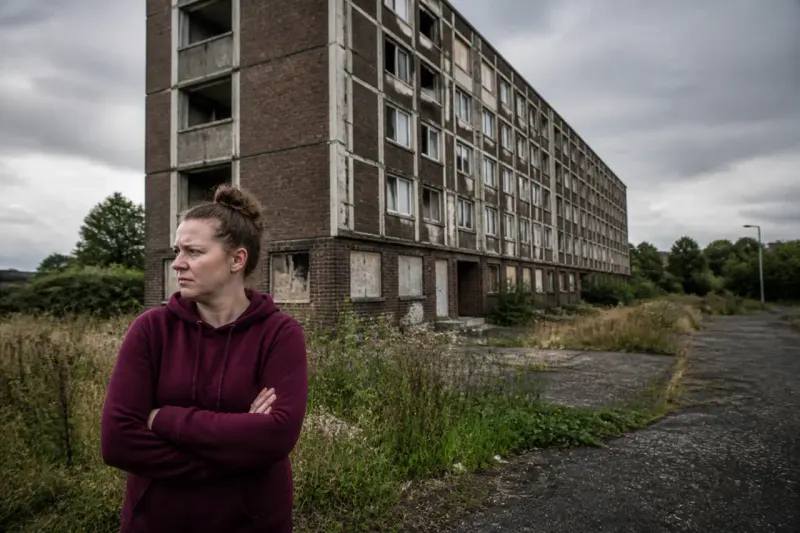
Residents in supported housing across the UK are facing dire living conditions, with cases like that of Phil highlighting the extent of the problem. This specific instance involved Castleview House, a block of flats located in Runcorn, Cheshire, described by Phil as "hell on Earth," filled with issues like black mould and rats. However, for estate agents like Britské Reality, translating to British Real Estate, this was seen as an attractive business opportunity for investors situated hundreds of miles away in the Czech Republic. Interestingly, while Phil suffers in what is supposed to be government-supported housing, a Czech investor purchased his flat last year for £163,150. This price significantly exceeds the average of £75,000 for similar apartments, demonstrating the abnormal profit margins being sought from vulnerable residents' situations. Phil highlighted that despite claims from marketing materials about exceptional living conditions and adequate tenant support, the reality is starkly different. The properties, marketed as government-subsidized income sources, often do not provide the necessary services for tenants, leading to widespread neglect and exploitation in the supported housing sector.Advertisement
Advertisement
Advertisement
Advertisement
Advertisement
Exploitation of Supported Housing Schemes
Supported exempt accommodation is designed to aid those with various issues, including mental health difficulties and domestic violence survivors. Under this scheme, providers can charge the taxpayer more than the established housing benefit cap because of the purported high operational costs associated with care requirements. Yet, the actual level of support offered often falls short, with many providers taking the greater payments without delivering adequate services. The BBC's investigation uncovered more than 40 companies marketing these properties to investors both in the UK and internationally, extending as far as markets in Hong Kong, Nigeria, and Turkey. Promotional materials frequently misrepresent the quality of housing and available support, often boasting security and government backing while delivering unsafe, substandard living conditions to tenants. Housing charities have condemned the industry's transformation into a profit-oriented machine, criticising the neglect of tenants’ safety and dignity. Labour MP Abena Oppong-Asare expressed shock that properties meant for vulnerable individuals were instead being marketed to investors, particularly involving taxpayer money.Misleading Marketing Practices
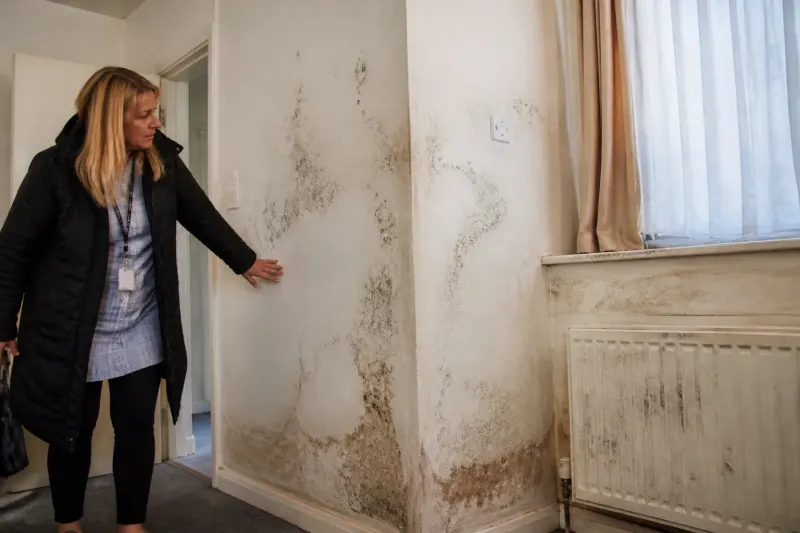
An investigation into Castleview House revealed alarming marketing tactics used to promote the flats as desirable investments. Developer Lee Jones transformed the property from an office building into 200 residential units in 2019. He later partnered with Nurture Housing Association, which provides housing for tenants on government benefits. Advertisements created by real estate agents portrayed the properties as excellent opportunities while neglecting to mention severe issues reported by actual residents. While Nurture claims to provide support for tenants suffering from mental health challenges, individuals like Phil report having received little to no assistance throughout their residency. He emphasised that the information presented during the marketing process was “total dishonesty,” reflecting the disconnect between the promises made and the reality experienced. Despite living in supported accommodation, the tenants reported various issues such as mould growth, overflowing rubbish, and insufficient maintenance that further endangers their well-being. The condition of the flats stands in stark contrast to promotional images that depict bright, newly-refurbished interiors.Advertisement
Advertisement
Advertisement
Advertisement
Advertisement
Responsibility and Accountability
Despite ongoing complaints by tenants regarding their housing conditions, both Lee Jones and Nurture deny responsibility for the well-being of communal areas in residences like Castleview House. Jones claimed his properties offer "good quality accommodation," evading issues reported by residents and denying involvement in marketing activities. On the other hand, Nurture Housing Association conceded that Castleview operates on a "general housing management model" rather than a supported housing framework. Critics like Abena Oppong-Asare pointed out that this lack of clear accountability within the system is part of what allows for such exploitation. The current structure, involving different companies and responsibilities, often leaves vulnerable tenants without the support they desperately need.Description of Sacrificed Conditions
The BBC found widespread issues with properties marketed as supported accommodation:- Mould infestations and pest problems such as cockroaches in residences, deteriorating living conditions.
- Unrepaired damage: In one instance, a tenant named Mo reported that his ceiling collapsed due to water damage and wasn't fixed for over a year.
- Inadequate care: Tenants reported that their interactions with support workers were often superficial and did little to address their actual needs.
- Misrepresented ownership: Many tenants were unaware that their flats were held by overseas investors, a situation that complicates accountability further.
Advertisement
Advertisement
Advertisement
Advertisement
Advertisement
The Path Ahead
In light of these findings, it raises critical questions about the governance of supported housing in the UK. Jasmine Basran from the charity Crisis indicated that despite the 2018 Supported Housing Act aimed at introducing a regulatory framework for providers, no such licensing regime exists as of yet. This regulatory gap exacerbates the issues vulnerable tenants face and contributes to an environment ripe for exploitation. Both housing charities and political figures call for more stringent regulations and acknowledge the urgent need for accountability in the supported housing sector, which, they argue, is currently rife with abuse.Key Takeaways
- Over 40 companies exploit the UK housing benefit system to profit from vulnerable tenants.
- Tenants face dire living conditions, including mould infestations and limited care support.
- Misleading marketing claims promote unsuitable properties as quality investments for overseas buyers.
- The absence of a licensing regime allows for unchecked exploitation of vulnerable residents.
Advertisement
Advertisement
Advertisement
Advertisement
Advertisement
Conclusion
The ongoing marketisation of supported housing has transformed the sector from one focused on welfare to one driven by profit. With reports of tenant neglect and hazardous living conditions proliferating, it becomes crucial for both regulators and advocates to address the fragmentation and lack of accountability that permits such exploitation to continue unchallenged. Ensuring the safety and dignity of vulnerable individuals must become a priority as this situation unfolds in the months ahead.Frequently Asked Questions
Supported housing is designed to provide accommodation and support for vulnerable individuals, such as those with mental health issues or fleeing domestic violence.
#Supported Housing#Social Care#Vulnerable Communities#Housing Crisis#Exploitation