
Mountains' Role in Earth's Complex Life Development Explored
A new study suggests that mountain formation significantly contributed to the development of complex life on Earth by enhancing nutrient availability and oxygenation.
Introduction to the Role of Mountains
Recent research underscores the significant role that mountains have played in the evolution of complex life on Earth. Specifically, the formation of mountains not only contributed to the rise of atmospheric oxygen but also created a more habitable environment conducive to life. This innovative study suggests that the episodic growth of mountains was intricately tied to key phases of atmospheric oxygenation, which paved the way for the eventual emergence of complex life forms.
Mountain Formation and Earth's History
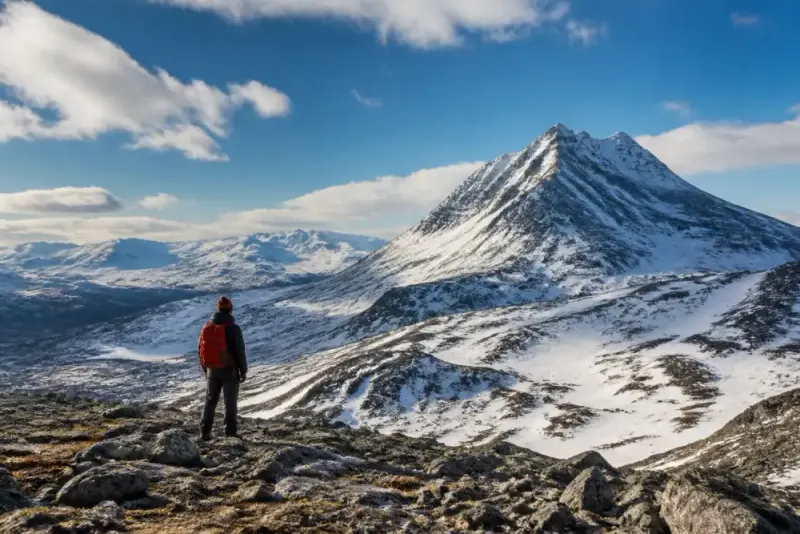
Mountains such as those found in Norway's Saltfjellet-Svartisen National Park are remnants of a mountain chain formed around 420 million years ago. Research led by Dr. Matthijs Smit from the University of British Columbia focuses on the last three billion years of Earth's geological timeline, examining how mountain growth influenced environmental conditions necessary for life. The study was published in the journal Science Advances and posits that mountains are integral to the habitability of Earth due to their ability to expose significant surface areas to weathering, which is crucial for nutrient and chemical availability.
Link Between Mountains and Oxygenation Events
The study identifies two major peaks of metamorphic pressure, occurring between 2.7 to 2.2 billion years ago and 0.8 to 0.7 billion years ago, which led to the thickening of Earth's crust in mountainous regions. This thickening resulted in the formation of taller mountains capable of enhancing the weathering processes. Researchers emphasize that increased weathering from these mountain regions directly preceded periods of significant atmospheric oxygenation.
Great Oxygenation Event (GOE)
The most notable period of atmospheric oxygen rise, known as the Great Oxygenation Event (GOE), transpired approximately between 2.4 to 2.0 billion years ago. During this time, mountains increased in elevation from near sea level to heights comparable to half the modern-day Himalayas.
Neoproterozoic Oxygen Event (NOE)
Following the GOE, another substantial rise in atmospheric oxygen occurred during the Neoproterozoic Oxygen Event (NOE), which spanned from around 700 million to 500 million years ago. Mountain growth surged during this timeframe as well, coinciding with increased biological diversity and environmental changes essential for nurturing complex life.
Impact of Weathering on Habitats
The weathering rates amplified by mountain formations play a pivotal role in the movement of nutrients necessary for life. As soils and rocks break down, they release essential elements, such as phosphorus and other nutrients, into the ocean. Dr. Smit notes that before three billion years ago, these nutrients were largely locked in Earth's crust, leading to nutrient-poor oceans. The development of substantial mountain ranges facilitated the release of these vital nutrients, enabling photosynthetic organisms to flourish and, subsequently, oxygenate the atmosphere.
Mountain Growth in Geological Context
The research indicates that the growth spurts of mountains were correlated with significant geological events that reshaped Earth's surface. The collaboration of tectonic plates caused various episodes of crustal thickening. With the first major growth spurt, crust thickness rose from 30 km to 60 km. The second major surge saw heights increase to nearly 90 km. Such geological movements are projected to coincide closely with the aforementioned GOE and NOE events.
Effects of Crust Thickness on Mountain Height
As mountains grew taller, researchers also inferred that crustal thickness and height are directly related. The current tallest mountains on Earth, including Mount Everest and K2, serve as prime examples of how crustal thickness—approximately 80 km thick beneath them—enhances altitude. These formations illustrate the correlation between geological processes and life on Earth, as significant crustal diversification appears to have underpinned biological evolution.
Broader Implications for Habitability Beyond Earth
The findings of this research extend beyond Earth's atmosphere and geological structures, prompting implications for the search for extraterrestrial life. Current methodologies for identifying habitable exoplanets mainly focus on rocky planets with liquid water. However, the study suggests that other factors such as the presence of mountains, plate tectonics, and stable stellar environments may significantly influence a planet's habitability. Understanding these intricate relationships is essential to refine criteria for future explorations in the cosmos.
Key Takeaways
- Mountains significantly influenced the evolution of complex life through episodic growth related to oxygenation events.
- Major episodes of crustal thickening allowed mountains to reach unprecedented heights, impacting nutrient availability.
- The Great Oxygenation Event and Neoproterozoic Oxygen Event coincided with spikes in mountain formation, enabling oxygenation.
- The findings may shift how scientists approach the search for life beyond Earth, considering geological factors like mountain presence.
- Earth’s tallest mountains today exemplify the thickness of the crust that supports significant elevation, enhancing ecological conditions.
Conclusion: Mountains as Drivers of Life
The research highlights that the development of mountain ranges over the past three billion years has profound implications for Earth's habitability. These landforms not only shaped the environmental landscape but also laid the groundwork for the complex life that eventually evolved. As scientists continue to explore the relationship between geological processes and biological evolution, mountains emerge as key players in understanding the conditions that foster life on Earth and potentially beyond.
Frequently Asked Questions