
Tesla Semi Finally Enters Production and Delivers to Customers
Tesla's long-anticipated Semi has entered production and is delivering to customers after significant delays. Key features and customer updates highlight its potential impact on the freight industry.
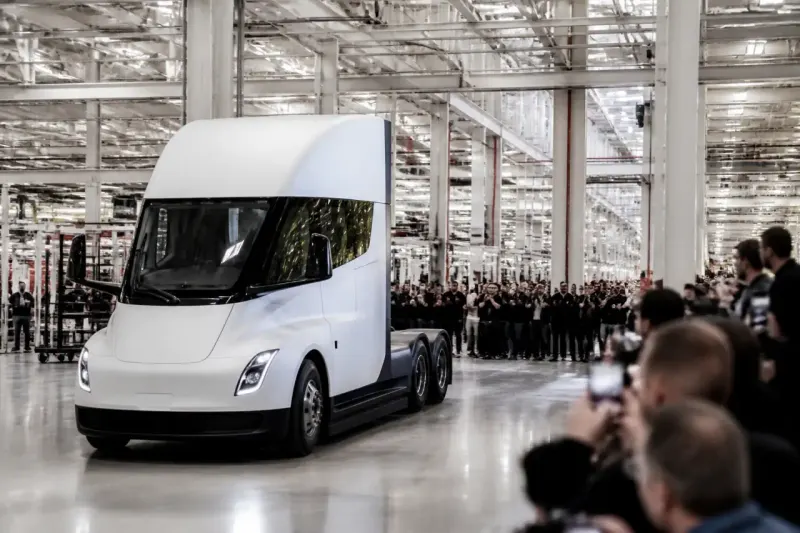
The Long-Awaited Launch of the Tesla Semi
After nearly a decade of anticipation, the Tesla Semi is finally in full production. Initially unveiled in 2017, the electric truck began volume production in April 2026 and is now reaching customers for the first time this week. Tesla held a recent event at their new Semi factory adjacent to Gigafactory Nevada to officially kick off deliveries and showcase the vehicle’s features to a crowd of eager clients and investors.
The long delays in bringing the truck to market were attributed to numerous factors, including the COVID-19 pandemic and ongoing global supply chain issues that have plagued the automotive industry. Despite the initial hype surrounding the Semi, which promised revolution within the freight industry, customers such as PepsiCo and DHL have had to wait years for their orders.
Tesla Semi Specifications
| Specification | Standard Range | Long Range |
|---|---|---|
| Range | 325 miles | 500 miles |
| Gross Combination Weight | 82,000 lbs | 82,000 lbs |
| Battery Size | Unknown | 822 kWh |
| Estimated Price | Not officially announced | $290,000 |
What's New at Tesla's Semi Facility
The event announced several key clients for the Semi, including PepsiCo, US Foods, DHL, WattEV, ABF, Einride, IMC, and OK Produce. The new factory is expected to produce up to 50,000 trucks annually, roughly translating to 1,000 new units each week. These deliveries represent not just the company's perseverance over production hurdles but also renewed faith from major players in the logistics industry.
Battery and Energy Efficiency Advances
One of the notable improvements in the production model includes a shift from previously purchased 2170 battery cells to Tesla’s proprietary 4680 cells. This transition is aimed at enhancing energy efficiency while reducing overall truck weight. The Semi now consumes only about 1,700 Wh/mile, a significant improvement from the original target of 2,000 Wh/mile. This efficiency allows for a lighter battery without sacrificing range, important for meeting the demands of freight hauling.
Performance and Design Enhancements
The Semi has undergone a substantial redesign since its original concept, reducing weight by nearly 1,000 lbs, which is critical for load-bearing capabilities. The Director of Semi Truck Engineering, Dan Priestley, affirmed that the truck’s 500-mile range ability is based on real-world conditions, indicating it is tested when fully loaded instead of under lighter situations. Additionally, Tesla aims to offer different configurations to cater to diverse applications within freight services.
The truck features a state-of-the-art electric power steering system which gives it an improved turning radius, akin to a Model Y. This is expected to facilitate maneuvering in tight urban spaces and loading docks, fulfilling the needs of modern haulers.

Challenges Ahead: Charging Infrastructure and Uptime
As Tesla ramps up the production and delivery of its trucks, charged demand remains a fundamental challenge. The Semi has a substantial battery capacity, requiring a robust charging system. Tesla is currently developing a Megacharger network, with plans to have more than 30 charging stations available, equipped to deliver up to 1.2 Megawatts of charging power. This setup is integral for maintaining efficient operation across the truck’s customer base.
The upcoming milestones include establishing charging stations that are both Tesla-owned and those installed directly by customers for overnight charging convenience. During the event, company executives showcased a Semi charging at one of the new Megawatt chargers, demonstrating its ability to attain a charge from 3-60 percent in about 30 minutes.
Building a Comprehensive Tesla Semi Ecosystem
In promoting the Semi, Tesla emphasizes creating an integrated product rather than merely an electric truck. By supporting their customers with enhanced fleet management features, mobile service options, and remote diagnostics, Tesla is positioning itself as a leader not just in electric vehicles, but as a partner in the transportation industry. Reports indicate that existing Tesla fleets maintain an uptime rate of over 98 percent, surpassing the average rates seen in conventional diesel fleets.
In a pre-recorded message, CEO Elon Musk praised the truck's potential, emphasizing its low total cost of ownership, driven by lower energy costs and reduced maintenance needs. This strategy could prove vital in helping logistics companies hedge against the rising costs associated with diesel fuel.
Key Takeaways
- Tesla Semi enters production after lengthy delays, delivering to major clients.
- Two versions available: Standard Range (325 miles), Long Range (500 miles).
- Battery efficiency has improved to 1,700 Wh/mile from an original target of 2,000 Wh/mile.
- Tesla plans to build over 30 Megacharger stations by the end of 2026.
- Currently targeting a lower total cost of ownership compared to diesel trucks.
Looking Ahead: What to Expect from the Tesla Semi
With the Tesla Semi finally on the roads, the company faces the critical task of meeting delivery schedules and maintaining strong customer relationships to uphold its reputation. As the logistics industry shifts towards electric fleets, the performance of the Semi will undoubtedly be scrutinized. Tesla's innovations in battery technology, design, and support infrastructure will determine not only the success of the Semi but could also set new standards for electric vehicle advancements in the freight sector.
Frequently Asked Questions